In the spring of 2011, Gregory Hall stood at a crossroads. After two decades as brewmaster at Goose Island Beer Company—the iconic Chicago brewery founded by his father, John Hall—Greg pioneered bourbon barrel-aged stouts. His legendary Bourbon County earned him a reputation as one of craft beer’s most innovative minds. But when Anheuser-Busch acquired Goose Island, Greg saw an opportunity to chase a new passion. He embarked on a two-month pilgrimage to England and France, immersing himself in the ancient traditions of farmhouse cider making. He toured legendary producers, interned at Domaine Dupont in Normandy, and connected with masters like Tom Oliver. What he discovered was a world of balanced, complex, terroir-driven ciders that felt worlds away from the overly sweet, mass-market versions dominating the U.S.
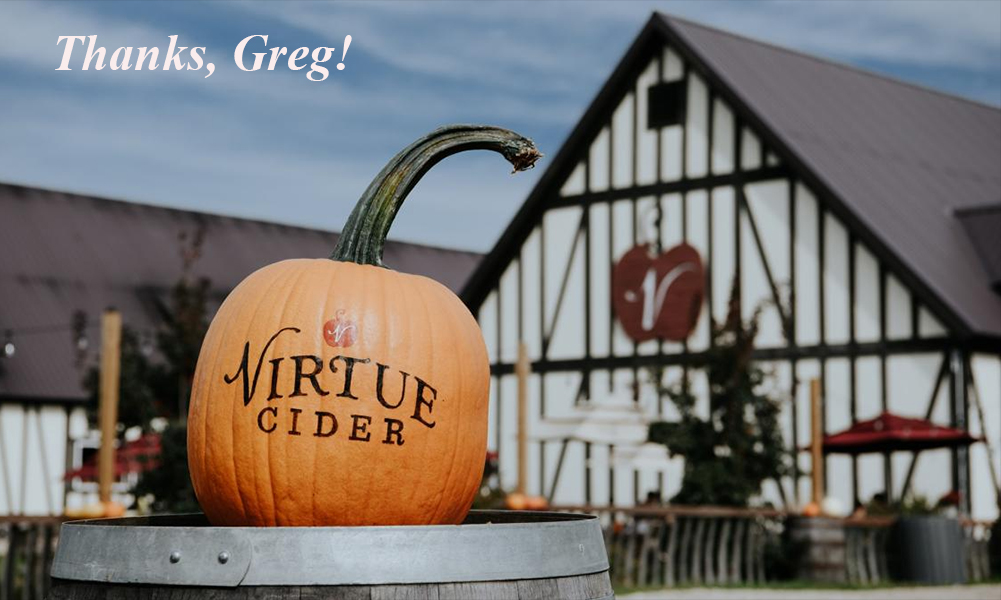
Greg returned with a bold vision: to bring authentic European-style cider to America using the perfect conditions of southwest Michigan. The region’s climate—cool, with ample rainfall—mirrored the great cider lands of Normandy and Herefordshire. In 2011, he purchased a 48-acre farm in Fennville, near the “Cider Coast,” and founded Virtue Cider. Partnering with local family orchards and sourcing heirloom Michigan apples, Greg built something special: rustic cider houses in the Norman French style, barrel-aging programs using French oak and bourbon barrels, and a commitment to sustainability that minimized waste and energy use (later powering much of the operation with solar panels).
Virtue rose quickly. Greg’s ciders—elegant, food-friendly, and layered with notes of apple, oak, and terroir—stood out. They weren’t just drinks; they were an experience. Visitors made pilgrimages to the farm for tastings, live music, tours of the orchards and barrel rooms, and a taste of rural hospitality. Greg poured his heart into it, treating the cidery like a living embodiment of patience and craft. “Patience is a Virtue,” became more than a tagline—it defined the process of slow fermentation, careful blending, and stewardship of the land. Awards followed, distribution grew, and Virtue helped put Fennville on the map as a destination for craft beverage lovers. Greg’s background in beer translated beautifully: he brought innovation, quality control, and a deep respect for ingredients, all while championing local farmers and sustainable practices.
Like many passionate founders, Greg faced the realities of scaling a craft operation. By 2015, rapid growth brought financial pressures—packaging costs, expansion needs, and the challenges of competing in a nascent cider market. Rather than compromise quality or let the dream falter, he made a pragmatic decision: selling a controlling stake to Anheuser-Busch (via Goose Island). This partnership provided stability, access to better equipment, and broader distribution. Virtue’s production scaled, reaching hundreds of thousands of cases at its peak, introducing more people to thoughtfully made cider. Greg remained deeply involved, ensuring the soul of the brand endured even under corporate ownership. Far from a surrender, it was a strategic move by a forward-thinking leader who had already navigated one major sale with integrity.
The plot twist came in 2023. When Anheuser-Busch began divesting some craft assets, Greg saw his chance. He reacquired Virtue Cider, returning it to independent hands—his hands. It was a triumphant homecoming. Once again fully in control, he focused on what mattered most: world-class ciders fit for the table, environmental stewardship, and sharing the beauty of southwest Michigan. He revived live music, planned renovations for a more European farmhouse feel, and emphasized smaller, higher-quality production aligned with his original ethos.
Yet, by early 2026, another chapter closed. The physical farm at 2170 62nd Street was sold. The tasting room, tours, events, and on-site pilgrimage experience that had defined Virtue for so many came to an end. It was bittersweet—a fall from the idyllic farmstead idyll. But Greg approached it with characteristic grace and positivity. The brand would live on through distribution partners in Michigan and Illinois. He sought new production collaborations to keep crafting excellent ciders without the burdens of maintaining the expansive property. It wasn’t defeat; it was a deliberate pivot by a resilient visionary prioritizing the liquid and the legacy over bricks and mortar.
Through it all, Greg Hall emerges as a true hero of craft: a pioneer who bridged beer and cider worlds, a steward of tradition who adapted to modern realities, and a passionate advocate for quality, locality, and sustainability. He turned a personal passion into a beloved brand that elevated American cider, supported communities, and inspired countless others. The farm may be gone, but Virtue’s spirit—patient, innovative, and rooted in excellence—endures in every bottle. In Greg’s story, rise and “fall” are simply chapters in a larger tale of enduring dedication to making better cider for a better world. Cheers to the man who made it all possible.
For Brewing fun fact, trivia, movies and more, Click Here.