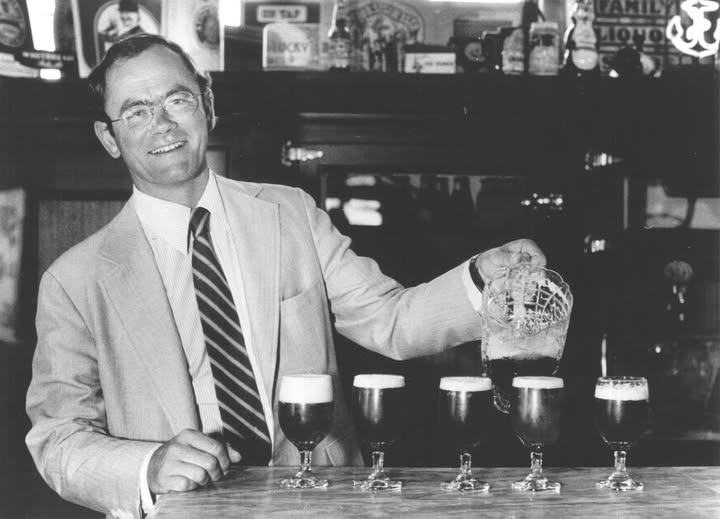
Fritz Maytag (born Frederick Louis Maytag III on December 9, 1937) is an American businessman, brewer, and philanthropist best known for single-handedly rescuing and revitalizing Anchor Brewing Company, thereby playing a pivotal role in launching the modern American craft beer movement.
A great-grandson of Frederick Louis Maytag, founder of the Maytag appliance corporation, Fritz grew up in Iowa but moved to California to attend Stanford University, where he earned a degree in American literature in 1960. Rather than join the family appliance business, he pursued interests in photography, writing, and eventually food and beverage.
In 1965, at the age of 27, Maytag visited Anchor Brewing Company in San Francisco—a tiny, nearly bankrupt 69-year-old brewery that was on the verge of closing. At the time, Anchor was producing a mediocre steam beer using outdated equipment and was down to its last few customers. Impressed by the unique style of Anchor Steam Beer (a California common beer fermented with lager yeast at ale temperatures), Maytag bought 51% of the struggling company for less than $10,000. By 1969, facing imminent closure, he purchased the remaining shares and became sole owner.
Under Maytag’s stewardship beginning in 1965, Anchor underwent a complete transformation:
 Anchor Steam Beer
In 1965, Anchor Brewing was down to producing 800 barrels a year (tiny even for the 1960s). The equipment was ancient, the beer was inconsistent, and the owners were about to shut the doors forever. After Fritz bought the brewery, he spent the next decade doing the following:
Threw out adjuncts (corn/rice) out the window → went 100% barley malt
Brought back open fermentation in the original shallow wooden tanks
Re-perfected the quirky warm lager fermentation
Started bottle-conditioning every single bottle with live yeast
Kept the old copper brewhouse from 1934
By the early 1970s, Anchor Steam was suddenly the best, most flavorful beer most Americans had ever tasted.
Story of Liberty Ale
The beer was originally brewed as a one-off to celebrate the 200th anniversary of Paul Revere’s famous ride (April 18, 1775), when Revere warned colonists that “the British are coming.” Maytag wanted to commemorate an iconic moment in American independence, so he named the beer Liberty Ale.
At the time, American beer was dominated by bland, mass-produced light lagers (Budweiser, Miller, Coors, etc.). Almost no one in the U.S. was brewing aggressively hopped ales in the English tradition, and Cascade hops — the distinctly American hops with bold citrus and pine notes — were brand new and largely untested.
Maytag decided to brew an all-malt, top-fermented ale using only Cascade hops — not just in the boil, but also by dry-hopping the beer (adding hops after fermentation to maximize aroma without extra bitterness). This combination was radical in 1975.
These innovations made Anchor the template for the thousands of craft breweries that followed. Many early craft brewing pioneers (including Ken Grossman of Sierra Nevada and Jim Koch of Samuel Adams) have cited Maytag and Anchor as direct inspirations.
Anchor Christmas Ale 1975 – The Original That Started It All
(Perfect for Google searches like “first Christmas beer,” “Anchor Christmas Ale history,” or “best holiday beer”)
In 1975, Fritz Maytag dropped a total game-changer: the very first modern American Christmas Ale.
Style: Rich, deep-amber spiced ale
ABV: ~6%
Malts: All-malt recipe with a kiss of crystal malt for caramel sweetness
The magic: A top-secret blend of holiday spices (think cinnamon, ginger, fresh spruce tips, maybe some orange peel and nutmeg – nobody knows for sure except Fritz) added after fermentation so the aromas pop without turning it into potpourri
Hops: Just enough to balance, never the star – this beer is all about malt + spice harmony
Finish: Bottle-conditioned (live yeast in every bottle) for super-fine natural carbonation and a creamy, long-lasting head
Taste? Picture warm caramel, fresh-baked gingerbread, pine needles from the Christmas tree you just brought inside, and a cozy hug in a glass. In 1975, when every other beer in America was thin yellow fizz, this was a revelation.
The legendary label
Fritz hand-drew the very first Christmas tree label himself – a simple, elegant line drawing with tiny ornaments that looked like something out of a Victorian storybook. No flashy colors, no gimmicks, just pure class. People started saving the bottles the moment they saw it.
Released in tiny batches right before Thanksgiving, it sold out instantly in San Francisco and became an overnight collector’s item. For years, Anchor was literally the only brewery in the country making a Christmas beer.
That 1975 bottle? It wasn’t just a seasonal release – it was the spark that launched America’s entire holiday beer tradition. Every spiced winter warmer you see on shelves today owes a pint to this one.
Anchor Distilling
Beyond beer, Maytag also revived Anchor Distilling (now part of the brewery’s portfolio) in 1993, producing small-batch rye whiskey, genever, and other spirits—again using traditional methods and helping spark the American craft distilling movement.
Anchor Today
In 2010, after 45 years of ownership, Fritz Maytag sold Anchor Brewing Company to Keith Greggor and Tony Foglio of Griffin Group, a San Francisco-based beverage investment firm. Seven years later, in 2017, Anchor was acquired by Sapporo Holdings of Japan. In 2023, Anchor was closed and bought again. Hopefully, soon we will see Anchor Steam again.
Maytag’s legacy is profound: Anchor Steam Beer remains one of the most iconic American beers, and Fritz is universally regarded as the “godfather of craft beer.” He has received lifetime achievement awards from the Brewers Association, the James Beard Foundation, and numerous other organizations.
Now in his late 80s, Fritz Maytag lives quietly in Northern California, still passionate about food, fermentation, and traditional craftsmanship. His 1965 decision to save a tiny, failing brewery is widely credited with igniting the revolution that turned America from the land of bland industrial lager into the world’s most vibrant and diverse beer culture.
Fun Beer Facts, Breweries and More: Click Here