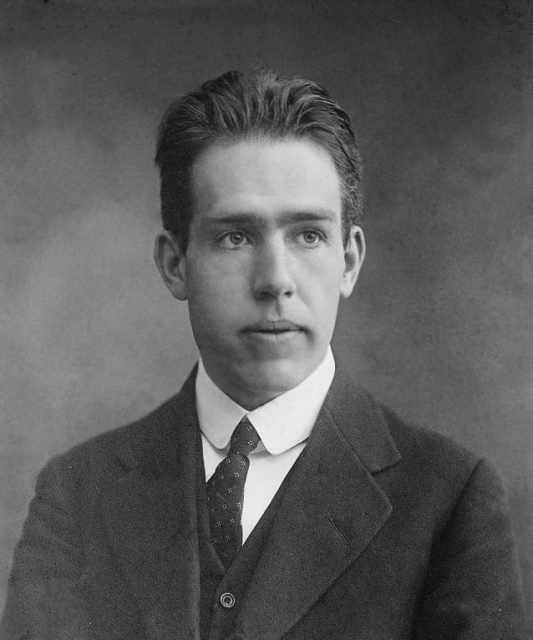
 Niels Bohr (1885–1962) stands as one of the towering figures of 20th-century physics. The Danish scientist developed the Bohr model of the atom, introducing the revolutionary idea that electrons orbit the nucleus in discrete energy levels—a breakthrough that helped lay the foundations of quantum mechanics. For this work, he was awarded the Nobel Prize in Physics in 1922. His institute in Copenhagen became a magnet for the world’s brightest minds, including Werner Heisenberg and many others who shaped modern physics. Bohr’s influence extended far beyond theory; he played a key role in the early development of quantum theory and later contributed to the Manhattan Project while advocating passionately for peaceful uses of atomic energy.
Yet for many people today, especially those who enjoy a cold beer, Bohr is remembered for something more delightfully mundane: his supposed connection to unlimited free Carlsberg.
The Honorary Residence
The story begins with the Carlsberg brewery’s deep ties to Danish science. Founder Jacob Christian Jacobsen was not only a successful brewer but a passionate supporter of research. In 1875, he established the Carlsberg Laboratory, which made significant contributions to science (including early work on yeast and fermentation). When Jacobsen died in 1887, his will stipulated that his grand neo-classical villa—located right next to the brewery in Valby, Copenhagen—should eventually serve as an honorary residence for Denmark’s most distinguished scientist, chosen by the Royal Danish Academy of Sciences. The Carlsberg Foundation, funded by brewery profits, would cover maintenance and expenses.
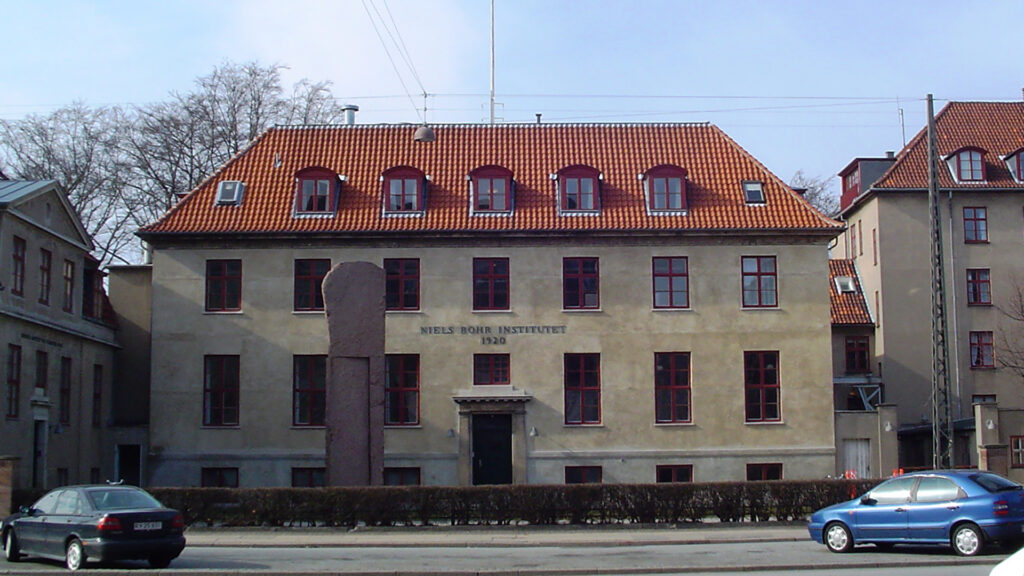
Bohr moved into this prestigious “House of Honor” (sometimes called the Carlsberg Honorary Residence) in 1932, a decade after his Nobel win. He lived there with his family until his death in 1962. The mansion was no ordinary home: it was a palatial property where Bohr hosted legendary scientific gatherings, turning it into an informal hub for international physicists. The brewery covered all housing costs, allowing the Nobel laureate to focus entirely on his work without financial worries related to his residence.
The Free Beer Legend
Here is where fact and folklore intertwine. Popular accounts claim that, as part of the perks, Carlsberg installed a direct pipeline from the brewery to Bohr’s house, giving him free beer on tap 24/7. The tale has been repeated in outlets like Forbes, The Guardian, and countless social media posts: imagine a physicist with an endless supply of fresh lager flowing straight into his kitchen. It’s the ultimate reward for scientific greatness—a literal fountain of beer.
The image is charming and perfectly Danish: national pride in a world-renowned scientist, combined with the country’s famous brewing heritage. Bohr reportedly enjoyed the occasional drink, and the story paints him as a relatable genius who balanced profound thoughts on complementarity (his philosophical principle that things can have seemingly contradictory properties) with simple earthly pleasures.
Separating Myth from Reality
Modern historians and archivists have gently corrected the record. According to experts at the Niels Bohr Archive and Carlsberg historians, there was no beer pipeline. The idea appears to be an urban myth, possibly originating as a joke among Bohr’s contemporaries or exaggerated over time. In the 1930s, piping beer over any distance would have caused quality issues (temperature fluctuations, oxidation, and loss of carbonation), making a direct tap impractical and unlikely to deliver the fresh pilsner Danes expect.
The truth is still generous, just less cinematic. As a resident of the honorary house, Bohr was entitled to free deliveries of beer (in kegs, bottles, and crates) from Carlsberg, along with soda, for the rest of his life—from 1932 until 1962. The brewery supplied him “ad libitum” (as much as he wanted), and all household expenses related to the residence were covered. So while he didn’t have a tap on the wall, he effectively enjoyed a lifetime supply of Carlsberg without ever reaching for his wallet.
Bohr’s son Aage (who also won a Nobel Prize in Physics in 1975) and other family members later confirmed the practical arrangement rather than the mythical pipe.
A Symbol of Science and Culture
Whether pipeline or polite deliveries, the story endures because it captures something wonderful: a society that deeply valued both scientific achievement and the simple joys of life. Denmark’s Carlsberg Foundation has long supported research, and honoring Bohr in this way reflected genuine national appreciation. The brewery itself benefited from the association—linking its brand to one of the greatest minds of the era.
 Bohr’s time in the house coincided with turbulent years: the rise of quantum mechanics, World War II (during which he fled Nazi-occupied Denmark), and the postwar atomic age. Through it all, the residence provided stability and a space for reflection. Visitors described lively discussions that blended physics, philosophy, and yes, perhaps the occasional toast with a Carlsberg.
Today, the former honorary residence operates as part of the Carlsberg Academy, continuing Jacobsen’s vision of bridging science and culture. The “free beer” anecdote remains a favorite icebreaker in physics lectures and bar conversations alike—a reminder that even the most profound thinkers were human.
In the end, Niels Bohr didn’t need a magical pipeline to make his mark on the world. But the legend of endless Carlsberg serves as a delightful footnote: proof that great science and good beer have always gone hand in hand in Denmark. Skål to that.
For Brewing fun fact, trivia, movies and more, Click Here.