• Skip to secondary menu
  • Skip to main content
  • Skip to primary sidebar

Beer Info

Beer News, Beer Releases and New Breweries

  • Home
  • Top 10 Beers
    • Ales
    • Lagers
    • Barrel Aged
    • Hybrid
    • Specialty
  • GABF
    • 2024 GABF
    • 2023 GABF
    • 2021 GABF
    • 2022 GABF
    • 2020 GABF
    • 2019 GABF
    • 2018 GABF
    • 2017 GABF
    • 2015 GABF
    • 2014 GABF
    • 2013 GABF
    • 2012 GABF
    • 2011 GABF
    • 2010 GABF
    • 1987 GABF
  • World Beer Cup
    • 2025 World Beer Cup
    • 2022 World Beer Cup
    • 2018 World Beer Cup
    • 2016 World Beer Cup
    • 2014 World Beer Cup
    • 2012 World Beer Cup
    • 2010 World Beer Cup
    • 2008 World Beer Cup
    • 2006 World Beer Cup
    • 2004 World Beer Cup
    • 2002 World Beer Cup
    • 2000 World Beer Cup
    • 1998 World Beer Cup
    • 1996 World Beer cup
  • U.S. Open
    • 2022 U.S. Open
    • 2021 U.S. Open
    • 2020 U.S. Open
    • 2019 U.S. Open
    • 2018 U.S. Open
    • 2017 U.S. Open
    • 2016 U.S. Open
    • 2015 U.S. Open
    • 2014 U.S. Open
    • 2013 U.S. Open
    • 2012 U.S. Open
    • 2011 U.S. Open
    • 2010 U.S. Open
    • 2009 U.S. Open
  • U.S. Open Cider
    • 2021 U.S. Open Cider
    • 2020 U.S. Open Cider
    • 2019 U.S. Open Cider
    • 2018 U.S. Open Cider
    • 2017 U.S. Open Cider
    • 2016 U.S. Open Cider
    • 2015 U.S. Open Cider
  • More
    • Schools
      • United States
      • Canada
      • Europe
    • Writers
      • Edwin Arnaudin
        • Zebulon Artisan Ales
        • Highland Brewing
      • Morgan Forsyth
      • Paul Leone
      • Austin Foster
      • Anne-Fitten Glenn
    • Books
      • Starting a Brewery
      • Homebrew
      • History
      • Fun & Games
    • Fun Facts

breweries

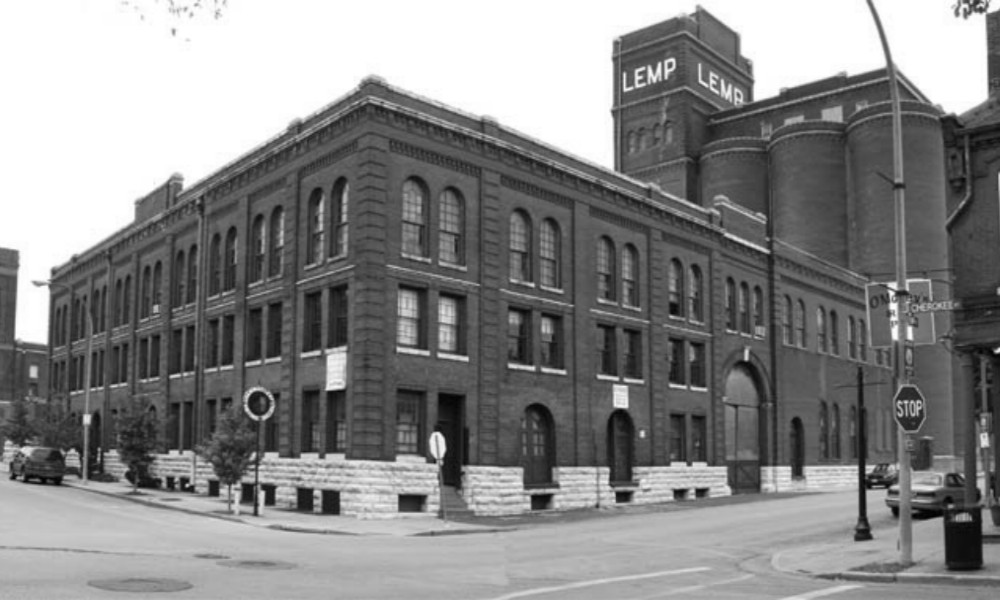
The Lemp Brewery and Mansion – Most Haunted Brewery in America

October 25, 2025 by Dow Scoggins

The Lemp Brewery and Mansion - Most Haunted Brewery in America

The Lemp Mansion in St. Louis stands as one of America’s most chilling haunted landmarks, tied to a tragic family dynasty that suffered seven deaths—five by suicide—within its walls between 1901 and 1949. Built in the 1860s alongside the massive Lemp Brewery, once the city’s largest beer producer, the mansion was home to brewing tycoon William Lemp Sr. and his heirs. Tragedy struck early with Frederick Lemp’s mysterious heart failure at age 28, followed by William Sr.’s suicide in 1904. After Prohibition crushed the brewery in 1919, despair deepened: Elsa Lemp died by gunshot in 1920 with no note and delayed police involvement, William Jr. took his life in the mansion office in 1922, William III died of heart failure at 42 in 1943, an illegitimate child perished in the 1940s, and Charles Lemp shot his dog before killing himself in 1949, leaving a note reading, “Blame no one but me.” The last survivor, Edwin, sold the mansion and lived to 90—many believe escaping the property saved his life.

Beneath the mansion and brewery lies a labyrinth of natural Caves of St. Louis, once used for aging beer and secret family passageways. Today, these 100-year-old underground tunnels host the Lemp Brewery Haunted House by Halloween Productions Inc., widely hailed as America’s only REAL haunted attraction. Visitors descend a century-old spiral staircase 50 feet below street level into 20,000 square feet of authentic gothic horror—damp stone arches, rusted machinery, and eerie silence broken only by state-of-the-art animatronics, zombie brewers, giant alligators, and swarms of bats. With real history soaked into every wall, this isn’t fake fog and plywood—it’s genuine terror. Escape means climbing “The Hole,” a final staircase back to daylight… if the spirits let you go. Open select nights in October—book now at lemphauntedhouse.com.

For More Information about visiting and touring the Lemp Brewery Haunted House – Click Here

Top 10 Beer Festivals in America plus a few more: Click Here!

Filed Under: Beer, breweries

National Pancake Day – Drink a Renegade Pancakes Maple Porter

September 26, 2025 by Dow Scoggins

National Pancake Day – Drink a Renegade Pancakes Maple PorterRenegade Pancakes Maple Porter is dark and roasty and is uniquely balanced with the flavor and aroma of maple syrup without any of the sweetness. The unmistakable maple hits the nose right off the bat, with the smokiness of a traditional porter hitting your palate to create a balanced and dry experience. Perfect for an after snow day warm up or a mid-summer camping adventure.

Pairing:
Mole, vanilla, roasted squash, pulled pork, breakfast, bourbon and good friends.

Malt: 2-ROW, C55, BISCUIT, ROASTED BARLEY, CHOCOLATE

Hops: MT. HOOD, FRAGGLE

RENEGADE BREWING CO
720.401.4089
925 W 9TH AVE
Denver, Colorado, 80204
Website: renegadebrewing.com

NATIONAL PANCAKE DAY
The table is set, the batter is mixed, the griddle is hot, and the butter and syrup are ready. This means you are prepared for National Pancake Day. This food holiday is observed each year on September 26.

You may not have time to make a pancake breakfast, but that is okay, pancakes make a great dinner as well. Pancakes can be served at any time and with a variety of toppings or fillings from sweet jams and syrups to savory meats and sauces.

There is archaeological evidence suggesting pancakes are probably the earliest and most widespread breakfast food eaten in prehistoric societies.

HOW TO OBSERVE
To celebrate National Pancake Day, enjoy one of the following pancake recipes:

Lemon Blueberry Pancakes
Banana and Pecan Pancakes with Maple Butter
Applesauce Pancakes
Buttermilk Pancakes
Pumpkin Pancakes

HISTORY
National Pancake Day’s humble beginnings in 2005, originally started as Lumberjack Day. Marianne Ways and Collen AF Venable sought an excuse to eat pancakes and waffles with friends and as it was one week after “Talk Like a Pirate Day” and that theme had been worn out, eating lots of pancakes like a lumberjack seemed a better holiday than ever.

Top 10 Beer Festivals in America plus a few more: Click Here!

Filed Under: Beer, breweries

Louis Pasteur Patents How to Brew Beer – January 28, 1873

September 16, 2025 by Andrew Innes

Louis Pasteur Patents How to Brew Beer – January 28, 1873

Louis Pasteur Patents How to Brew Beer – January 28, 1873
Beer was first made by the Sumerians, and the technology was absorbed into the Babylonian and ancient Egyptian cultures. The practice of the Sumarians was to bake grains into bread, and the bread was moistened to begin the process of making beer. The baked bread was a way to preserve the grain for later use in the beer making process. A Sumerian beer was recreated recently by the folks at Anchor Steam Beer, as an experiment.

In more recent times, Louis Pasteur studied beer and wine making and patented a process for making beer which resulted in a better beer. Previously the wort was boiled and exposed to the air for cooling. In Pasteur’s process, the wort is kept in closed vessels and cooled by spraying the outside of the vessel with water. A special yeast was introduced into the mash after it cooled, thus preventing contamination of the wort with stray wild yeasts floating through the air.

More about Louis Pasteur
Louis Pasteur, the renowned French microbiologist and chemist, revolutionized the brewing industry with his pioneering research on fermentation and beer spoilage in the 19th century. Through meticulous studies, Pasteur proved that alcoholic fermentation is caused by living yeast cells converting sugar into alcohol and carbon dioxide, debunking the outdated theory of spontaneous generation. His groundbreaking 1876 book, Études sur la Bière, detailed the “diseases” of beer caused by contaminating bacteria and wild yeasts, providing brewers with scientific insights to produce cleaner, more consistent beers.

Pasteur’s discoveries led to the development of pasteurization—a gentle heating process that kills harmful microorganisms without altering flavor—first applied to beer to extend shelf life and prevent souring. This innovation not only elevated French brewing to compete globally but also laid the foundation for modern hygiene practices in the craft beer world, ensuring safer and higher-quality brews enjoyed by enthusiasts today. Pasteur’s enduring contributions continue to inspire brewers committed to excellence in fermentation science and product stability.

For Fun Beer Facts, Trivia and more: Click Here

Filed Under: Beer, breweries

National Pumpkin Day and the History of Pumpkin Beer

September 2, 2025 by Dow Scoggins

NATIONAL PUMPKIN DAY and the History of Pumpkin Beer

We recognize a favored autumn decoration and food on October 26th that is used in a variety of recipes, competitions, and festivals. It’s National Pumpkin Day!

By October 26th, we in a frenzy of pumpkin obsession. We cannot wait for the big November holiday for pumpkin pie.  No siree, we need pumpkin everything! Bars, cookies, coffee, cheesecake, pasta and oatmeal.  Pumpkin Chunkin’, pumpkin patches, festivals, bake-offs and television specials. Let’s not forget jack-o-lantern carving, too! This fruit grabs American’s attention.

As it should be.  This squash is native to  North America. The oldest evidence of pumpkin-related seeds dates back to somewhere between 7000 and 5500 BC to seeds found in Mexico.

The word pumpkin originates from the word pepon, which means “large melon” in Greek.

Within recent years, white pumpkins have become more popular in the United States. The United States produces 1.5 billion pounds of pumpkins, with Illinois producing more than any other state.

A 2,145-pound pumping from Streator, Illinois holds the current North American record.  Grown by Gene McMullen in 2015, the great pumpkin weighed in a few hundred pounds lighter than the current world record pumpkin from 2014.  At 2,323-pounds, the giant pumpkin from Switzerland retains the world record prize.

Canned pumpkin may be recommended by veterinarians as a dietary supplement for dogs and cats that are experiencing certain digestive ailments.

Raw pumpkin can be fed to poultry as a supplement to their regular feed during the winter months to help maintain egg production.

The History of Pumpkin Beer: From Colonial Necessity to Modern Craft Staple
Pumpkin beer, now a quintessential fall seasonal in the American craft beer landscape, has roots deeply embedded in early colonial history. What began as a practical solution to ingredient shortages evolved into a beloved (and sometimes divisive) style that reflects broader trends in brewing innovation.

Colonial Beginnings: The Pilgrims and Early Settlers (17th Century)
The story of pumpkin beer starts with the Pilgrims and other early European settlers in North America. Upon arriving in the New World in the early 1600s, colonists faced challenges in brewing traditional beers due to the scarcity and high cost of barley malt, which was often imported from Europe. Pumpkins, native to the Americas and abundant in the region, became a readily available substitute for fermentable sugars. By the 17th century, settlers had adapted brewing techniques to incorporate pumpkin flesh, which was mashed and fermented in place of malt, resulting in a rustic, earthy ale. This wasn’t the spiced, pie-like beer we know today; historical versions were more about survival and necessity than flavor enhancement.

Beer played a crucial role in Pilgrim life, serving as a safer alternative to contaminated water, and pumpkin-based brews were part of this tradition. Pumpkins had been introduced to Europe by the 16th century, but it was in the colonies where they became a brewing staple, often referred to as “pompion” in old texts. These early beers were simple ferments, sometimes combined with other local ingredients like persimmons or molasses.

The 18th Century: Peak Popularity and Notable Recipes
Pumpkin beer remained a common household brew throughout the 18th century. One of the most frequently cited recipes dates to 1771, from the American Philosophical Society, which instructed brewers to boil pumpkin, mix it with hops, and ferment it—yielding a beverage more akin to a basic ale than a flavored specialty. Founding Fathers like George Washington were known to experiment with pumpkin or squash in their homebrewing, further embedding the style in American lore. However, as barley cultivation improved and imports became more reliable, pumpkin’s role diminished, leading to a gradual decline in its use by the late 18th and early 19th centuries.

Decline and Dormancy (19th to Mid-20th Century)
By the 19th century, with industrialization and better access to grains, pumpkin beer faded into obscurity. It was no longer a necessity, and brewing shifted toward European-style lagers and ales that didn’t rely on local substitutes. The style survived mostly in folklore and occasional homebrew experiments, but it wasn’t commercially prominent. Prohibition in the 1920s further stifled any remnants of creative brewing traditions in the U.S.

Revival in the Craft Beer Era (Late 20th Century Onward)
The modern resurgence of pumpkin beer can be traced to the 1980s craft beer revolution. In 1985, Bill Owens, founder of Buffalo Bill’s Brewery in Hayward, California, brewed what is widely regarded as the first commercial pumpkin beer of the modern era. Inspired by historical accounts of George Washington’s brewing, Owens mashed pumpkins into the wort and added spices like cinnamon, nutmeg, and cloves—evoking pumpkin pie flavors that would define the contemporary style. This innovation helped kickstart seasonal brewing trends and contributed to the broader craft beer movement by encouraging experimentation with unconventional ingredients.

By the 1990s and 2000s, other breweries followed suit. Elysian Brewing in Seattle became famous for its pumpkin ales, hosting annual festivals, while brands like Dogfish Head and Southern Tier popularized imperial versions like Punkin Ale and Pumking. The style exploded in popularity, with sales peaking in the fall and often featuring bold spicing, though some purists argue it strays from historical authenticity.

Pumpkin Beer Today: A Seasonal Phenomenon
As of 2025, pumpkin beer remains a polarizing yet enduring fixture in the craft beer world, with hundreds of variations released annually. Craft breweries have expanded the category to include barrel-aged, sour, and even non-alcoholic options, reflecting consumer demand for novelty. However, backlash against “pumpkin spice everything” has led some brewers to focus on subtler, vegetable-forward interpretations. Despite debates over its taste—loved for its cozy, autumnal vibe or loathed as overly commercial—pumpkin beer’s journey from Pilgrim necessity to craft icon underscores America’s innovative brewing heritage.

Filed Under: Beer, breweries

Roadhouse Brewing and Breakside Brewery Drop Hypersonic Kush IPA: A Citrus-Charged Hazy Hops Bomb

August 22, 2025 by Dow Scoggins

Jackson Hole, WY — Get ready for a flavor explosion! Roadhouse Brewing Co. teams up with Breakside Brewery to unleash Hypersonic Kush, the latest hop-fueled masterpiece in Roadhouse’s bold Kush Series. This citrus-packed Hazy IPA, brewed with a killer combo of Zumo, Mosaic, Chinook, and Strata hops, is here to blast your taste buds into orbit.

“This collab with Breakside was a no-brainer,” says Max Shafer, Roadhouse’s Brewmaster. “They’re rockstars in the craft beer world, and we both love pushing the boundaries of what a beer can be.” Breakside’s Brewmaster, Ben Edmunds, adds, “Hypersonic Kush is a love letter to hops. Zumo brings zesty lime and lemon vibes, while Mosaic and Chinook deliver that dank West Coast edge. Strata rounds it out with tropical flair. Plus, it’s awesome to support American hop farmers by blending public and private hop varieties in a way that keeps the craft beer community thriving.”

This 6.2% ABV Hazy IPA is a citrus lover’s dream, bursting with candied lime, lemon zest, and tropical notes, all wrapped in a smooth, hazy finish. Brewed with innovative Zumo hops from Segal Ranch in Washington, alongside classic heavyweights, Hypersonic Kush is a bold, refreshing sip that’s perfect for craft beer fans looking for something new.

Now Available: Grab Hypersonic Kush in 16 oz. 4-packs or on draft at bars, grocery stores, and convenience stores across Arizona, California, Colorado, Idaho, Illinois, Kansas, Nevada, Texas, Utah, and Wyoming.

About Roadhouse Brewing Co.
Founded in 2012 in the heart of Jackson Hole, Wyoming, Roadhouse Brewing Co. was born from a passion for craft beer, mountain culture, and culinary creativity. The brewery was established by chef-turned-entrepreneur Colby Cox and his business partner, Gavin Fine, both driven by a vision to create bold, flavorful beers that reflect the rugged, adventurous spirit of the Tetons. As a Certified B Corp, Roadhouse emphasizes sustainability and community, crafting beers that pair perfectly with the music, food, and outdoor lifestyle of the Mountain West. From its original brewpub to its expanded production facility, Roadhouse has grown into a regional favorite, distributing across 10 states while staying true to its Jackson Hole roots.

Under the leadership of Brewmaster Max Shafer, Roadhouse Brewing Co. produces a diverse lineup of beers that cater to both hop heads and flavor explorers. Their portfolio includes year-round offerings like The Walrus Hazy IPA, a juicy crowd-pleaser, and Wilson West Coast IPA, a crisp nod to classic hoppy brews, alongside seasonal and limited releases like the Kush Series, which showcases innovative hop-forward collaborations. Shafer’s team experiments with unique ingredients and cutting-edge hop varieties, such as Zumo in their recent Hypersonic Kush IPA, blending culinary artistry with brewing precision. With a commitment to quality and creativity, Roadhouse continues to push boundaries, delivering beers that embody the wild, untamed spirit of their Teton surroundings.  Learn more at roadhousebrewery.com.

About Breakside Brewery
Breakside Brewery was founded in 2010 by Scott Lawrence in Northeast Portland, Oregon, initially operating as a small brewpub in the Dekum neighborhood. Lawrence, who previously worked in software sales in South Carolina, was inspired to turn his passion for craft beer and communal dining into a career after a transformative trip to Alaska. The brewery expanded significantly in 2013 with a production facility and taproom in Milwaukie, Oregon, boosting its capacity to 40,000 barrels per year. By 2019, Breakside had become employee-owned, a rare model in the industry, and now operates eight locations in the Portland area plus a taproom in Astoria, producing around 30,000 barrels annually while distributing to multiple states and international markets.

Ben Edmunds serves as the founding brewmaster, having joined early on with a background that includes a Spanish degree from Yale University and brewing education from the Siebel Institute. Over the years, the brewing team has included talents like Sam Barber and Jacob Leonard, contributing to the brewery’s innovative approach. Breakside is celebrated for its diverse and award-winning beers, ranging from classic styles to experimental creations, with popular offerings including Breakside Pilsner, JoyRx pale ale, and Post Time kölsch. The brewery has earned accolades such as Brewery of the Year at the Oregon Beer Awards multiple times (2017, 2019–2022) and focuses on a broad portfolio that emphasizes quality and creativity, available on draft and in packages across the Pacific Northwest and beyond.  Learn more at  breakside.com.

About the Kush Series
Roadhouse’s Kush Series is all about hop-forward collabs with cutting-edge breweries. Each release highlights unique hop varieties and bold flavors, celebrating the art and science of craft brewing.

Filed Under: Beer, breweries

Jim Koch Returns as CEO of Boston Beer Company: A Founder’s Comeback Amid Brewing Success

August 13, 2025 by Dow Scoggins

Jim Koch returns as CEO of the Boston Beer Company
Photo: Courtesy of the Boston Beer Company

In a move that blends nostalgia with strategic necessity, Jim Koch, the visionary founder and chairman of the Boston Beer Company, is set to reclaim the role of CEO effective August 15, 2025. Koch, who first led the company from its inception in 1984 until 2001, will step in following the departure of current CEO Michael Spillane, who is stepping down for personal reasons but will remain on the board of directors.

The announcement, made on August 1, 2025, comes at a pivotal time for the Boston-based brewer, best known for its flagship Samuel Adams brand. The company recently reported one of its most profitable quarters in years, highlighting resilience in a competitive craft beer market increasingly challenged by shifting consumer preferences toward non-alcoholic beverages and ready-to-drink cocktails. Koch’s return is positioned as an interim measure, with the 76-year-old entrepreneur indicating he plans to hold the position until an internal successor is prepared to take over. “I don’t anticipate doing this in five years,” Koch told The Wall Street Journal, underscoring his commitment to a smooth transition rather than a long-term tenure.

A Brewer’s Legacy Revisited
Jim Koch’s story is synonymous with the rise of American craft beer. Armed with a family recipe dating back to the 19th century and a Harvard Business School education, Koch launched Boston Beer Company in 1984 with Samuel Adams Boston Lager as its cornerstone product. What began as a small operation in Koch’s kitchen quickly grew into a powerhouse, challenging the dominance of mass-market beers and sparking the craft beer revolution. Under his initial leadership, the company went public in 1995 and expanded its portfolio to include brands like Angry Orchard cider, Truly hard seltzer, and Twisted Tea.

Koch stepped away from the CEO role in 2001 to focus on brewing and innovation, but he has remained deeply involved as chairman and the company’s public face. His return now echoes similar comebacks in the business world, where founders like Howard Schultz at Starbucks or Michael Dell at Dell Technologies have rejoined to steer their creations through turbulent times. For Boston Beer, recent challenges include navigating a slowdown in craft beer sales and adapting to the explosive growth—and subsequent cooling—of the hard seltzer category.

Strategic Implications and Market Reaction
Analysts view Koch’s reinstatement positively, citing his intimate knowledge of the brand and proven track record. The company’s stock saw a modest uptick following the news, reflecting investor confidence in Koch’s ability to maintain momentum from the recent strong quarter. Spillane, who joined Boston Beer nearly a decade ago and became CEO in 2022, has been credited with streamlining operations and driving profitability, including through diversification beyond traditional beer.

Looking ahead, Koch has hinted at grooming internal talent for the top job, potentially from within the company’s executive ranks. This approach aligns with Boston Beer’s culture of innovation and loyalty, as evidenced by its employee-owned structure and commitment to quality brewing. Industry observers speculate that Koch’s leadership could accelerate expansions in non-alcoholic offerings or further integrations of its diverse portfolio, including recent ventures into cannabis-infused beverages through partnerships.

Stirring Memories in the Craft Beer Community
The news has resonated widely in the craft beer scene, evoking memories of Koch’s pioneering days. Social media buzz highlights his role in elevating American beer on the global stage, with many praising the move as a “victory lap” for a industry icon. As one LinkedIn post noted, Koch’s return “stirs up a lot of memories” among former colleagues and fans alike.

For Boston Beer Company, this leadership shift represents not just a change at the top but a reaffirmation of its roots. As Koch once famously said while promoting Samuel Adams, “We take the beer seriously, but not ourselves.” With him back at the helm, the company aims to blend that ethos with forward-thinking strategies to keep pouring success in an ever-evolving market.

Filed Under: Beer, breweries

True North Ales Launches Season of the Witch

August 6, 2025 by Dow Scoggins

True North Ale Company
Photo Credit: True North Ale Company

True North Ale Company introduces its fall seasonal, Season of the Witch, a double dry hopped hazy and juicy IPA. Featuring Citra, Vic Secret, and Strata hops, this beer bursts with vibrant flavors and aromas of passion fruit, mango, pineapple, and melon. With a modest 5.9% ABV, it’s crafted for easy drinking, boasting a soft mouthfeel and full body.

“First brewed for our Salem, Massachusetts fans in 2019, Season of the Witch has grown into a fan favorite,” said Jake Rogers, Founder & Chief of Brewery Operations at True North Ales. “Its low ABV makes it perfect for enjoying multiple rounds on a patio. While fall beers often lean toward pumpkin and spice, this IPA offers a unique, crowd-pleasing alternative.”

The can’s striking artwork, designed by Marblehead artist Amy Hourihan, complements the beer’s bold character. Available in kegs and cans, Season of the Witch can be found in stores and restaurants across Massachusetts and New Hampshire, as well as at True North Ales’ Ipswich Taproom, through October 31.

About True North Ale Company

Located in Ipswich, Massachusetts, True North Ale Company opened in 2017 and now distributes to over 2,000 bars, restaurants, and stores across Massachusetts, New Hampshire, and Rhode Island. The brewery has earned prestigious accolades, including a Gold Award at the 2018 World Beer Cup, a Gold Medal at the 2023 Great American Beer Fest, Gold and Bronze Medals at the 2021 Great American Beer Fest, a Silver Medal at the 2024 World Beer Cup, and a Silver Medal at the 2020 Great American Beer Fest. Voted Best Brewery on Boston’s North Shore for four consecutive years, True North offers a 150+ seat open-air and tented patio, 150+ seat indoor taproom, and a North Side events venue accommodating over 250 guests.

For more information please visit https://www.truenorthales.com/

Filed Under: Beer, breweries, craftbeer

Public Coast Brewing Debuts Four Refreshing Summer Beers

August 6, 2025 by Dow Scoggins

Public Coast Brewing
Photo Credit: Public Coast Brewing Co.

CANNON BEACH, Ore. – Public Coast Brewing Co. is marking the late-summer season with the release of four new seasonal beers: Jasmine Smash-It Ale, Hazy Pale Ale, Hibiscus Pom Gose, and Blueberry Wheat Ale. The Jasmine Smash-It Ale, crafted in collaboration with Smith Teamaker, highlights the brewery’s continued commitment to creative, locally inspired brews.

“Summer is the perfect time to explore new flavors and showcase seasonal ingredients from our sister property, Public Coast Farm,” said Ben Christianson, brewer at Public Coast Brewing. “Oregon’s summer bounty—especially its fruits and berries—is something we love to celebrate in our beers whenever we can.”

Jasmine Smash-It Ale is a single malt and single hop style beer with a twist–instead of hops, the Smash-It Ale features Smith Teamaker’s Jasmine Pearls green tea, resulting in a crisp and refreshing bubbly beverage with light floral notes.

Hazy Pale Ale is a low-ABV hazy pale ale with a tropical punch. Featuring notes of citrus, peach, and mango, it’s the perfect drink for a hot summer day on the coast. Featured ingredients include malted wheat, malted oats, El Dorado hops, Riwaka Hops, and Cashmere Hops.

Hibiscus Pom Gose is a part of Public Coast’s “Sour Series,” and is a fruit and floral-forward sour ale with bursts of hibiscus, juicy pomegranates, and a touch of sea salt. Featured ingredients include malted wheat, lemon drop hops, Jacobsen Sea Salt, hibiscus flowers, and pomegranate juice.

Blueberry Wheat Ale spotlights Public Coast Farms’ blueberries, combining everything Public Coast loves: beermaking, fresh and local produce, and hops. This ale is described as an “easy drinking” wheat ale with a hint of ripe blueberry and hops.

All four beers will be available for purchase in 16 oz single cans and four-packs at the Public Coast Farmstand in Banks and on tap at the brewpub in Cannon Beach for a limited time.

About Public Coast Brewing

Located just 70 miles west of Portland in Cannon Beach, Ore., Public Coast Brewing is named after the only true public coastlines in America: the Oregon Coast. The brewery features a 10bbl Brewhouse with two 30-barrel fermenters, two 20-barrel fermenters, and four 10-barrel fermenters. Public Coast Brewing also offers fresh and delicious fare from local farms and ranches, including their own – Public Coast Farm. Boasting a large pet-friendly patio, large community-style outdoor fire pit, and an open brewhouse easily viewed from the bar, Public Coast Brewing offers a relaxed and welcoming spot for the whole family.

About Public Coast Farm

Oregon’s historic Route 26, known to Portlanders as the Sunset Highway, has welcomed generations of families traveling to and from the coast on its forested byway. Now Public Coast Farm sits on that very route, straddling West Dairy Creek at the base of the Coastal Range, on a 40-acre site lush with blueberry bushes, beehives, fruit orchards and hops. The farm is fertile ground for the farm’s sister properties – the Stephanie Inn and Public Coast Brewing Co. – each of which incorporate Public Coast Farm’s fresh ingredients into delicious dishes and seasonal beers.

For more information please visit https://publiccoastbrewing.com/

Filed Under: Beer, breweries, craftbeer

2019 Top 50 Craft Breweries in the United States. Where are they today?

August 4, 2025 by Dow Scoggins

Craft Brewing Industry from 2019-2025

U.S. Craft Beer Industry: 2019 to 2025
From 2019 to 2025, the U.S. craft beer industry experienced a rollercoaster ride, starting with steady growth before being hammered by the COVID-19 pandemic and then grappling with ongoing challenges. In 2019, craft brewers saw a 4% increase in production and a 6% rise in retail dollar value, fueled by consumer demand for innovative flavors and local brews. However, 2020 brought a sharp decline as lockdowns crushed on-premise sales like draft beer at bars and restaurants, leading to a significant drop in production—down to levels not seen in years—while off-premise sales (cans and bottles) surged to keep many afloat. By 2021-2022, the sector began recovering, with production rebounding to about 24.8 million barrels in 2021 as breweries adapted through e-commerce, outdoor seating, and canned innovations, though many small operations faced closures or pivots amid supply chain issues and shifting consumer habits toward hard seltzers and non-alcoholic options.

Entering 2023-2025, recovery stalled into stagnation and decline, with production volumes dropping further—down 3.9% to 23.1 million barrels in 2024 and another 4.1% decline in the first half of 2025—amid rising costs, market saturation, and competition from ready-to-drink cocktails and health-conscious alternatives. The number of operating craft breweries peaked at around 9,796 in 2024, but closures outpaced openings for the first time since 2005 (529 closures vs. 430 openings), signaling a “painful period of rationalization” with consolidations, acquisitions, and a shift toward hospitality-focused models like taprooms to boost employment (up 3% to 197,112 jobs). Despite volume woes, retail dollar sales grew 3% to $28.8 billion in 2024, holding a 24.7% market share by value, and forecasts suggest cautious optimism through premiumization, strategic partnerships, and innovation in low-alc or bright, fruity beers to appeal to millennials and Gen Z.


Top 50 craft brewing companies  by volume in 2019.

1. D. G. Yuengling & Son – Pottsville, PA
D. G. Yuengling & Son, established in 1829, is America’s oldest operating brewery and remains family-owned through six generations. Known for its Traditional Lager, the brewery produces a variety of beers including light options like FLIGHT and Black & Tan, emphasizing rich flavors from caramel malt and mild hops. Located in Pottsville, Pennsylvania, it offers free tours, samples, and a gift shop, making it a historic destination for beer enthusiasts.

2. Boston Beer Co. – Boston, MA
Boston Beer Company, founded in 1984, is renowned for Samuel Adams beers and has grown into a major player in craft brewing, also producing Twisted Tea and Angry Orchard cider. The company operates breweries in Boston and beyond, emphasizing innovation with seasonal releases and collaborations. Its Boston brewery offers tours showcasing the beer-making process, highlighting its role in the American craft beer revolution.

3. Sierra Nevada Brewing – Chico, CA
Sierra Nevada Brewing Company, started in 1980 by Ken Grossman, pioneered American craft beer with its Pale Ale and focuses on sustainability through solar power and organic hops. The Chico brewery produces favorites like Torpedo Extra IPA and features tours, a taproom, and restaurant emphasizing farm-to-table fare. Known for award-winning beers, it remains family-owned and committed to quality and environmental responsibility.

4. New Belgium Brewing – Fort Collins, CO
New Belgium Brewing, founded in 1991, is famous for Fat Tire Amber Ale and became 100% employee-owned before its 2019 acquisition by Lion Little World Beverages. The Fort Collins brewery emphasizes sustainability, offering tours, a taproom, and events while producing innovative beers like Voodoo Ranger IPAs. It remains a leader in craft beer, focusing on community and environmental initiatives.

5. Duvel Moortgat – CA, MO, NY
Duvel Moortgat USA represents Belgian brewing traditions in America, owning Boulevard Brewing in Missouri, Brewery Ommegang in New York, and Firestone Walker in California. The group produces Belgian-style beers like Duvel and Boulevard’s Tank 7, emphasizing quality and innovation. Their U.S. operations focus on craft excellence while maintaining European roots.

6. Gambrinus – TX, CA, OR
The Gambrinus Company owns Shiner Beers in Texas, BridgePort in Oregon, and Trumer in California, producing traditional lagers like Shiner Bock. Founded in 1986, it focuses on quality craft brews with regional appeal. The company emphasizes sustainability and community involvement across its operations.

7. Bell’s Brewery – Comstock, MI
Bell’s Brewery, founded in 1985, is known for Two Hearted Ale and Oberon, growing from a homebrew supply shop to a major craft producer. The Comstock facility offers tours and a brewpub with diverse beers and events. Acquired by Lion Little World Beverages in 2021, it remains committed to quality and innovation.

8. CANarchy – CO, FL, UT, MI, TX
CANarchy Craft Brewery Collective included Oskar Blues, Cigar City, and others before its 2022 acquisition by Monster Beverage, focusing on bold beers like Dale’s Pale Ale. The group emphasized innovation and sustainability across multiple states. Post-acquisition, brands continue under new ownership with expanded distribution.

9. Stone Brewing – Escondido, CA
Stone Brewing, founded in 1996, pioneered bold IPAs like Arrogant Bastard and emphasizes sustainability with solar power. The Escondido brewery features a bistro, gardens, and tours showcasing innovative brews. Acquired by Sapporo in 2022, it remains a craft beer icon with global reach.

10. Deschutes Brewery – Bend, OR
Deschutes Brewery, established in 1988, is known for Black Butte Porter and Fresh Squeezed IPA, focusing on fresh ingredients and sustainability. The Bend facility offers tours, a taproom, and events in a scenic setting. Family-owned, it distributes widely while prioritizing community and quality.

11. Artisanal Brewing Ventures – PA, NY, NY
Artisanal Brewing Ventures partners with Victory, Southern Tier, and Sixpoint, producing diverse craft beers like HopDevil IPA. The company emphasizes innovation and community support across its operations. Focused on growth, it ranks among top U.S. craft brewers.

12. Brooklyn Brewery – Brooklyn, NY
Brooklyn Brewery, founded in 1988, pioneered craft beer with Brooklyn Lager and innovative offerings like Black Chocolate Stout. The Williamsburg facility provides tours, a taproom, and events in a vibrant space. Employee-owned since 2018, it distributes globally while fostering community.

13. Dogfish Head Craft Brewery – Milton, DE
Dogfish Head, started in 1995, is famous for off-centered ales like 90 Minute IPA and SeaQuench Ale. The Milton brewery offers tours, a taproom, and distillery experiences emphasizing innovation. Acquired by Boston Beer in 2019, it maintains a creative spirit.

14. SweetWater Brewing – Atlanta, GA
SweetWater Brewing, founded in 1997, specializes in hop-forward beers like 420 Extra Pale Ale and G13 IPA. The Atlanta brewery features tours, a taproom, and events with a focus on sustainability. Acquired by Aphria in 2020, it expands while staying true to roots.

15. Minhas Craft Brewery – Monroe, WI
Minhas Craft Brewery, established in 1845, is the Midwest’s oldest brewery, producing affordable crafts like Boxer Lager. It offers tours, a museum, and distillery experiences in a historic setting. Family-owned, it emphasizes quality and value.

16. New Glarus Brewing – New Glarus, WI
New Glarus Brewing, founded in 1993, is known for Spotted Cow and Wisconsin-exclusive beers like Raspberry Tart. The hilltop brewery offers self-guided tours and a tasting room with scenic views. Woman-owned, it focuses on innovation and local distribution.

17. Matt Brewing – Utica, NY
F.X. Matt Brewing, established in 1888, produces Saranac beers and Utica Club, surviving Prohibition through soft drinks. The Utica brewery offers tours, a tavern, and events on historic grounds. Family-owned, it’s New York’s second-oldest brewery.

18. Harpoon Brewery – Boston, MA
Harpoon Brewery, founded in 1986, pioneered New England IPA and offers diverse beers like UFO Hefeweizen. The Boston brewery features a beer hall, tours, and events with a focus on employee ownership. It’s Massachusetts’ first permitted brewery in decades.

19. Alaskan Brewing – Juneau, AK
Alaskan Brewing, started in 1986, is known for Alaskan Amber and sustainable practices like CO2 recovery. The Juneau brewery offers tours, a tasting room, and emphasis on local ingredients. It’s Alaska’s oldest continuously operating brewery.

20. Great Lakes Brewing – Cleveland, OH
Great Lakes Brewing, founded in 1988, produces classics like Eliot Ness Amber and Edmund Fitzgerald Porter. The Ohio City brewpub offers tours, sustainable practices, and seasonal beers. Employee-owned, it’s committed to community and quality.

21. Abita Brewing – Abita Springs, LA
Abita Brewing, established in 1986, uses local spring water for beers like Purple Haze and Turbodog. The Covington brewery offers tours, a taproom, and eco-friendly practices. It’s Louisiana’s oldest craft brewery.

22. Stevens Point Brewery – Stevens Point, WI
Stevens Point Brewery, founded in 1857, produces Point Special Lager and gourmet sodas. The historic facility offers tours and a taproom with diverse brews. It’s Wisconsin’s fifth-oldest continuously operating brewery.

23. Odell Brewing – Fort Collins, CO
Odell Brewing, started in 1989, is known for 90 Shilling Amber and innovative IPAs. The Fort Collins brewery features a taproom, tours, and wine project. Employee-owned, it emphasizes community and quality.

24. Summit Brewing – St. Paul, MN
Summit Brewing, founded in 1986, produces Extra Pale Ale and seasonal beers like Oktoberfest. The St. Paul brewery offers tours, a ratskeller taproom, and events. It’s Minnesota’s second-largest brewery.

25. August Schell Brewing – New Ulm, MN
August Schell Brewing, established in 1860, is Minnesota’s oldest brewery, producing Schell’s Deer Brand and Grain Belt. The historic New Ulm facility offers tours, gardens, and events. Family-owned, it emphasizes tradition and quality.

26. 21st Amendment Brewery – Bay Area, CA
21st Amendment Brewery, founded in 2000, is known for Brew Free! or Die IPA and watermelon wheat. The San Leandro facility offers co-packing and a taproom with innovative beers. Independent, it celebrates originality.

27. Troëgs Brewing – Hershey, PA
Tröegs Independent Brewing, started in 1997, produces Perpetual IPA and Mad Elf. The Hershey brewery features a snack bar, tours, and events. Family-owned, it focuses on bold, curious beers.

28. Rhinegeist Brewery – Cincinnati, OH
Rhinegeist Brewery, founded in 2013, brews Truth IPA in historic Over-the-Rhine. The Cincinnati facility offers a taproom, rooftop bar, and events. Independent, it emphasizes community and innovation.

29. Shipyard Brewing – Portland, ME
Shipyard Brewing, established in 1994, produces Pumpkinhead Ale and Export Ale. The Portland brewery offers tastings, tours, and a gift shop. Family-owned, it focuses on traditional crafts.

30. Allagash Brewing – Portland, ME
Allagash Brewing, founded in 1995, specializes in Belgian-style beers like Allagash White. The Portland brewery offers tours, a tasting room, and sustainable practices. Certified B Corp, it donates to community causes.

31. Long Trail Brewing – Bridgewater Corners, VT
Long Trail Brewing, started in 1989, produces Long Trail Ale and seasonal brews. The Bridgewater Corners brewpub offers tours, food, and events. Acquired by Fulham & Co. in 2021, it emphasizes Vermont roots.

32. Narragansett Brewing – Providence, RI
Narragansett Brewing, revived in 2005, produces classic Lager and craft offerings like Del’s Shandy. The Providence brewery features a taproom and events. Independent, it celebrates Rhode Island heritage.

33. Flying Dog Brewery – Frederick, MD
Flying Dog Brewery, founded in 1990, is known for bold beers like Raging Bitch IPA. The Frederick facility offers tours and a taproom with gonzo art. Acquired by FX Matt in 2023, production shifts to New York.

34. Surly Brewing Company – Minneapolis, MN
Surly Brewing, established in 2005, pioneered Minnesota taprooms with beers like Furious IPA. The Minneapolis destination brewery features a beer hall and events. Employee-owned, it emphasizes innovation.

35. Ninkasi Brewing – Eugene, OR
Ninkasi Brewing, founded in 2006, produces Total Domination IPA and seasonal brews. The Eugene brewery offers a tasting room and events. Acquired by Legacy Breweries in 2019, it focuses on quality crafts.

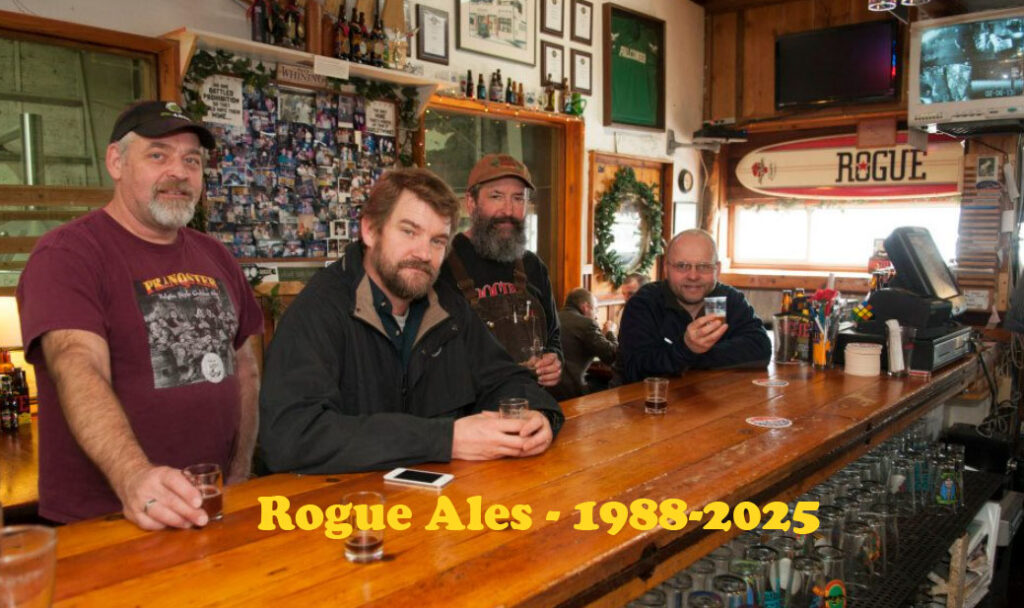
36. Rogue Ales – Newport, OR
Rogue Ales, started in 1988, brews Dead Guy Ale and innovative offerings. The Newport headquarters features a brewpub and distillery. Independent, it emphasizes daring recipes and sustainability.

37. Gordon Biersch Brewing – San Jose, CA
Gordon Biersch Brewing, founded in 1987, specializes in German-style lagers like Märzen. The San Jose facility produces for distribution, emphasizing purity laws. Independent, it focuses on traditional crafts.

38. Revolution Brewing – Chicago, IL
Revolution Brewing, established in 2010, produces Anti-Hero IPA and barrel-aged beers. The Chicago facilities include a brewpub and taproom. Independent, it’s Illinois’ largest craft brewery.

39. Three Floyds Brewing – Munster, IN
Three Floyds Brewing, founded in 1996, is known for Zombie Dust and Dark Lord. The Munster brewery plans a 2024 taproom reopening. Independent, it emphasizes bold, innovative brews.

40. Karl Strauss Brewing – San Diego, CA
Karl Strauss Brewing, started in 1989, pioneered San Diego craft with Red Trolley Ale. Multiple brewpubs offer tours and innovative beers. Independent, it’s a Southern California staple.

41. Georgetown Brewing – Seattle, WA
Georgetown Brewing, founded in 2002, produces Manny’s Pale Ale and Bodhizafa IPA. The Seattle brewery offers tastings and growlers. Independent, it focuses on sessionable crafts.

42.  Uinta Brewing – Salt Lake City, UT
Uinta Brewing, established in 1993, brews Cutthroat Pale Ale and seasonal offerings. The Salt Lake City brewery emphasizes sustainability. Acquired by Utah Brewers Cooperative in 2022, it remains local-focused

43. Wachusett Brewing – Westminster, MA
Wachusett Brewing, founded in 1994, is known for Blueberry Ale and Green Monsta IPA, brewed with local ingredients. The Westminster facility offers a taproom, tours, and events, emphasizing New England charm. Independent, it’s a Massachusetts favorite focused on community and quality.

44. Full Sail Brewing – Hood River, OR
Full Sail Brewing, established in 1987, produces Session Lager and Amber Ale in the scenic Columbia River Gorge. The Hood River brewery features a pub, tours, and sustainable practices like water conservation. Employee-owned, it’s a pioneer of Oregon’s craft beer scene.

45. Modern Times Beer – San Diego, CA
Modern Times Beer, founded in 2013, is known for hazy IPAs like Orderville and vegan-friendly brews. The San Diego brewery offers a taproom and bold, artistic branding. Independent until its 2022 acquisition by Craft ‘Ohana, it emphasizes innovation and sustainability.

46. North Coast Brewing – Fort Bragg, CA
North Coast Brewing, started in 1988, produces Old Rasputin Stout and Scrimshaw Pilsner with a focus on quality. The Fort Bragg brewpub offers tours, a taproom, and jazz events. Independent, it supports conservation through beer sales.

47. Lost Coast Brewery – Eureka, CA
Lost Coast Brewery, founded in 1990, brews Great White and Tangerine Wheat in a historic Eureka setting. The brewery features a taproom and distributes widely with a focus on bold flavors. Independent, it’s a Humboldt County staple.

48. Saint Arnold Brewing – Houston, TX
Saint Arnold Brewing, established in 1994, is Texas’ oldest craft brewery, known for Amber Ale and Art Car IPA. The Houston beer garden offers tours, food, and a vibrant atmosphere. Independent, it emphasizes local pride and innovative brews.

49. Bear Republic Brewing – Cloverdale, CA
Bear Republic Brewing, founded in 1995, produces Racer 5 IPA and Hop Rod Rye before its 2023 closure and revival under new ownership. The Cloverdale brewpub focused on bold, hoppy beers and pub fare. Now rebuilding, it aims to reclaim its craft legacy.

50. Left Hand Brewing Company – Longmont, CO
Left Hand Brewing, started in 1993, is renowned for Milk Stout Nitro and Sawtooth Ale. The Longmont brewery offers a taproom, tours, and sustainable practices like water treatment. Independent, it’s a Colorado craft leader with a focus on community.

2025 Top 50 Craft Breweries by Volume
1. D.G. Yuengling & Son – Pottsville, PA
2. Boston Beer Co. – Boston, MA
3. Sierra Nevada Brewing – Chico, CA
4. Tilray Brands – Atlanta, GA
5. Duvel Moortgat USA – Kansas City, MO
6. Gambrinus – Shiner, TX
7. Artisanal Brewing Ventures – Downingtown, PA
8. Athletic Brewing – Milford, CT
9. Monster Brewing Co. – Longmont, CO
10. Brooklyn Brewery – Brooklyn, NY
11. Dogfish Head Craft Brewery – Milton, DE
12. Deschutes Brewery – Bend, OR
13. New Glarus Brewing – New Glarus, WI
14. Georgetown Brewing – Seattle, WA
15. Minhas Craft Brewery – Monroe, WI
16. Rhinegeist Brewery – Cincinnati, OH
17. Craft ‘Ohana – San Diego, CA
18. Great Lakes Brewing – Cleveland, OH
19. Matt Brewing – Utica, NY
20. Harpoon Brewery – Boston, MA
21. Odell Brewing – Fort Collins, CO
22. Stevens Point Brewery – Stevens Point, WI
23. Abita Brewing – Abita Springs, LA
24. Summit Brewing – St. Paul, MN
25. August Schell Brewing – New Ulm, MN
26. Troëgs Brewing – Hershey, PA
27. 21st Amendment Brewery – Bay Area, CA
28. Allagash Brewing – Portland, ME
29. Shipyard Brewing – Portland, ME
30. Revolution Brewing – Chicago, IL
31. Long Trail Brewing – Bridgewater Corners, VT
32. Narragansett Brewing – Providence, RI
33. Surly Brewing Company – Minneapolis, MN
34. Three Floyds Brewing – Munster, IN
35. Karl Strauss Brewing – San Diego, CA
36. Fiddlehead Brewing – Shelburne, VT
37. Rogue Ales – Newport, OR
38. Pizza Port Brewing – Carlsbad, CA
39. Ninkasi Brewing – Eugene, OR
40. North Coast Brewing – Fort Bragg, CA
41. Saint Arnold Brewing – Houston, TX
42. Uinta Brewing – Salt Lake City, UT
43. Left Hand Brewing Company – Longmont, CO
44. Full Sail Brewing – Hood River, OR
45. Wachusett Brewing – Westminster, MA
46. New Trail Brewing – Williamsport, PA
47. Zero Gravity Craft Brewery – Burlington, VT
48. Fat Head’s Brewery – Middleburg Heights, OH
49. Lost Coast Brewery – Eureka, CA
50. Creature Comforts Brewing – Athens, GA

Top 10 Beer Festivals in America plus a few more: Click Here!

Filed Under: Beer, breweries

The History of Anderson Valley Brewing Company: Pioneers of Craft Beer in California’s Anderson Valley

August 3, 2025 by Dow Scoggins

History of Anderson Valley Brewing
Photo Credit: Anderson Valley Brewing Company

Nestled in the picturesque Anderson Valley of Mendocino County, California, Anderson Valley Brewing Company (AVBC) has etched its name into the annals of American craft beer history. Known for its balanced ales, innovative sours, and unwavering commitment to sustainability, AVBC stands as a testament to the craft beer revolution that began in the late 20th century. From humble beginnings in a small brewpub to becoming a solar-powered powerhouse, here’s a comprehensive look at the brewery’s journey.

Founding and Early Years: The Birth of a Craft Pioneer
Anderson Valley Brewing Company was established on December 26, 1987, in the quaint town of Boonville, California. Founded by Ken Allen, his wife Kim Allen, and David Norfleet—who designed the original brewhouse—the company emerged during a time when craft brewing was still a nascent industry. At its inception, AVBC was one of only about 20 craft breweries operating in the United States, making it a true pioneer in the movement.

The brewery started modestly in a 10-barrel brewhouse located in the lower level of The Buckhorn Saloon, a local brewpub that doubled as the company’s initial headquarters. In its first year, AVBC produced around 600 barrels of beer, focusing on traditional styles like ales, porters, and stouts. The name “Anderson Valley” pays homage to its location, and the brewery’s iconic mascot—a mythical bear-deer hybrid called the “Boont” (short for Boontling, a local dialect)—draws from regional folklore, adding a unique cultural flair to its branding.
Early distribution efforts included selling kegs to notable spots like the Toronado bar in San Francisco, which opened the same year and helped introduce AVBC’s beers to a broader audience. By the mid-1990s, the brewery had introduced flagship beers such as Boont Amber Ale, Poleeko Pale Ale, Barney Flats Oatmeal Stout, and Hop Ottin’ IPA, which quickly gained a loyal following for their balanced flavors.


Expansion and Growth: Scaling Up in the Valley

As demand for AVBC’s award-winning beers surged, the brewery outgrew its original setup. In 1995–1996, the company relocated to a new 28-acre (later expanded to 30-acre) facility at the intersection of Highways 128 and 253, just a mile from downtown Boonville. This site, dubbed “Beer Park,” featured a 30-barrel brewhouse and a 12-ounce bottling line, boosting production to 15,000 barrels annually by 1998.

A major milestone came in 1998 with the construction of a three-story Bavarian-style brewhouse, incorporating salvaged 100-barrel and 85-barrel copper “onion dome” kettles from defunct German breweries. Operational by August 2000, this expansion allowed AVBC to innovate further. In 2004, after selling The Buckhorn Saloon, the brewery opened a dedicated tasting room at Beer Park, complete with a beer garden, outdoor music stage, lounge lawn, and the world’s first 18-hole disc golf course at a brewery.
The brewery also launched the annual Boonville Beer Festival in 1997, which has raised over $1.75 million for local charities by 2020, solidifying AVBC’s role in the community. Production continued to climb, reaching about 55,000 barrels by 2016.

Ownership Changes: Evolving Leadership
AVBC’s ownership has transitioned several times, reflecting the dynamic nature of the craft beer industry. In April 2010, founder Ken Allen sold the brewery to Trey White, a former executive at United States Beverage, along with two silent partners. This era saw the return of Fal Allen as brewmaster in September 2010, who had previously served from 2000 to 2004. Under White’s leadership, AVBC expanded its barrel-aged and sour beer programs.

In December 2019, the brewery was acquired by the McGee Family, with Kevin McGee—a veteran in the beer and wine industries—appointed as President and CEO. This period emphasized sustainability and innovation.

Most recently, in March 2025, AVBC was sold to local entrepreneur Jason McConnell, who brings extensive experience from the wine industry, including co-founding Rivino Estate Vineyard and Winery in 2008. McConnell aims to usher in an era of rejuvenation, leveraging Beer Park’s destination appeal with its music venue and disc golf course while preserving the brewery’s quality standards.

Anderson Valley Brewing
Photo Credit: Anderson Valley Brewing Company

Innovations and Notable Products: Pushing Beer Boundaries
AVBC has been at the forefront of beer innovation. In 2011, an exclusive partnership with a leading bourbon maker birthed the Bourbon Barrel Series, featuring beers like Bourbon Barrel Stout, Salted Caramel Porter, and Huge Arker Imperial Stout. A 2012 collaboration with Wild Turkey further elevated this line.
In 2013, the brewery revived the ancient gose style—a tart, salty German wheat beer—releasing The Kimmie, The Yink, & The Holy Gose in 2014 as the first year-round canned gose in the U.S. This sparked a gose renaissance, with variations like Blood Orange, Briney Melon, Cherry, and G&T Gose following.
The barrel-aging program expanded to wine barrel-aged sours, ranging from light Horse Tongue Wheat to robust Gatlin Damnosus Sour Barleywine. Other offerings include Belgian-style Brother David’s Double and Triple, Heelch O’Hops Imperial IPA, and seasonal Solstice beers.

AVBC’s excellence has earned numerous accolades, including gold medals at the Great American Beer Festival and World Beer Cup for beers like Barney Flats Stout, Brother David’s Double, and Holy Gose (2022). Esquire magazine even hailed Boont Amber Ale as one of the “Best Canned Beers to Drink Now” in 2012.

Sustainability and Community Impact: Brewing with Purpose
From its early days, AVBC has prioritized environmental stewardship. In 2005, it became the world’s first solar-powered brewery, with photovoltaic arrays supplying nearly half its electricity. The company operates a self-contained water system, treating and reusing 100% of wastewater for irrigation on its property. A nitrogen generator cuts CO2 usage by up to 80%, and all packaging is plastic-free aluminum and cardboard, reducing trucking needs by 60% compared to glass. Spent grains and yeast feed local cattle, closing the loop on waste.
This philosophy aligns with AVBC’s community focus, evident in the Boonville Beer Festival and its role as a destination brewery amid redwood forests and rolling hills.

Current Status: A Legacy in Motion
As of 2025, under Jason McConnell’s ownership, AVBC continues to thrive on its 30-acre Beer Park, blending tradition with innovation. With a portfolio of balanced, complex beers and a dedication to sustainability, the brewery remains a beacon for craft beer enthusiasts. From its pioneering roots in 1987 to its modern eco-conscious operations, Anderson Valley Brewing Company exemplifies how passion and perseverance can brew lasting success.


Top 10 Beer Festivals in America plus a few more: Click Here!

Filed Under: Beer, breweries

  • « Go to Previous Page
  • Page 1
  • Interim pages omitted …
  • Page 4
  • Page 5
  • Page 6
  • Page 7
  • Page 8
  • Interim pages omitted …
  • Page 11
  • Go to Next Page »

Primary Sidebar

Follow us

  • Email
  • Facebook
  • Instagram
  • Twitter
  • YouTube

2025 U.S. Open Beer Championship  
Medal Winners

 
2024 U.S. Open Cider Championship  
Medal Winners

Archives

  • March 2026
  • February 2026
  • January 2026
  • December 2025
  • November 2025
  • October 2025
  • September 2025
  • August 2025
  • July 2025
  • June 2025
  • May 2025
  • April 2025
  • March 2025
  • February 2025
  • January 2025
  • December 2024
  • November 2024
  • October 2024
  • September 2024
  • August 2024
  • July 2024
  • May 2024
  • April 2024
  • March 2024
  • November 2023
  • October 2023
  • August 2023
  • July 2023
  • June 2023
  • May 2023
  • April 2023
  • October 2022
  • May 2022
  • February 2022
  • January 2022
  • June 2021
  • March 2021
  • December 2020
  • September 2020
  • August 2020
  • July 2020
  • June 2020
  • February 2020
  • November 2019
  • February 2019
  • May 2018
  • April 2018

Copyright © 2026 · BeerInfo.com. All Rights Reserved.