• Skip to secondary menu
  • Skip to main content
  • Skip to primary sidebar

Beer Info

Beer News, Beer Releases and New Breweries

  • Home
  • Top 10 Beers
    • Ales
    • Lagers
    • Barrel Aged
    • Hybrid
    • Specialty
  • GABF
    • 2024 GABF
    • 2023 GABF
    • 2021 GABF
    • 2022 GABF
    • 2020 GABF
    • 2019 GABF
    • 2018 GABF
    • 2017 GABF
    • 2015 GABF
    • 2014 GABF
    • 2013 GABF
    • 2012 GABF
    • 2011 GABF
    • 2010 GABF
    • 1987 GABF
  • World Beer Cup
    • 2025 World Beer Cup
    • 2022 World Beer Cup
    • 2018 World Beer Cup
    • 2016 World Beer Cup
    • 2014 World Beer Cup
    • 2012 World Beer Cup
    • 2010 World Beer Cup
    • 2008 World Beer Cup
    • 2006 World Beer Cup
    • 2004 World Beer Cup
    • 2002 World Beer Cup
    • 2000 World Beer Cup
    • 1998 World Beer Cup
    • 1996 World Beer cup
  • U.S. Open
    • 2022 U.S. Open
    • 2021 U.S. Open
    • 2020 U.S. Open
    • 2019 U.S. Open
    • 2018 U.S. Open
    • 2017 U.S. Open
    • 2016 U.S. Open
    • 2015 U.S. Open
    • 2014 U.S. Open
    • 2013 U.S. Open
    • 2012 U.S. Open
    • 2011 U.S. Open
    • 2010 U.S. Open
    • 2009 U.S. Open
  • U.S. Open Cider
    • 2021 U.S. Open Cider
    • 2020 U.S. Open Cider
    • 2019 U.S. Open Cider
    • 2018 U.S. Open Cider
    • 2017 U.S. Open Cider
    • 2016 U.S. Open Cider
    • 2015 U.S. Open Cider
  • More
    • Schools
      • United States
      • Canada
      • Europe
    • Writers
      • Edwin Arnaudin
        • Zebulon Artisan Ales
        • Highland Brewing
      • Morgan Forsyth
      • Paul Leone
      • Austin Foster
      • Anne-Fitten Glenn
    • Books
      • Starting a Brewery
      • Homebrew
      • History
      • Fun & Games
    • Fun Facts

Archives for September 2025

National Pumpkin Day and the History of Pumpkin Beer

September 2, 2025 by Dow Scoggins

NATIONAL PUMPKIN DAY and the History of Pumpkin Beer

We recognize a favored autumn decoration and food on October 26th that is used in a variety of recipes, competitions, and festivals. It’s National Pumpkin Day!

By October 26th, we in a frenzy of pumpkin obsession. We cannot wait for the big November holiday for pumpkin pie.  No siree, we need pumpkin everything! Bars, cookies, coffee, cheesecake, pasta and oatmeal.  Pumpkin Chunkin’, pumpkin patches, festivals, bake-offs and television specials. Let’s not forget jack-o-lantern carving, too! This fruit grabs American’s attention.

As it should be.  This squash is native to  North America. The oldest evidence of pumpkin-related seeds dates back to somewhere between 7000 and 5500 BC to seeds found in Mexico.

The word pumpkin originates from the word pepon, which means “large melon” in Greek.

Within recent years, white pumpkins have become more popular in the United States. The United States produces 1.5 billion pounds of pumpkins, with Illinois producing more than any other state.

A 2,145-pound pumping from Streator, Illinois holds the current North American record.  Grown by Gene McMullen in 2015, the great pumpkin weighed in a few hundred pounds lighter than the current world record pumpkin from 2014.  At 2,323-pounds, the giant pumpkin from Switzerland retains the world record prize.

Canned pumpkin may be recommended by veterinarians as a dietary supplement for dogs and cats that are experiencing certain digestive ailments.

Raw pumpkin can be fed to poultry as a supplement to their regular feed during the winter months to help maintain egg production.

The History of Pumpkin Beer: From Colonial Necessity to Modern Craft Staple
Pumpkin beer, now a quintessential fall seasonal in the American craft beer landscape, has roots deeply embedded in early colonial history. What began as a practical solution to ingredient shortages evolved into a beloved (and sometimes divisive) style that reflects broader trends in brewing innovation.

Colonial Beginnings: The Pilgrims and Early Settlers (17th Century)
The story of pumpkin beer starts with the Pilgrims and other early European settlers in North America. Upon arriving in the New World in the early 1600s, colonists faced challenges in brewing traditional beers due to the scarcity and high cost of barley malt, which was often imported from Europe. Pumpkins, native to the Americas and abundant in the region, became a readily available substitute for fermentable sugars. By the 17th century, settlers had adapted brewing techniques to incorporate pumpkin flesh, which was mashed and fermented in place of malt, resulting in a rustic, earthy ale. This wasn’t the spiced, pie-like beer we know today; historical versions were more about survival and necessity than flavor enhancement.

Beer played a crucial role in Pilgrim life, serving as a safer alternative to contaminated water, and pumpkin-based brews were part of this tradition. Pumpkins had been introduced to Europe by the 16th century, but it was in the colonies where they became a brewing staple, often referred to as “pompion” in old texts. These early beers were simple ferments, sometimes combined with other local ingredients like persimmons or molasses.

The 18th Century: Peak Popularity and Notable Recipes
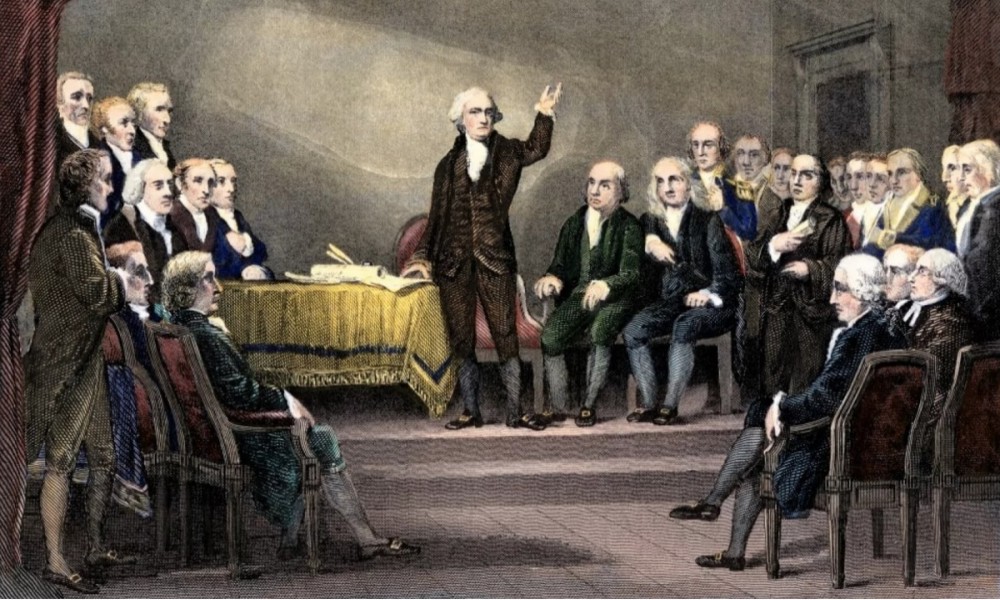
Pumpkin beer remained a common household brew throughout the 18th century. One of the most frequently cited recipes dates to 1771, from the American Philosophical Society, which instructed brewers to boil pumpkin, mix it with hops, and ferment it—yielding a beverage more akin to a basic ale than a flavored specialty. Founding Fathers like George Washington were known to experiment with pumpkin or squash in their homebrewing, further embedding the style in American lore. However, as barley cultivation improved and imports became more reliable, pumpkin’s role diminished, leading to a gradual decline in its use by the late 18th and early 19th centuries.

Decline and Dormancy (19th to Mid-20th Century)
By the 19th century, with industrialization and better access to grains, pumpkin beer faded into obscurity. It was no longer a necessity, and brewing shifted toward European-style lagers and ales that didn’t rely on local substitutes. The style survived mostly in folklore and occasional homebrew experiments, but it wasn’t commercially prominent. Prohibition in the 1920s further stifled any remnants of creative brewing traditions in the U.S.

Revival in the Craft Beer Era (Late 20th Century Onward)
The modern resurgence of pumpkin beer can be traced to the 1980s craft beer revolution. In 1985, Bill Owens, founder of Buffalo Bill’s Brewery in Hayward, California, brewed what is widely regarded as the first commercial pumpkin beer of the modern era. Inspired by historical accounts of George Washington’s brewing, Owens mashed pumpkins into the wort and added spices like cinnamon, nutmeg, and cloves—evoking pumpkin pie flavors that would define the contemporary style. This innovation helped kickstart seasonal brewing trends and contributed to the broader craft beer movement by encouraging experimentation with unconventional ingredients.

By the 1990s and 2000s, other breweries followed suit. Elysian Brewing in Seattle became famous for its pumpkin ales, hosting annual festivals, while brands like Dogfish Head and Southern Tier popularized imperial versions like Punkin Ale and Pumking. The style exploded in popularity, with sales peaking in the fall and often featuring bold spicing, though some purists argue it strays from historical authenticity.

Pumpkin Beer Today: A Seasonal Phenomenon
As of 2025, pumpkin beer remains a polarizing yet enduring fixture in the craft beer world, with hundreds of variations released annually. Craft breweries have expanded the category to include barrel-aged, sour, and even non-alcoholic options, reflecting consumer demand for novelty. However, backlash against “pumpkin spice everything” has led some brewers to focus on subtler, vegetable-forward interpretations. Despite debates over its taste—loved for its cozy, autumnal vibe or loathed as overly commercial—pumpkin beer’s journey from Pilgrim necessity to craft icon underscores America’s innovative brewing heritage.
Filed Under: Beer, breweries

Great American Beer Festival 2025: America’s Premier Beverage Event

September 1, 2025 by Dow Scoggins

Great American Beer Festival

Great American Beer Festival 2025: America’s Premier Beverage Event

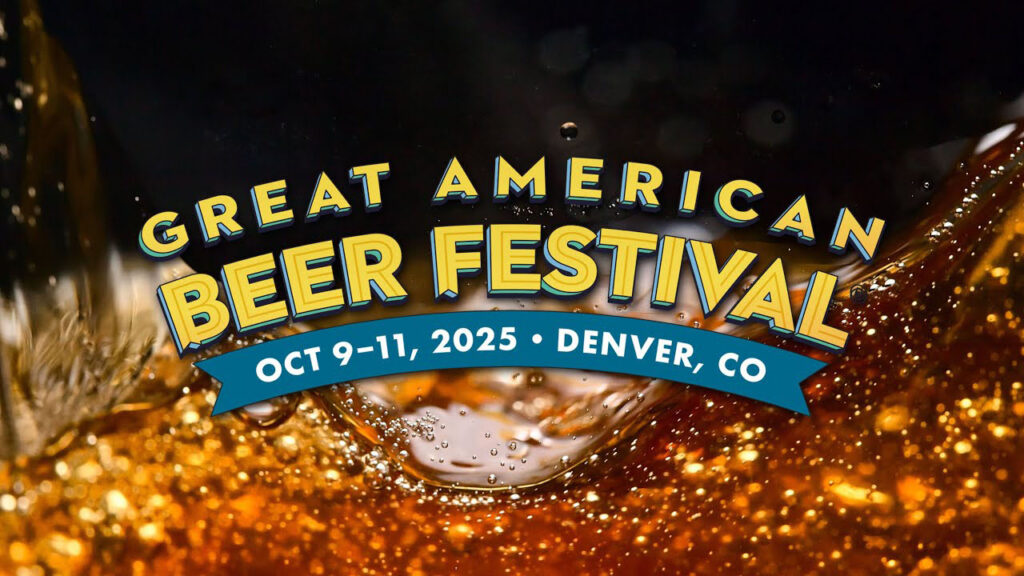
The 2025 Great American Beer Festival (GABF), hosted by the Brewers Association, takes place October 9–11 at the Colorado Convention Center in Denver. As the largest beer festival in the U.S., GABF showcases thousands of craft beers, ciders, seltzers, and other beverages, alongside a prestigious competition for independent craft breweries. Tickets are available now!

What’s New for 2025

This year introduces the Distilling Experience, featuring 20 distilleries offering 0.25-ounce samples of whiskey, vodka, gin, and more. Alongside beer, attendees can explore ready-to-drink cocktails, hard kombucha, cider, and zero-proof beverages.

The festival includes themed experience areas, such as:

  • Prost! – German biergarten vibes

  • Score! – Sports-themed zone

  • Fright – Halloween-inspired setup

  • Blast Off – Focus on beyond-beer drinks

  • Chill – Relaxed backyard hangout with live music

  • Meet the Brewer – Connect directly with craft brewers

  • Mile High Stage – New for 2025, featuring live music and contests

Why Brewers Attend

GABF is a key platform for breweries to showcase innovation and connect with beer enthusiasts. The GABF competition awards medals across over 100 categories, often boosting winners’ sales and visibility. It’s also a networking hub for small breweries to engage with peers nationwide.

PAIRED Program

The PAIRED beer-and-food experience pairs small plates from top chefs with limited-release beers and cocktails. A separate ticket is required for this event.

Ticket Information

  • General Session: $85 (Thursday, October 9), $95 (Friday, October 10 or Saturday, October 11)

  • Three-Day Pass: $220

  • PAIRED: $129 (standalone) or $199 (combined with GABF session)

Why Fans Love GABF

Beer enthusiasts flock to GABF to sample diverse styles from across the U.S., often including new and limited-release brews. The festival also offers themed entertainment, live music, silent discos, and costume contests.

Why It Matters

GABF remains the ultimate celebration of American craft brewing, offering brewers and fans alike a unique opportunity to explore and celebrate the industry. Secure your tickets now for this unparalleled event!

Great American Beer Festival History
The Great American Beer Festival (GABF), launched in 1982 in Boulder, Colorado, by nuclear engineer and homebrewing enthusiast Charlie Papazian, emerged as a pioneering celebration of American craft beer. Initially a modest event with 24 breweries, 47 beers, and 800 attendees, it was born from Papazian’s vision to showcase the burgeoning craft beer movement. Held under the auspices of the Brewers Association (then the American Homebrewers Association), the festival aimed to elevate small-scale brewing, spotlighting innovative flavors and techniques. By bringing together brewers and beer lovers, GABF laid the groundwork for a cultural shift, transforming beer from a mass-produced commodity into an artisanal craft, fostering a community that valued quality and diversity.

Over the decades, GABF has grown into the largest beer festival in the United States, now hosted annually in Denver at the Colorado Convention Center. By 2024, it featured over 2,000 beers from more than 500 breweries, drawing tens of thousands of attendees. The festival’s prestigious competition, judged by industry experts, awards gold, silver, and bronze medals across numerous beer style categories, setting benchmarks for excellence in craft brewing. GABF has not only championed the growth of independent breweries but also influenced global beer trends, making it a cornerstone of American beer culture. Its inclusive, festive atmosphere continues to attract enthusiasts and professionals alike, cementing its legacy as a catalyst for the craft beer revolution.

Filed Under: Beer, Beer Competition

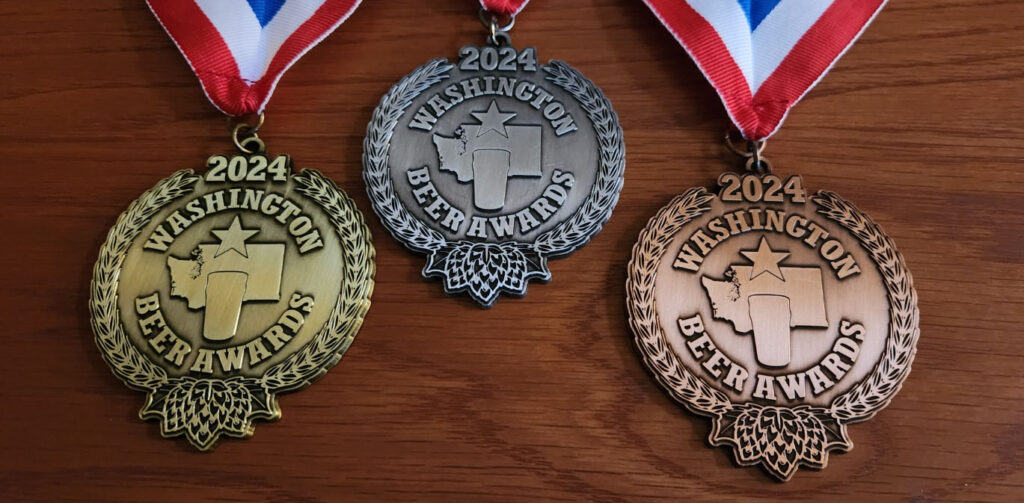
2025 Washington Beer Awards and the 2024 Medal Winners

September 1, 2025 by Dow Scoggins

2025 Washington Beer Awards and the 2024 Medal Winners

The 2025 Washington Beer Awards will take place in September for the main competition and October for the fresh hop category, with gold, silver, and bronze medals awarded to first, second, and third-place winners, respectively. Special awards will also recognize breweries with multiple standout entries. Winners will be announced and medals presented at a ceremony held alongside a prominent beer event, such as the Washington Brewers Festival or Washington Craft Beer Summit, amplifying the celebration of the state’s craft beer excellence.

This competition is the longest-running organizers of major beer competitions in the Northwest, the event is led by Master Judge-certified professionals who ensure a rigorous and fair evaluation process. This prestigious competition brings together Washington’s top judging talent to honor the finest beers in the state, highlighting the skill and innovation of its breweries. From crisp lagers to bold fresh hop ales, the Washington Beer Awards continues to elevate the region’s vibrant craft beer community.

2024 Washington Beer Awards Medal Winners

Light German-Style Lagers:
Gold: Larrabee Lager Company – Larrabee Original Lager
Silver: Chuckanut Brewery – Chuckanut Fest Bier
Bronze: Kulshan Brewing Co. – K2 – Helles

German-Style Pilsners:
Gold: E9 Brewing Co – T-Dome Pilsner
Silver: Fortside Brewing Company – Fortside Pilsner
Bronze: Farmstrong Brewing Co. – Skagit Pilsner

German-Style Oktoberfests/Wiesns:
Gold: Brick West Brewing – Festbier
Silver: Brothers Cascadia Brewing – Festbier
Bronze: Urban Family Brewing Co – Test Fest

German-Style Maerzens:
Gold: Garland Brew Werks – Oktoberfest
Silver: Heathen Brewing – Marzen Invaders
Bronze: Formula Brewing – Jacob Two Tree’s

German-Style Schwarzbiers:
Gold: The Good Society Brewery & Public House – Schwarzbier
Silver: Flying Lion Brewing – Small But Tiny Dark Lager
Bronze: Bellevue Brewing Co. – Bellevue Brewing Schwarzbier

Other European Amber & Dark Beers:
Gold: Four Generals Brewing – Alt Bier
Silver: San Juan Island Brewing Company – The Late Boat Czech Dark Lager
Bronze: Obec Brewing – Czech Dark Lager

Bohemian-Style Pilsners:
Gold: Chuckanut Brewery – Chuckanut Pilsner
Silver: Wander Brewing – Czech Pils
Bronze: Stemma Brewing – Stemma Pils

Vienna-Style Lagers:
Gold: Grains Of Wrath Brewing – Vienna Lager
Silver: Uprise Brewing Co – Vienna Lager
Bronze: Obec Brewing – Granat

American-Style Light Lagers:
Gold: Sound 2 Summit Brewing – Boat Beer
Silver: Varietal Beer Company – Moxee Light
Bronze: Heathen Brewing – Heathen Light

American-Style Lagers:
Gold: Western Red Brewing – Little Tugger Lager
Silver: Distant West – American Lager
Bronze: Recluse Brew Works, LLC – RBW LAGER BEER

Contemporary American-Style Lager:
Gold: Hellbent Brewing – Tobogan Mexican Lager
Silver: Here Today Brewery & Kitchen – Lightning Harp
Bronze: Stoup Brewing – Cervecita

American-Style Pilsners:
Gold: Single Hill Brewing Company – Adams Pils
Silver: Reuben’s Brews – Pilsner
Bronze: Bellevue Brewing Co. – Bellevue 1882 Lager

Contemporary American-Style Pilsners:
Gold: Single Hill Brewing Company – Super Delicious
Silver: Recluse Brew Works, LLC – Faceless Commodity
Bronze: Farmstrong Brewing Co. – Skagit Pilsner

American-Style India Pale Lagers:
Gold: Trap Door Brewing – Day Beer
Silver: Old Stove Brewing Gardens – Neighborhood Chill
Bronze: Stoup Brewing-Capitol Hill – Mixtape Romeo

Other American-Style Lagers:
Gold: Halcyon Brewing Co. – Midnight Coterie
Silver: Lucky Envelope Brewing – Yinz Jawn Pennsylvania Lager
Bronze: Single Hill Brewing Company – Flight Cancelled

Australasian, Latin American or Tropical-Style Light Lagers:
Gold: Diamond Knot Brewing Company – Cantina
Silver: Boundary Bay Brewery – Van Zandt
Bronze: Wander Brewing – See You Tomorrow

International-Style Pilseners:
Gold: Maelstrom Brewing Company – Pilsner
Silver: Recluse Brew Works, LLC – Ugly Mug
Bronze: Project 9 Brewing – Floating Lotus

Strong Lagers:
Gold: Airways Brewing – Bockbier
Silver: DYSTOPIAN STATE BREWING CO – High Command
Bronze: Formula Brewing – Daydream Stream

Kellerbiers or Zwickelbiers:
Gold: Formula Brewing – Bootup Sequence
Silver: Valholl Brewing – Zwickel Pilsner
Bronze: Larrabee Lager Company – Keller Pils

German-Style Kölsches:
Gold: Dru Bru – Kolsch
Silver: Moment Brewing – Kolsch
Bronze: Sound 2 Summit Brewing – Kiteboard Kolsch

German-Style Wheat Beers:
Gold: Brick West Brewing – Big Heart
Silver: Larrabee Lager Company – White Duck
Bronze: Kulshan Brewing Co. – K2 – Hefeweizen

Rye and American Wheat Beers:
Gold: Barrel Mountain Brewing – Be Happy
Silver: White Bluffs Brewing – Rock N Brown
Bronze: Mac & Jack’s Brewing Company – Serengeti Wheat

Golden or Blonde Ales:
Gold: Elliott Bay Brewing – Organic Boat Beer
Silver: Valholl Brewing – Golden Warrior
Bronze: Logan Brewing Company – Easy Mode

English-Style Bitters:
Gold: Obec Brewing – English Bitter
Silver: Rainy Daze Brewing – Test Drive Amber
Bronze: Vice Beer – AT-AT ESB

English Ales:
Gold: Kulshan Brewing Co. – Sunnyland – Transporter
Silver: Georgetown Brewing Co – Manny’s
Bronze: Loowit Brewing Company – Shadow Shinobi

Irish-Style Red Ales:
Gold: Kulshan Brewing Co. – Sunnyland – Red Cap
Silver: Silver City Brewery – Ridgetop Red
Bronze: WHISTLE PUNK BREWING – Irish Red Ale

Scottish Ales:
Gold: Silver City Brewery – The Magnificent Scotch Ale
Silver: Outer Planet Brewing – Falcon Wee Heavy
Bronze: Sound 2 Summit Brewing – Sail Away Scotch Ale

Cream Ales:
Gold: Lucky Envelope Brewing – Mexican Lager (Insert Snarky Style Comment Here)
Silver: Varietal Beer Company – Two Wolves
Bronze: Resonate Brewery – Mexican Radio

International & Australasian Ales:
Gold: Grains Of Wrath Brewing – Wastelandia
Silver: Scuttlebutt Brewing Company – Option 42 Pale Ale
Bronze: Postdoc Brewing – Finest Decision XPA

British & American Strong Ales:
Gold: Grains Of Wrath Brewing – Geezer’s Paradox
Silver: San Juan Island Brewing Company – King Tide Barleywine
Bronze: Brothers Cascadia Brewing – Barleywine

Robust Porters:
Gold: White Bluffs Brewing – Shadows Of Temptation
Silver: Reuben’s Brews – Robust Porter
Bronze: Georgetown Brewing Co – 9 Pound

American-Style Stout:
Gold: Top Rung Brewing Company – My Dog Scout Stout
Silver: Old Stove Brewing – Dark Passage
Bronze: Stoup Brewing-Capitol Hill – Stoup American Stout

British Stouts:
Gold: Kulshan Brewing Co. – Sunnyland – Echoes In Time
Silver: Rainy Daze Brewing – Haulin Oats Stout
Bronze: Ten Pin Brewing – Snake Eye Stout

Irish Stouts:
Gold: Barrel Mountain Brewing – Starway
Silver: Elysian Brewing Co – Dragonstooth
Bronze: Hat Trick Brewing – Stouty McStouterson

American-Style Imperial Porters & Imperial Stouts:
Gold: Loowit Brewing Company – Shimmergloom
Silver: Big Barn Brewing – Black Dog Stout
Bronze: Ten Pin Brewing – Black Eyed Katy

American-Style Pale Ales:
Gold: Grains Of Wrath Brewing – Papermaker
Silver: Georgetown Brewing Co – Johnny Utah
Bronze: Stoup Brewing – N Zed Pale

Juicy or Hazy Pale Ales:
Gold: Humble Abode Brewing – Life Juice
Silver: Old Stove Brewing Gardens – Fight The Good Fight
Bronze: Icicle Brewing Company – Little Giant

American-Style Strong Pale Ales:
Gold: Hellbent Brewing – Dang! Citra IPA
Silver: Single Hill Brewing Company – Eastside
Bronze: Resonate Brewery – Atomic Punk

Juicy or Hazy Strong Pale Ales:
Gold: Irrelevant Beer – Psychedelic Therapy
Silver: Trap Door Brewing – Glowed Up
Bronze: Old Stove Brewing – No One Knows

American-Style Amber/Red Ales:
Gold: Old Stove Brewing Gardens – Amber Waves
Silver: Stemma Brewing – First Amber
Bronze: Terramar Brewstillery – Amber On

Pumpkin Spice Beers:
Gold: Elysian Brewing Co – Night Owl
Silver: Elysian Brewing Co – Great Pumpkin
Bronze: Elliott Bay Brewing – Organic Mashing Pumpkin

American-Style Brown & Black Ales:
Gold: Ladd & Lass Brewing – The Night Is Dark And Full Of Terror
Silver: Fortside Brewing Company – Couve A’licious
Bronze: Ice Harbor Brewing Co. – Bruneau Brown

American-Style India Pale Ales:
Gold: Victor 23 – Imitator
Silver: Sound 2 Summit Brewing – Apex IPA
Bronze: Kulshan Brewing Co. – Sunnyland – Bastard Kat

West Coast-Style India Pale Ales:
Gold: Barrel Mountain Brewing – Unplug
Silver: Hellbent Brewing – Hop For Teacher IPA
Bronze: Uprise Brewing Co – Lucid Portal

Juicy or Hazy India Pale Ales:
Gold: Icicle Brewing Company – Enchantments
Silver: Sound 2 Summit Brewing – Ice Axe
Bronze: Wet Coast Brewing Co. – Mixtape For 1

Imperial or Double India Pale Ales:
Gold: Single Hill Brewing Company – Mind Plant
Silver: Bale Breaker Brewing Company – Bottomcutter IIPA
Bronze: Taneum Creek Brewing – Never Lift

Juicy or Hazy Imperial or Double India Pale Ales:
Gold: Trap Door Brewing – Juiced Up
Silver: Reuben’s Brews Taproom – Supernova
Bronze: White Bluffs Brewing – Super NOG

Belgian-Style Witbiers:
Gold: Genus Brewing & Supply – “Erinaceus” (Genus Of The Hedgehog) V.4 Witbier
Silver: Hellbent Brewing – Wit
Bronze: Ghost Runners Brewery – Phantom Blanca

Belgian & Belgian Inspired Ales:
Gold: The Good Society Brewery & Public House – First To Fall
Silver: Dwinell Country Ales – Lookie Loo
Bronze: Echoes Brewing Company – The Golden Blonde

Belgian Strong & Abbey Ales:
Gold: Moment Brewing – Belgian Dark Strong
Silver: White Bluffs Brewing – Monking Around
Bronze: Hat Trick Brewing – Sup Nerds

Belgian & French Farmhouse Ales:
Gold: Lucky Envelope Brewing – LE Saison
Silver: E9 Brewing Co – Vital Transformation
Bronze: Humble Abode Brewing – Rye Saison

Chili Pepper Beers:
Gold: Haywire Brewing Co. – Lizzy Enfuego
Silver: Icicle Brewing Company – Cot In The Heat
Bronze: Old Stove Brewing – Ring Of Fire

Brett Beers:
Gold: Dwinell Country Ales – Summer Blush
Silver: Dwinell Country Ales – Fever Dream
Bronze: Dwinell Country Ales – Fuzzword

German Style Sour Beers:
Gold: Kulshan Brewing Co. – K2 – Gose
Silver: Dru Bru – Peach Sour
Bronze: Narrows Brewing – Good 2 Gose

American-Style Sour Ales:
Gold: FrinGe Brewing – Project Stardust
Silver: Ashtown Brewing Co. – Orange-Strawberry Smoothie Sour
Bronze: Beach Cat Brewing – Raspberry Purree

Belgian Sour and Wild Ales:
Gold: Elliott Bay Brewing Lake City Way – Ambrosia Kreik
Silver: North Fork Brewery – Turbo Goes To Rocket
Bronze: Elliott Bay Brewing Lake City Way – DeRode Duivels

American-Style Fruit Beers:
Gold: SnowEater Brewing Co – Rylans Dandy Shandy
Silver: Big Barn Brewing – Strawberry Blonde
Bronze: Narrows Brewing – Peachy Voyage

Fruit Wheat Beers:
Gold: Ice Harbor Brewing Co. – Ice Harbor Tangerine Hefeweizen
Silver: Ten Pin Brewing – Groove Pineapple Wheat Ale
Bronze: Resonate Brewery – Hysberia

Spiced, Field & Herb Beers:
Gold: Machine House Brewery – Stinging Nettle Ale
Silver: Beach Cat Brewing – Christmas In July
Bronze: In The Shadow Brewing – ITS HBL

Pastry Stouts, Coffee & Chocolate Beers:
Gold: Georgetown Brewing Co – Gusto Creme Coffee Ale
Silver: Humble Abode Brewing – Peanut Butter Chocolate Porter
Bronze: Farmstrong Brewing Co. – Mike In The Morning Coffee Porter

Smoke Beers:
Gold: Here Today Brewery & Kitchen – Icarus Phase
Silver: Ladd & Lass Brewing – Short Days, Dark Nights
Bronze: Genus Brewing & Supply – “Clavaria Fumosa” (Genus Of The Smokey Spindles)

Specialty & Historical Beers:
Gold: Taneum Creek Brewing – Wild Goose Chase
Silver: Fremont Brewing – NA IPA
Bronze: Ladd & Lass Brewing – WAtucky Corn Snacks

Session Beers:
Gold: Grains Of Wrath Brewing – Ticklish Warrior
Silver: Formula Brewing – I’ll Say It Once More
Bronze: Logan Brewing Company – Alchemist’s Dilemma

Experimental Beers:
Gold: Rainy Daze Brewing – Mr. Mustachio
Silver: Dru Bru – Experimental IPA #3
Bronze: Elysian Brewing Co – Punkuccino

Wood & Barrel Aged Strong Stouts:
Gold: Matchless Brewing – Thurston County Stout 2023
Silver: Fortside Brewing Company – Bourbon Barrel Aged Night King
Bronze: Uprise Brewing Co – Phases Of The Moon

Other Wood & Barrel Aged Beers:
Gold: Lumberbeard Brewing – Anniversary Year 4
Silver: Echoes Brewing Company – Glutinous Prime
Bronze: Postdoc Brewing – Hogus Maximus Extremis Amburana 2024

Wood & Barrel Aged Sour Beers:
Gold: Dru Bru – Margarita Sour
Silver: Urban Family Brewing Co – Rum Dawn
Bronze: Jellyfish Brewing Company – Birra Chiara

Seltzers:
Gold: Triceratops Brewing Co – Strawberry Lemonade Hard Seltzer
Silver: Timber City Ginger Beer – Imperial Ginger Beer
Bronze: Four Eyed Guys Brewing – Strawberry Basil Hard Seltzer

Pro-Am:
Gold: Reuben’s Brews and Homebrewer Drew Scoggins – Dortmunder
Silver: Beach Cat Brewing and Homebrewers Joe Murphy and Carolyn Macaulay Waldo – Joe’rchata Mexican Cream Ale
Bronze: North 47 Brewing Co and Homebrewer Tristan McCoy – Diet Smoke

Collaboration Beers:
Gold: Scuttlebutt Brewing Company & Sound to Summit Brewing – Bridging The Trestle
Silver: Heathen Brewing & Brothers Cascadia Brewing – Marzen Invaders
Bronze: Ladd & Lass Brewing, Big Time Brewery & Halcyon Brewing – WAtucky Corn Snacks

Very Small Brewery of the Year (Sponsored by Country Malt Group): Dwinell Country Ailes
Small Brewery of the Year (Sponsored by Crosby Hops): Larrabee Lager Company
Mid-Sized Brewery of the Year (Sponsored by Yakima Chief Hops): Grains of Wrath Brewing
Large Brewery of the Year (Sponsored by Briess Malt and Ingredients): Single Hill Brewing Company

History of the Washington State Craft Beer Scene  

The Washington State craft beer scene began to take shape in the late 1970s and early 1980s, catalyzed by the legalization of homebrewing and a growing interest in diverse, flavorful beers. Pioneering breweries like Redhook, founded in Seattle in 1981, and Hale’s Ales, established in 1983, laid the groundwork for a burgeoning industry by introducing bold, innovative brews that contrasted with mass-produced lagers. These early breweries capitalized on Washington’s abundant resources, including high-quality hops from the Yakima Valley, which supplies over 70% of the nation’s hops. By the 1990s, the state’s craft beer culture had gained momentum, with brewpubs and microbreweries popping up in cities like Seattle, Spokane, and Bellingham, fostering a community of brewers and beer enthusiasts eager to experiment with styles ranging from IPAs to porters.

The 21st century saw explosive growth in Washington’s craft beer industry, with the number of breweries climbing from around 50 in 2000 to over 400 by 2025. Events like the Washington Beer Awards and festivals such as the Washington Brewers Festival have elevated the state’s reputation as a craft beer powerhouse. The scene thrives on collaboration, with breweries often partnering on special releases or community events, while taprooms and beer festivals draw locals and tourists alike. Washington’s craft beer culture is defined by its innovation, quality, and deep connection to local ingredients, cementing its status as a leader in the national craft beer movement.

Fun Beer Facts, Breweries and More: Click Here

Filed Under: Uncategorized

The History of Beer in the United States

September 1, 2025 by Dow Scoggins

The History of Beer in the United StatesThe History of Beer and Brewing in the United States
1607 – First shipment of beer arrives in the Virginia colony from England.

1609 – America’s first “Help Wanted” ad appears. The job, a brewer.

1612 – Adrian Block and Hans Christiansen establish the first known brewery in the New World on the southern tip of New Amsterdam (Manhattan).

1640 – The Massachuetts colony passes a regulation the “on one should be allowed to brew beer unless he is a good brewer”

1683 – William Frampton erects the first brewery in Philadelphia on Front Street between Walnut and Spruce at the Dock Street Creek.

1754 – George Washington enters a beer recipe in his notebook.

1762 – “The Theory and Practice of Brewing” by Michael Combrune is published. This is the first attempt to establish rules and principles for the art of brewing.

1799 – George Washington run the largest distillery in the United States.

1810 – There are 120 active breweries in the United States.

1819 – A steam engine built by Thomas Holloway is installed in the brewery of Frances Perot in Philadelphia. This is the first engine to be used in beer production in America.

1826 – American Society for the Promotion of Temperance, also known as the American Temperance Society, is formed in Boston. Three years later it has 100,000 members.

1829 – David G. Yuengling opens a brewery in the Pennsylvania coal town of Pottsville. It continues as the oldest operating brewery in the United States, still owned by the Yuengling family.

1844 – Jacob Best starts a brewery in Milwaukee which later becomes the Pabst Brewing Co.

1849 – August Krug forms a brewery in Milwaukee which evolves into the Schlitz Brewery.

1852 – George Schneider starts a brewery in St. Louis, Missouri. This brewery is the seed of the Anheuser-Busch Brewery.

1856 – The Benedictine Society of Saint Vincent’s Abbey opens a commercial brewery in their Monastery near Latrobe, Pa.

1860 – More than 1,269 breweries produce over one million barrels of beer for a population of 31 million. New York and Pennsylvania account for 85 percent of production.

1861 – Internal Revenue System introduced and in 1862 taxes beer at the rate of one dollar per barrel to help finance the government during the Civil War.

1862 – An Indian uprising caused August Schell to abandon his brewery(Founded 1860) and flee the area. Many white settlers were killed and over 400 homes and buildings burned, but Schell’s brewery remained standing, due to Mrs.Schell’s kindness to the Indians in the years prior to the uprising.

1873, Adolph Coors and the Denver confectioner Jacob Schueler purchased the abandoned Golden City Tannery and converted it to the Golden Brewery. Today, it’s the largest brewery in the world.

1880-1910 – The number of breweries declines from a high of 4,131 in 1873. Improved methods of production and distribution mean fewer breweries can manufacture more beer. By 1910, the number of breweries drops less than 1600.

1900 – Woman’s Christian Temperance Union member Carrie Nation does a hatchet job on the Carey Hotel in Wichita, Kansas.

1910 – There are 1,568 active breweries in the United States. History of Beer

1919 – House of Representatives Bill No. 6810 presented in May by Rep. Andrew Volstead establishing the apparatus for the enforcement of prohibition. The bill was passed Oct. 10, then vetoed by President Woodrow Wilson on Oct. 27. The veto was subsequently overridden by Congressional vote.

1930 – The Crusaders formed to protest the lawlessness, crime, and corruption brought on by Prohibition.

1933 – On Apr. 7 the legalization of beer takes effect via the 21st Amendment repealing the 18th; 31 brewers back in operation by June.  A great day in the history of beer.

1940 – There are 498 active breweries in the United States.

1950 – There are 407 active breweries in the United States.

1951 – Anheuser-Busch of St. Louis builds a new brewery in Newark, starting a trend for expansion of breweries. Two years later the company buys the St. Louis Cardinals.

1954 – Actor Ronald Regan promotes Pabst Blue Ribbon Beer

1959 – Aluminum can introduced by Coors Brewing Company.

1960 – There are 229 active breweries in the United States.

1962 – Pittsburg Brewing introduces the first poptop can. The beer was Iron City.

1965 – Fritz Maytag, of the Maytag appliance family invests in Anchor Brewing Co. in San Francisco. In 1969, he takes over the brewery.

1967 – Meister Brau out of Chicago introduce the first “Lite” beer.

1970 – There are 142 active breweries in the United States.

1977 – The New Albion Brewery will become known as America’s first “Micro Brewery”.

1979 – The Sierra Nevada Brewing Company was established in 1979 and began selling beers in February of by homebrewer Ken Grossman and Paul Camusi.. Boulder Beer was started in Boulder, Colorado.

1980 – There are 82 active breweries in the United States.

1982 – Charlie Papazian, homebrewer starts the Great American Beer Festival in Boulder, Colorado.

1982 – Bert Grant opens the first brewpub in the United States in the modern era in Yakima, Washington.

1983 – In January, 51 brewing concerns are operating 80 breweries. This is the low water mark for breweries in the 20th century. The top six breweries – Anheuser-Busch, Miller, Heileman, Stroh, Coors, and Pabst – control 92 percent of U. S. beer production.

1985 – Jim Koch introduces a beer called Samuel Adams. Samuel Adams Boston Lager debuted at the re-creation of the first battle of the American Revolution, Patriot’s Day 1985. Three months later, it was voted best beer in the United States at the Great American Beer Festival.

1992 – The first batch of Goose Island Bourbon County Stout was brewed.

2000 – Russian River brewmaster Vinnie Cilurzo first brewed Pliny the Elder in 2000, for the first double IPA festival in Hayward, CA.

2001 – More than 1,400 breweries produce more then 6 million barrels of beer.

2009 – More than 1,500 breweries in the USA. More breweries than any country in the world.

2010 – After Anheuser-Busch and Miller got bought by foreign companies, Boston Beer Company becomes the largest American owned Brewery

2013 – D. G. Yuengling and Son Inc. Pottsville PA is the number one American Owned Brewery

2017 – More than 6000 breweries in the USA. More breweries than any country in the world.

2020 – More than 8000 breweries in the USA. More breweries than any country in the world and then COVID19 hits the United States. A sad day in the history of beer.

2025 – More than 9000 breweries in the USA. More breweries than any country in the world

For Fun Beer Facts, Trivia and more: Click Here

Filed Under: Beer, craftbeer

  • « Go to Previous Page
  • Page 1
  • Page 2

Primary Sidebar

Follow us

  • Email
  • Facebook
  • Instagram
  • Twitter
  • YouTube

2025 U.S. Open Beer Championship  
Medal Winners

 
2024 U.S. Open Cider Championship  
Medal Winners

Archives

  • February 2026
  • January 2026
  • December 2025
  • November 2025
  • October 2025
  • September 2025
  • August 2025
  • July 2025
  • June 2025
  • May 2025
  • April 2025
  • March 2025
  • February 2025
  • January 2025
  • December 2024
  • November 2024
  • October 2024
  • September 2024
  • August 2024
  • July 2024
  • May 2024
  • April 2024
  • March 2024
  • November 2023
  • October 2023
  • August 2023
  • July 2023
  • June 2023
  • May 2023
  • April 2023
  • October 2022
  • May 2022
  • February 2022
  • January 2022
  • June 2021
  • March 2021
  • December 2020
  • September 2020
  • August 2020
  • July 2020
  • June 2020
  • February 2020
  • November 2019
  • February 2019
  • May 2018
  • April 2018

Copyright © 2026 · BeerInfo.com. All Rights Reserved.