• Skip to secondary menu
  • Skip to main content
  • Skip to primary sidebar

Beer Info

Beer News, Beer Releases and New Breweries

  • Home
  • Top 10 Beers
    • Ales
    • Lagers
    • Barrel Aged
    • Hybrid
    • Specialty
  • GABF
    • 2024 GABF
    • 2023 GABF
    • 2021 GABF
    • 2022 GABF
    • 2020 GABF
    • 2019 GABF
    • 2018 GABF
    • 2017 GABF
    • 2015 GABF
    • 2014 GABF
    • 2013 GABF
    • 2012 GABF
    • 2011 GABF
    • 2010 GABF
    • 1987 GABF
  • World Beer Cup
    • 2025 World Beer Cup
    • 2022 World Beer Cup
    • 2018 World Beer Cup
    • 2016 World Beer Cup
    • 2014 World Beer Cup
    • 2012 World Beer Cup
    • 2010 World Beer Cup
    • 2008 World Beer Cup
    • 2006 World Beer Cup
    • 2004 World Beer Cup
    • 2002 World Beer Cup
    • 2000 World Beer Cup
    • 1998 World Beer Cup
    • 1996 World Beer cup
  • U.S. Open
    • 2022 U.S. Open
    • 2021 U.S. Open
    • 2020 U.S. Open
    • 2019 U.S. Open
    • 2018 U.S. Open
    • 2017 U.S. Open
    • 2016 U.S. Open
    • 2015 U.S. Open
    • 2014 U.S. Open
    • 2013 U.S. Open
    • 2012 U.S. Open
    • 2011 U.S. Open
    • 2010 U.S. Open
    • 2009 U.S. Open
  • U.S. Open Cider
    • 2021 U.S. Open Cider
    • 2020 U.S. Open Cider
    • 2019 U.S. Open Cider
    • 2018 U.S. Open Cider
    • 2017 U.S. Open Cider
    • 2016 U.S. Open Cider
    • 2015 U.S. Open Cider
  • More
    • Schools
      • United States
      • Canada
      • Europe
    • Writers
      • Edwin Arnaudin
        • Zebulon Artisan Ales
        • Highland Brewing
      • Morgan Forsyth
      • Paul Leone
      • Austin Foster
      • Anne-Fitten Glenn
    • Books
      • Starting a Brewery
      • Homebrew
      • History
      • Fun & Games
    • Fun Facts

News

Top 10 Barrel Aged Extreme Imperial Stouts (12.5%+ ABV) – 2026

January 3, 2026 by Dow Scoggins

Top 10 Barrel-Aged Imperial Stouts (Over 12.5% ABV)

Top 10 Barrel-Aged Imperial Stouts (Over 12.5% ABV)

In the world of craft beer, few styles command as much reverence and anticipation as barrel-aged imperial stouts exceeding 12.5% ABV. These massive, inky-black powerhouses combine the deep roast, dark chocolate, espresso, and caramelized malt of a classic Russian imperial stout with the transformative magic of extended aging in bourbon, rye, rum, or other spirit barrels. The result is a velvety, boozy symphony of vanilla, oak, toasted coconut, dried fruit, and warm whiskey notes that often hides its formidable strength behind remarkable balance and complexity. From iconic annual releases like Goose Island Bourbon County Brand Double Barrel Stout (17.4% ABV) and Firestone Walker Parabola (14.1% ABV) to ultra-limited gems from breweries such as Toppling Goliath, Side Project, Bottle Logic, and Revolution, these beers represent the pinnacle of the style. As winter settles in, they offer profound warmth and depth, rewarding patient sippers with layers of flavor that evolve in the glass—and often in the cellar—for years to come.

1) Monochrome Brewing’s Eigengrau – Illinois
Monochrome Brewing’s Eigengrau (around 14.5% ABV) has quickly risen to acclaim from this young Illinois brewery, earning a gold medal at FoBAB for its sophisticated blend aged in premium barrels like Four Roses, Willett, and vanilla bourbon. It delivers rich roast, complex barrel tannins, and deep chocolate-oak integration in a clean, non-adjunct style that’s elegant and highly regarded.
Address: 2101 S Carpenter St, Chicago, IL 60608
Website: https://www.monochromebrewing.com

2) Toppling Goliath’s Assassin barrel-aged variants – Iowa
Toppling Goliath’s Assassin barrel-aged variants stand out as some of the most coveted and highest-rated barrel-aged imperial stouts, often earning scores in the upper 4.0s on platforms like Untappd and BeerAdvocate. The 2025 vintage and variants like Double Barrel Assassin (around 14.9% ABV) deliver an intensely rich fudge-like chocolate base layered with bold bourbon warmth, oak, and sometimes apple brandy or rye influences for added complexity. Aged for over a year—sometimes nearing two—in premium barrels, these ultra-limited releases are true “whales” known for their smooth yet deadly depth and balance.
Address: 1600 Prosperity Rd, Decorah, IA 52101
Website: https://www.tgbrews.com

3) Revolution Brewing’s Deth’s Tar – Illinois
Revolution Brewing’s Deth’s Tar (Barrel-Aged) is a Chicago classic at 14.8% ABV, where oatmeal contributes a silky, tar-like thickness to a base of deep roast, dark chocolate, and caramel. Aged in bourbon barrels for a full year, it integrates notes of vanilla, toasted coconut, and subtle warmth, making it viscous, roasty, and deceptively drinkable despite its strength—consistently scoring in the mid-4.0s and a staple for stout enthusiasts.
Address: 3340 N Kedzie Ave, Chicago, IL 60618
Website: https://revbrew.com

4) Oskar Blues’ Barrel-Aged Ten FIDY – Colorado
Oskar Blues’ Barrel-Aged Ten FIDY offers accessible excellence around 12.5-12.9% ABV, transforming the base stout with bourbon barrel aging that brings espresso, burnt sugar, rich chocolate, and smooth oak-vanilla notes. Widely available in cans, it’s balanced, warming, and highly rated (often 4.4+), serving as a gateway to bigger barrel-aged experiences with its robust yet approachable profile.
Address: 1640 S Sunset St, Longmont, CO 80501
Website: https://oskarblues.com

5) Goose Island’s Bourbon County Brand Double Barrel Stout – Illinois
Goose Island’s Bourbon County Brand Double Barrel Stout pushes the boundaries with its extraordinary 17.4% ABV, achieved through double aging in freshly emptied Heaven Hill Bottled-in-Bond bourbon barrels. This results in a masterclass of toasted marshmallow, warm vanilla, pronounced oak, and intense bourbon character that’s boozy yet remarkably balanced and layered, earning high praise with ratings around 4.5 on Untappd and 97 on BeerAdvocate. It’s a standout in the iconic lineup, celebrating pure barrel complexity.
Address: 1800 W Fulton St, Chicago, IL 60612
Website: https://www.gooseisland.com

6) Riverlands Brewing’s Tranquil – Illinois
Riverlands Brewing’s Tranquil 2025 continues their award-winning barrel-aged program with a clean, bourbon barrel-aged imperial stout (typically 13-14.5%+ ABV range based on prior releases). It emphasizes elegant dark chocolate, oak, and subtle warmth without adjuncts, resulting in a refined, balanced pour that’s a standout from this St. Charles gem.
Address: 1860 Dean St, Unit A, St. Charles, IL 60174
Website: https://www.riverlandsbrewing.com

7) Mikerphone Brewing’s Sir Blends A-Lot #5 – Illinois
Mikerphone Brewing’s Sir Blends A-Lot #5 clocks in at a hefty 15.75% ABV as a masterful blend of ultra-long-aged stouts (32-40 months) in top-tier barrels like Weller, Willett, and Buffalo Trace. The result is profound depth with woody tannins, vanilla, espresso, dark fruit, and chocolate, hiding its strength behind silky smoothness and earning strong ratings for its blending artistry.
Address: 121 Garlisch Dr, Elk Grove Village, IL 60007
Website: https://www.mikerphonebrewing.com

8) Firestone Walker’s Parabola – California
Firestone Walker’s Parabola is a legendary bourbon barrel-aged Russian imperial stout that has been captivating beer enthusiasts since its debut in 2010, consistently ranking among the world’s elite barrel-aged offerings with its impenetrable black pour and soaring strength around 14.1% ABV in recent vintages. Each annual release spends a full year maturing in premium bourbon barrels—such as the exquisite 12-year Elijah Craig and 11-year Henry McKenna selections for the 2025 edition—imparting profound layers of black cherry, dark chocolate fudge, roasted coffee, vanilla, charred oak, and subtle bourbon warmth, all balanced in a velvety, full-bodied texture that hides its potency behind elegant complexity and a silky finish.
Address: 1400 Ramada Dr, Paso Robles, CA 93446
Website: https://www.firestonewalker.com

9) Verboten Brewing & Barrel Project – Colorado
Verboten Brewing & Barrel Project’s Others in Darkness series is a celebrated barrel-aged imperial stout that showcases the brewery’s mastery of dark, high-ABV beers, often pushing 13-15% ABV with variants like the massive 14.5% anniversary release. The base version spends a full year (or more in special blends) in premium barrels—typically Colorado small-batch bourbon, with creative twists including rye whiskey, rum, cognac, or multi-barrel finishes—yielding rich layers of dark chocolate, vanilla, oak, licorice, dark fruits, and subtle warmth that hide its strength behind a velvety, viscous body.
Address: 127 E 5th St, Loveland, CO 80537
Website: https://verbotenbrewing.com

10) River North Brewing’s Double Barrel Aged Shadowman – Colorado
River North Brewing’s Double Barrel Aged Shadowman reaches extreme heights at up to 20.4% ABV in recent releases, sequentially aged in whiskey and single malt barrels for massive layers of chocolate, roast, caramel, and oak. It’s one of the strongest and most complex out there, demanding slow sipping for its warming, viscous intensity.
Address: 6021 Washington St, Unit A, Denver, CO 80216
Website: https://www.rivernorthbrewery.com

10) Rhinegeist’s Rye Barrel Aged Night Whale – Ohio
Rhinegeist’s Rye Barrel Aged Night Whale brings aggressive spice and char from rye whiskey barrels to a massive base around 15.7% ABV, balancing herbal rye notes with cocoa, vanilla, roast, and oak. It’s a bold, balanced beast from Cincinnati that stands out for its intensity and integration.
Address: 1910 Elm St, Cincinnati, OH 45202
Website: https://rhinegeist.com


 Top 10 Beers in America – Ales  Lagers  Specialty  Barrel Aged
Filed Under: Beer, breweries

The History of the UC Davis’s Brewing Program form the 1956-1980’s

December 30, 2025 by Dow Scoggins

The History of the UC Davis's Brewing Program form the 1956-1980's
In the late 1950’s, the beginning:
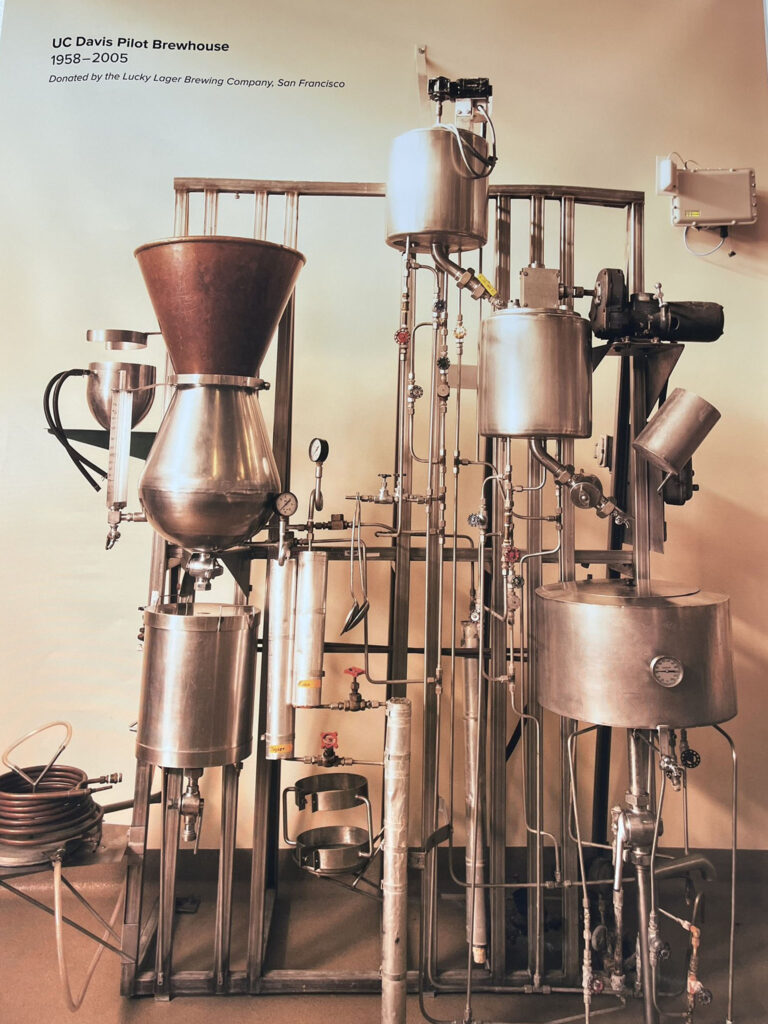
The UC Davis brewing program began in the late 1950s, driven by industry needs. In 1956, the Lucky Lager Brewing Company urged the university to train technical personnel, leading to equipment and funding donations from the company and the Master Brewers Association of the Americas. The first brewing technology courses in the U.S. started in 1958, taught initially by Dr. Herman Phaff (a yeast expert) and then Dr. Tommy Nakayama. These were held in Cruess Hall using a new pilot brewery dedicated on December 8, 1958. The focus was on complementing UC Davis’s strong wine fermentation program with scientific brewing education for industrial-scale production.

1960s: Expansion Under Michael Lewis
The program grew significantly after Professor Michael J. Lewis, a biochemist specializing in yeast and fermentation, joined the Food Science and Technology faculty in 1962 (some sources note formal appointment in 1964). Lewis designed core courses like Malting and Brewing Science (lecture) and Practical Malting and Brewing (lab), emphasizing yeast physiology, biochemistry, cereal grains, enzymes, and beer flavor sensory analysis. These prepared students for roles at major breweries in an era of consolidated industrial lager production. In the late 1960s, Lewis collaborated with University Extension to offer professional short courses for industry professionals.

1970s: Milestones and Ties to Emerging Craft Brewing
Key developments included the introduction of the nation’s first four-year undergraduate degree in fermentation science with a brewing concentration for the 1971-1972 academic year. The program continued focusing on rigorous science for large-scale brewing, but it inadvertently influenced the craft beer movement. In the mid-1970s, classes included field trips to New Albion Brewing Co. (founded 1976 by Jack McAuliffe, the first U.S. microbrewery post-Prohibition). Homebrewing classes began in 1976, teaching sanitation, all-grain methods, and yeast selection amid rising amateur interest. Professional extension programs expanded.

Early 1980s: Continuation and Growing Influence
Under Lewis’s leadership (until his retirement in 1994-1995), the program maintained its emphasis on undergraduate and professional training in brewing science. The craft brewing scene began accelerating in the U.S. during this period, with UC Davis alumni and resources supporting early pioneers. Homebrewing and extension courses for amateurs and professionals continued, laying further groundwork for the craft revolution that boomed later in the decade and beyond. Graduates typically entered major breweries, but the scientific foundation influenced smaller operations.

Overall, from the 1950s to early 1980s, UC Davis transitioned from basic industry-supported courses to a comprehensive, science-driven program that trained brewers for industrial giants while unintentionally seeding the American craft beer renaissance through education, alumni, and connections to early microbreweries.

University of California, Davis 
One Shields Avenue, Davis, CA 95616
Website: https://brewing.ucdavis.edu/

Filed Under: Beer

2026 Alaska Craft Brew & Barley Wine Festival: Anchorage’s Premier Winter Beer Celebration

December 30, 2025 by Dow Scoggins


The 2026 Alaska Craft Brew & Barley Wine Festival is set to return as one of Anchorage’s most anticipated winter events, bringing together craft beverage enthusiasts for a weekend of tastings, live music, and community vibes. Organized by the Brewers Guild of Alaska in partnership with Peak 2 Peak Events, this festival highlights the thriving craft scene in the Last Frontier.

Event Details: Dates, Location, and Sessions
Mark your calendars for January 30–31, 2026. The festival will take place at the Dena’ina Civic and Convention Center in downtown Anchorage, a spacious venue perfect for hosting multiple tasting sessions.
Expect three distinct sessions across the two days, allowing attendees flexibility:
Friday evening session
Saturday afternoon session
Saturday evening session

Each session features unlimited samples from a wide array of beverages, paired with food vendors and live performances by local bands.

What to Expect: Over 250 Beverages and More
This expanded event showcases over 250 regional beverages, going far beyond traditional beer. Highlights include:
Award-winning craft beers from Alaskan and Pacific Northwest breweries
Rich, high-alcohol barley wines – a specialty that’s rare to find in such concentration
Ciders, meads, seltzers, wines, and an increasing selection of non-alcoholic options like creative kombuchas and botanical drinks

The festival is known for its barley wine competition, one of only a handful in the U.S., where brewers vie for gold pan trophies in categories like Barley Wine and Winter Warmer. Past winners have included standout entries from breweries like Midnight Sun Brewing and Reuben’s Brews.
Food pairings from local vendors complement the drinks, with options ranging from hearty appetizers to sweet treats. Live music adds to the festive atmosphere, making it a perfect mid-winter gathering.

Why Attend the Alaska Craft Brew & Barley Wine Festival?
Alaska’s craft beverage industry has exploded in recent years, with over 50 breweries statewide producing world-class drinks inspired by the rugged landscape and pure ingredients. This festival is the ultimate showcase:

Discover new favorites: Try limited-edition pours unavailable elsewhere.
Support local: Proceeds benefit the Brewers Guild of Alaska.
Inclusive fun: Designated driver tickets are affordable, and non-alcoholic options ensure everyone can join.
Winter escape: Combat the January blues with warmth, flavors, and camaraderie.

Whether you’re a seasoned beer connoisseur chasing bold barley wines or a casual visitor exploring ciders and meads, there’s something for every palate.

Tickets and Practical Information
Tickets are available exclusively through the official platform, MyAlaskaTix, via the event website: www.alaskacraftbrewandbarleywine.com. Beware of resale scams – only purchase from authorized sources.
Sessions typically sell out quickly, so early booking is recommended. The event is 21+ for alcohol sampling, with ID required.

For the latest updates on participating breweries, competition details, and session times, check the official site or follow on social media.

Join thousands of attendees in celebrating Alaska’s craft heritage at the 2026 Alaska Craft Brew & Barley Wine Festival – a true highlight of Anchorage’s winter calendar!

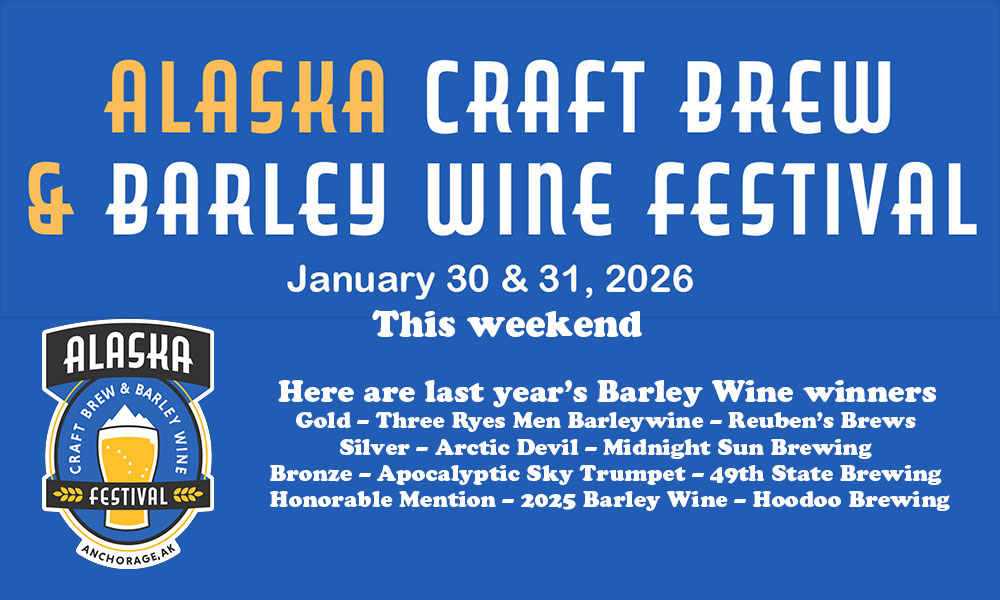
Here are the 2025 Alaska Craft Brew and Barley Wine Festival – Medal Winners
Barley Wine Winners
Gold – Three Ryes Men Barleywine – Reuben’s Brews – Washington
Silver – Arctic Devil – Midnight Sun Brewing – Alaska
Bronze – Apocalyptic Sky Trumpet – 49th State Brewing – Alaska
Honorable Mention – 2025 Barley Wine – Hoodoo Brewing – Alaska

Winter Warmer Winners
Gold – 2024 Jim Beam Double Barrel Aged Eisboch – Glacier Brewhouse – Alaska
Silver – Barrel Aged Black Pearl Imperial Coconut – Maui Brewing – Hawaii
Bronze – Reuben’s Brew Barrel Aged Stout – Reuben’s Brews – Washington

Brewers Guild of Alaska
The Brewers Guild of Alaska (BGA), founded in 2000 as a scrappy non-profit by a band of visionary craft brewers, is the beating heart of the Last Frontier’s booming beer scene—championing over 50 independent breweries, cideries, and meaderies through fierce legislative advocacy, hands-on education, and epic community events that keep Alaska’s taps flowing with bold, boundary-pushing pours like hazy IPAs brewed with midnight sun barley and barrel-aged stouts infused with wild Alaskan berries. From hosting the legendary 29th Annual Alaska Craft Brew & Barley Wine Festival in January 2025 at Anchorage’s Dena’ina Center—where 65+ breweries slinged 250+ samples amid live music and food trucks—to powering the Boots & Brews Beer Fest in Fairbanks and the massive Alaska Crafted Festival in Eagle River, the BGA turns winter nights into hoppy havens and equips brewers with everything from financial workshops to biotransformation seminars at their November 2025 Alaska Crafted Conference. Whether you’re a local chasing that perfect Arctic Devil barleywine or a visitor plotting a northern beer road trip, the BGA’s all about raising a glass to sustainable sips, small-batch innovation, and the rugged spirit that makes Alaskan craft beer as untamed as its wilderness—sláinte to the guild keeping the north’s brew game strong!

For Brewing fun facts, trivia, movies and more, Click Here.

Filed Under: Beer, Beer Competition

Atlanta’s Oldest Bars and their stories

December 28, 2025 by Dow Scoggins

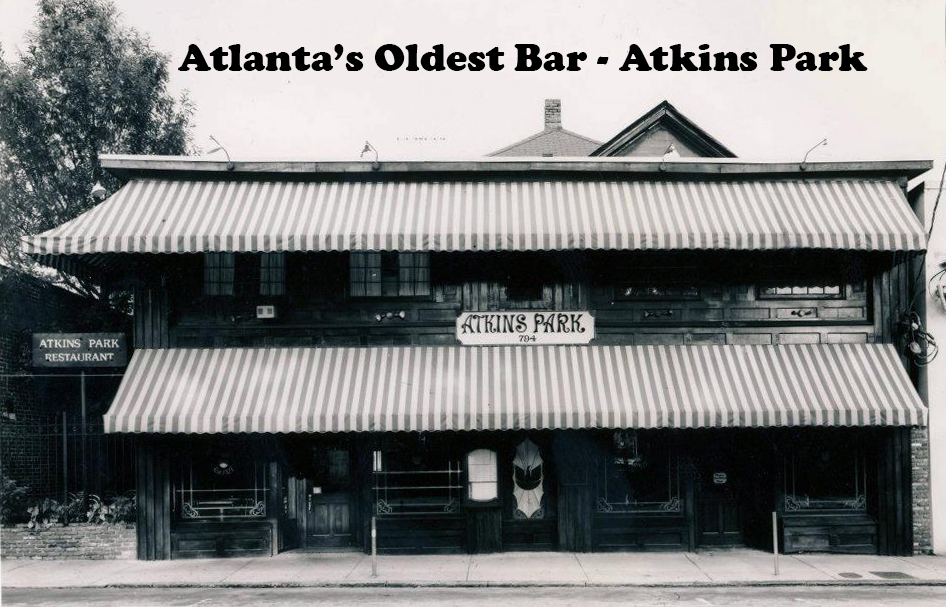
Dive into Atlanta’s oldest bars, where history pours as freely as the drinks at the city’s oldest and most iconic watering holes! From Atkins Park, the undisputed granddaddy of them all (established in 1922 and still slinging Southern comfort food in its cozy, phoenix-emblazoned digs), to legendary dives like Moe’s and Joe’s, Manuel’s Tavern, Northside Tavern, and the gloriously quirky Clermont Lounge, these spots have survived Prohibition, politics, blues riffs, and wild nights to become beloved ATL institutions. Whether you’re chasing cold beers, live music, political chatter, or unapologetic fun, Atlanta’s oldest bars offer a perfect mix of nostalgia, character, and good vibes that keep locals and visitors coming back for more.
Atlanta's Oldest Bars and their stories
Atkins Park Restaurant & Bar (1922)
Step into Atkins Park in Virginia-Highland, and you’re walking into Atlanta’s oldest continuously operating tavern—a true survivor that started as a humble delicatessen back in 1922, cleverly navigating Prohibition before snagging its beer and wine license right after repeal (full liquor came in 1980). This cozy spot, with its classic tin ceilings, dark wood vibes, and phoenix motifs symbolizing Atlanta’s rebirth, became a neighborhood legend under visionary restaurateur Warren Bruno, who bought it in 1983 and turned it into a beloved hangout. Today, it’s lovingly run by his widow, Sandra Spoon, who keeps the farm-to-table Southern comfort food flowing—think duck fat-fried wings that are downright addictive—along with family-friendly brunches and late-night drinks. What makes it unique? It’s the perfect blend of history and heart, where generations of locals gather in a timeless space that feels like home, proving that some Atlanta classics never go out of style.
Address: 794 North Highland Ave NE, Atlanta, GA 30306
Website: https://www.atkinspark.com/
Moe's and Joe's Tavern (1947) - Number 1 PBR bar in America!
Moe’s and Joe’s Tavern (1947)
Picture this: Two brothers fresh from WWII open a no-frills tavern in Virginia-Highland in 1947, and it becomes an instant classic—Moe’s and Joe’s is that unpretentious dive where time stands still, complete with worn wooden booths, a vintage cash register, and walls that whisper stories of generations past. Founded by Moe and Joe Krinsky (who famously traded 1,700 pitchers of PBR for a 1947 Rolls-Royce—talk about a deal!), it was once a Pabst Blue Ribbon “tied house” and remains the nation’s top seller of the stuff. Legendary bartender Horace McKennie poured pitchers for over 50 years, becoming the soul of the place. Though ownership has changed hands, the current team keeps the spirit alive with expansions like a full bar and patio while preserving the divey charm. What sets it apart? Those killer wings, ice-cold PBR pitchers for pocket change, and a loyal crowd of locals who treat it like their living room—it’s Atlanta’s ultimate neighborhood haunt where everyone knows your name (or at least your drink order).
Address: 1033 N Highland Ave NE, Atlanta, GA 30306
Website: https://www.moesandjoesatl.com/

Manuel’s Tavern (1956)
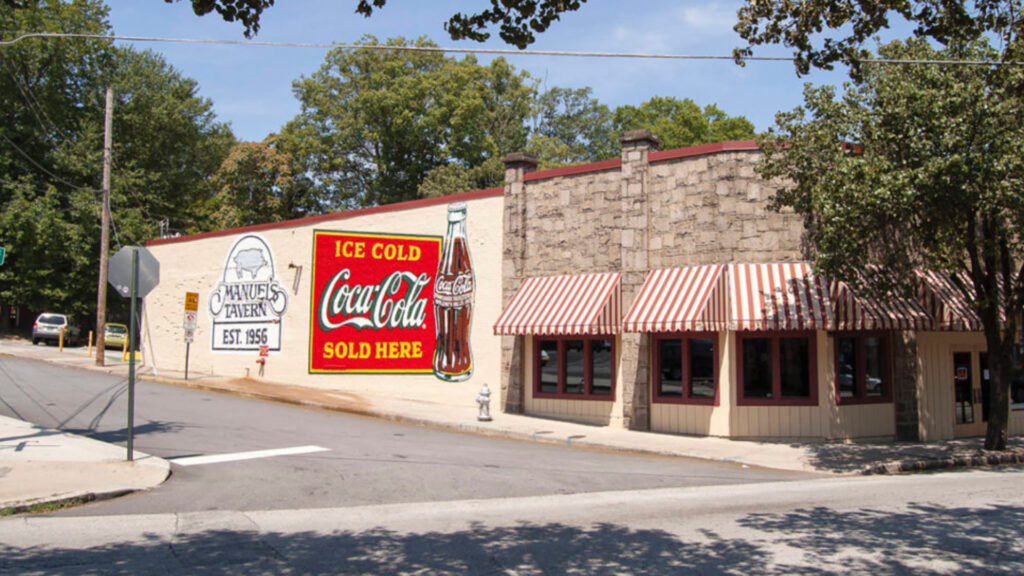
Manuel’s Tavern in Poncey-Highland is more than a bar—it’s Atlanta’s unofficial political headquarters and community living room, opened in 1956 by the charismatic Manuel Maloof, a Lebanese immigrant’s son who turned a deli into a welcoming pub inspired by European taverns he loved during WWII. Manuel, who later became a bigwig in local politics (DeKalb County CEO and “Godfather” of Georgia Democrats), filled it with salvaged treasures and banned jukeboxes to spark real conversations—Jimmy Carter even announced his gubernatorial campaign here! The walls are a wild museum of memorabilia, from political bumper stickers to sports pennants. Still family-owned and operated by Manuel’s son Brian Maloof, it draws everyone from presidents to plumbers with hearty pub grub and a massive beer selection. Its magic? That rare cross-section vibe where blue-collar folks rub elbows with journalists and power players—it’s on the National Register of Historic Places for good reason, embodying Atlanta’s soulful, talkative spirit.
Address: 602 N Highland Ave NE, Atlanta, GA 30307
Website: https://manuelstavern.com/

Photo by Northside Tavern

Northside Tavern (c. 1950s–1960s, roots earlier)
Tucked in West Midtown amid gleaming skyscrapers, Northside Tavern is Atlanta’s gritty blues sanctuary—a cinderblock dive that started as a 1940s grocery store/gas station before evolving into a blue-collar watering hole in the ’60s and finding its true calling as a live music spot in the ’70s. Under continuous family ownership since 1975 (originally by Butler Webb, then his daughter Ellyn Webb until recently, with family still at the helm), it exploded into legend in the ’90s when musician Danny “Mudcat” Dudeck convinced Ellyn to make it a blues haven. Live blues thumps seven nights a week in this smoky, no-frills joint with barred windows and stiff pours. What makes it unforgettable? It’s the authentic juke joint feel—pool tables, cheap drinks, and raw performances from legends like Beverly “Guitar” Watkins—that’s kept it thriving against gentrification, earning spots on “best dive bars in America” lists and even its own documentary.
Address: 1058 Howell Mill Rd NW, Atlanta, GA 30318
Website: https://northsidetavern.com/ 

Clermont Lounge (1965)
The Clermont Lounge may not be the Atlanta’s oldest bar, but  it is Atlanta’s oldest strip club.  Down in the basement of the historic Clermont Hotel (now a boutique hotspot), the Clermont Lounge is Atlanta’s wildest, most iconic strip club—a gloriously unpolished gem that’s been shaking things up since 1965 as the city’s first and longest-running adult venue. Born from a former supper club space with a colorful past (including a short-lived fake “Playboy Club” that got sued), it’s proudly female-owned and defies every stereotype with dancers of all ages and vibes—legendary Blondie has been crushing beer cans with her assets since 1979! Celebs from Anthony Bourdain to Lady Gaga flock here for the quirky, cash-only chaos. Current owners keep the retro dive energy alive amid the hotel’s upscale revival. Its charm? Pure, unapologetic weirdness—karaoke nights, burlesque flair, and a “be yourself” ethos that makes it a beloved landmark where tourists, locals, and oddballs unite for unforgettable, laugh-out-loud nights.
Address: 789 Ponce De Leon Ave NE, Atlanta, GA 30306
Website: https://www.clermontlounge.net/

Top 10 Beer Festivals in America plus a few more: Click Here!

Filed Under: Bars, Beer

Top 10 American Herb and Spiced Beers of 2025

December 26, 2025 by Dow Scoggins

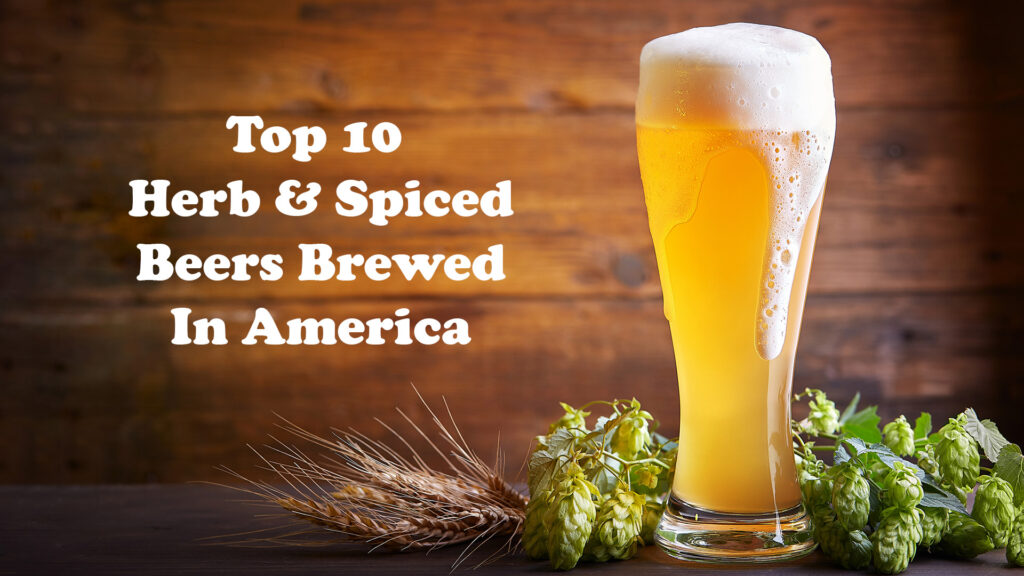
Photo by Oleksii Hulak

This Top 10 Herb and Spiced beer list showcases the creative use of herbs, spices, and botanicals (such as coriander, orange peel, juniper, cinnamon, ginger, nutmeg, chili peppers, or unique gruit blends), drawn from medal winners and highly regarded examples in major competitions like the Great American Beer Festival, World Beer Cup, U.S. Open Beer Championship, and other notable sources.

These beers incorporate herbs and spices—distinct from or in addition to hops and roasted malts—to deliver pronounced, balanced characters ranging from refreshing citrusy notes to warming holiday spices or earthy herbal depth. Moderate hopping allows the botanicals to shine without excessive bitterness, creating harmonious and complex profiles.

Top 10 American Herb and Spiced Beers of 2025

Top 10 American Herb and Spiced Beers of 2025
Photo by Allagash Brewing

1) Allagash White from Allagash Brewing Company is a quintessential American interpretation of the classic Belgian witbier, expertly spiced with coriander and Curaçao orange peel for bright, refreshing citrus notes and a subtle floral spice that complements its hazy, wheat-driven body. This multi-award-winning beer, including numerous Great American Beer Festival medals, offers a crisp, effervescent finish perfect for warm days or pairing with light seafood dishes.
Address: 50 Industrial Way, Portland, ME 04103
Website: https://www.allagash.com/

2) Red Nose Holiday Wassail from Great Basin Brewing Company is a richly spiced holiday ale that captures the essence of traditional wassail with warming notes of cinnamon, nutmeg, and other festive botanicals blended into a malty backbone. This gold medal winner in the Herb and Spice Beer category at the 2025 Great American Beer Festival delivers comforting, seasonal flavors ideal for winter gatherings.
Address: 846 Victorian Ave, Sparks, NV 89431
Website: https://www.greatbasinbrewingco.com/

3) Chai Eye Captain from Third Eye Brewing Company is an innovative chai-spiced ale that infuses traditional Indian masala spices like cardamom, cinnamon, and clove into a smooth, balanced base, creating layers of warming aroma and flavor. A gold medalist in the Herb and Spice Beer category at the 2023 Great American Beer Festival, this beer stands out for its bold yet harmonious spice profile.
Address: 11276 Chester Rd, Sharonville, OH 45246
Website: https://thirdeyebrewingco.com/

4) Hecho En Szechuan from Pinthouse Brewing is a unique rice lager infused with Szechuan peppercorns, lime leaf, and zest, delivering a tingling, numbing spice alongside bright citrus and subtle floral notes for an intriguing, refreshing twist on the style. This silver medal winner in the Herb and Spice Beer category at the 2025 Great American Beer Festival showcases creative botanical experimentation.
Address: 2201 E Ben White Blvd, Austin, TX 78741
Website: https://pinthouse.com/

5) Two Wheeler from Far Field Beer Co. is a tart, effervescent Berliner Weisse delicately spiced with lavender, offering floral, herbal elegance that balances its light sourness and crisp finish. This gold medal winner in the Herb and Spice Beer category at the 2024 Great American Beer Festival highlights subtle botanical sophistication in a sessionable package.
Address: 4471 W Rosecrans Ave, Lawndale, CA 90250
Website: https://farfieldbeer.com/

6) Station 3 Habanero IPA from Lock 15 Brewing Co. is a bold West Coast IPA infused with fire-roasted habanero peppers, blending citrusy hop bitterness with a building heat and smoky spice for an adventurous, fiery drinking experience. A gold medalist in the Herb and Spice Beer category at the 2024 U.S. Open Beer Championship, it’s perfect for spice enthusiasts.
Address: 21 W North St, Akron, OH 44304
Website: https://www.lock15brewing.com/

7) The Great Pumpkin from Elysian Brewing Co. is an iconic imperial pumpkin ale brewed with real pumpkin and a blend of warming spices like cinnamon, nutmeg, and cloves, delivering rich, pie-like flavors with malty depth and a smooth finish. This legendary seasonal has earned multiple Great American Beer Festival medals in spiced categories and remains a fall favorite.
Address: 6010 Airport Way S, Seattle, WA 98108 (production facility)
Website: https://www.elysianbrewing.com/

8) Nutty Ale-Thundai from Omnium Brewing Company is a creative pale ale spiced with a thandai-inspired masala blend including fennel, almonds, pistachios, cardamom, and rose petals, plus lactose for subtle sweetness and nutty complexity. This gold medal winner in the Herb and Spice Beer category at the 2025 U.S. Open Beer Championship offers exotic, aromatic depth.
Address: 460 High St, Somersworth, NH 03878
Website: https://omniumbrewing.com/

9) Sah’tea from Dogfish Head Craft Brewery is a modern recreation of ancient Finnish sahti, spiced with juniper berries and black chai tea for earthy, piney notes alongside warming masala spices in a strong, malty ale. This innovative herb-forward beer embodies off-centered brewing tradition with its unique botanical fusion.
Address: 6 Cannery Village Center, Milton, DE 19968
Website: https://www.dogfish.com/

10) Celis White from Celis Brewery is a revived classic Belgian-style witbier spiced with coriander and orange peel, yielding a hazy, refreshing pour with bright citrus, subtle spice, and a smooth wheat character. Founded by the legendary Pierre Celis and reborn in Austin, this authentic witbier carries a rich heritage of botanical elegance.
Address: 10001 Metric Blvd, Austin, TX 78758
Website: https://www.celisbeers.com/


History of Herb and Spiced Beers
Ancient Origins
Beer is one of the oldest fermented beverages, dating back over 8,000 years. In ancient Mesopotamia (modern Iraq), Sumerians brewed thick, porridge-like beer from barley, often flavored with dates, honey, and herbs for taste and preservation. The Hymn to Ninkasi (c. 1800 BCE), a poem honoring the goddess of brewing, is the world’s oldest surviving beer recipe.

In ancient Egypt, beer (called henqet) was a daily staple, lighter and smoother than Mesopotamian versions. Brewers used emmer wheat or barley, adding herbs, fruits, spices like mandrake, or dates for flavor. It served as food, medicine, religious offering, and worker ration (e.g., for pyramid builders).
These early beers relied on local botanicals rather than hops, which were unknown in brewing at the time.

Medieval Europe: The Era of Gruit
Before hops dominated, European beers used gruit (or gruyt)—a variable mixture of herbs and spices for bittering, flavoring, and preservation. Common ingredients included:
Bog myrtle (sweet gale)
Yarrow
Wild rosemary (marsh rosemary)
Mugwort
Heather
Juniper berries
Ginger
Caraway
Anise
Nutmeg
Cinnamon

Gruit originated in regions like the Low Countries, Germany, and Flanders around the 10th century. The Catholic Church and local lords often monopolized gruit production, taxing it heavily for revenue. These beers were unhopped ales, sometimes with psychoactive or aphrodisiac effects from the herbs.
Traditional survivors include Finnish sahti, flavored primarily with juniper branches and berries, brewed rustic-style without boiling the wort.

Transition to Hops (11th–16th Centuries)
Hops emerged in brewing around the 9th–11th centuries in Central Europe, prized for superior preservation, consistent bitterness, and lower cost compared to taxed gruit. The shift was gradual:

Hops spread from Bavaria and Bohemia northward
Better stability allowed longer storage and trade

Key factors included the Protestant Reformation undermining Church gruit monopolies and the 1516 Reinheitsgebot (German purity law) mandating only water, barley, and hops (yeast added later). By the late 16th century, hopped beer dominated most of Europe, though gruit lingered in places like Westphalia into the 17th century.

Spiced Beers in the Hop Era
Even with hops standard, spices persisted in certain styles:

Belgian witbier → Uses coriander and orange peel
Christmas/winter warmers → Often feature cinnamon, nutmeg, clove, ginger, or spruce, evoking holiday pies and mulled drinks

In colonial America, scarce barley led to beers fermented with pumpkin or other local produce, sometimes spiced. Modern pumpkin ales (popularized in the 1980s by breweries like Buffalo Bill’s) add pumpkin pie spices (cinnamon, nutmeg, allspice, clove) for fall seasonal appeal, though actual pumpkin is often minimal.

Modern Revival
The 1990s craft beer boom revived herb and spiced beers. Brewers experiment with gruit-inspired unhopped ales, botanical additions, or hybrids (herbs + hops). Styles like “Herb and Spice Beer” encompass everything from juniper-lavender gruits to chili-chocolate stouts.

International Gruit Day (February 1) celebrates this heritage, and breweries worldwide release limited editions using ancient-inspired blends. Today, these beers offer diverse, complex flavors beyond hop bitterness—earthy, floral, spicy, or medicinal—connecting modern drinkers to millennia-old traditions.1.7s68 sources.


Top 10 Beer Festivals in America plus a few more: Click Here!


Filed Under: Beer, Beer Competition

  • « Go to Previous Page
  • Page 1
  • Interim pages omitted …
  • Page 12
  • Page 13
  • Page 14
  • Page 15
  • Page 16
  • Interim pages omitted …
  • Page 71
  • Go to Next Page »

Primary Sidebar

Follow us

  • Email
  • Facebook
  • Instagram
  • Twitter
  • YouTube

2025 U.S. Open Beer Championship  
Medal Winners

 
2024 U.S. Open Cider Championship  
Medal Winners

Archives

  • April 2026
  • March 2026
  • February 2026
  • January 2026
  • December 2025
  • November 2025
  • October 2025
  • September 2025
  • August 2025
  • July 2025
  • June 2025
  • May 2025
  • April 2025
  • March 2025
  • February 2025
  • January 2025
  • December 2024
  • November 2024
  • October 2024
  • September 2024
  • August 2024
  • July 2024
  • May 2024
  • April 2024
  • March 2024
  • November 2023
  • October 2023
  • August 2023
  • July 2023
  • June 2023
  • May 2023
  • April 2023
  • October 2022
  • May 2022
  • February 2022
  • January 2022
  • June 2021
  • March 2021
  • December 2020
  • September 2020
  • August 2020
  • July 2020
  • June 2020
  • February 2020
  • November 2019
  • February 2019
  • May 2018
  • April 2018

Copyright © 2026 · BeerInfo.com. All Rights Reserved.