• Skip to secondary menu
  • Skip to main content
  • Skip to primary sidebar

Beer Info

Beer News, Beer Releases and New Breweries

  • Home
  • Top 10 Beers
    • Ales
    • Lagers
    • Barrel Aged
    • Hybrid
    • Specialty
  • GABF
    • 2024 GABF
    • 2023 GABF
    • 2021 GABF
    • 2022 GABF
    • 2020 GABF
    • 2019 GABF
    • 2018 GABF
    • 2017 GABF
    • 2015 GABF
    • 2014 GABF
    • 2013 GABF
    • 2012 GABF
    • 2011 GABF
    • 2010 GABF
    • 1987 GABF
  • World Beer Cup
    • 2025 World Beer Cup
    • 2022 World Beer Cup
    • 2018 World Beer Cup
    • 2016 World Beer Cup
    • 2014 World Beer Cup
    • 2012 World Beer Cup
    • 2010 World Beer Cup
    • 2008 World Beer Cup
    • 2006 World Beer Cup
    • 2004 World Beer Cup
    • 2002 World Beer Cup
    • 2000 World Beer Cup
    • 1998 World Beer Cup
    • 1996 World Beer cup
  • U.S. Open
    • 2022 U.S. Open
    • 2021 U.S. Open
    • 2020 U.S. Open
    • 2019 U.S. Open
    • 2018 U.S. Open
    • 2017 U.S. Open
    • 2016 U.S. Open
    • 2015 U.S. Open
    • 2014 U.S. Open
    • 2013 U.S. Open
    • 2012 U.S. Open
    • 2011 U.S. Open
    • 2010 U.S. Open
    • 2009 U.S. Open
  • U.S. Open Cider
    • 2021 U.S. Open Cider
    • 2020 U.S. Open Cider
    • 2019 U.S. Open Cider
    • 2018 U.S. Open Cider
    • 2017 U.S. Open Cider
    • 2016 U.S. Open Cider
    • 2015 U.S. Open Cider
  • More
    • Schools
      • United States
      • Canada
      • Europe
    • Writers
      • Edwin Arnaudin
        • Zebulon Artisan Ales
        • Highland Brewing
      • Morgan Forsyth
      • Paul Leone
      • Austin Foster
      • Anne-Fitten Glenn
    • Books
      • Starting a Brewery
      • Homebrew
      • History
      • Fun & Games
    • Fun Facts

Archives for August 2026

The Wild and Wonderful History of Oktoberfest

August 31, 2026 by Dow Scoggins

History of Oktoberfest 

A Toast to Tradition: The Wild and Wonderful History of Oktoberfest

It all started with a royal “I do” and a thundering horse race. On October 12, 1810, Crown Prince Ludwig of Bavaria married Princess Therese of Saxe-Hildburghausen. To celebrate, they threw a party so epic it would become an annual tradition. Five days later, on October 17, Munich gathered at the city’s edge for horse races in honor of the newlyweds. That celebration laid the foundation for what we now know as Oktoberfest.

Fast forward to 1850, and Oktoberfest had become more than just a party—it was a parade of Bavarian pride. Each year, 8,000 people dressed in traditional attire march through the heart of Munich from Maximilian Street to the Wiesn, led by the symbolic Münchner Kindl (Munich Child). That same year, the imposing Bavaria statue was completed, standing tall above Theresienwiese, forever watching over the revelers below like a stein-wielding guardian angel of the festival.

Of course, not all years were brimming with bratwurst and beer. In 1854 and again in 1873, cholera epidemics halted the festivities. In 1866 and 1870, wars kept the steins dry. But Oktoberfest kept bouncing back, evolving with the times. By 1880, electric lights twinkled above the tents. The following year, bratwurst booths joined the fun. In 1892, glass beer mugs made their first appearance—giving everyone a crystal-clear view of their favorite beverage.

As Oktoberfest strutted into the 20th century, it kept getting bigger and better. In 1887, the now-famous Entry of the Oktoberfest Staff and Breweries debuted, showcasing magnificent beer wagons, costumed workers, and oompah bands parading through the streets. It’s still the grand kickoff to Oktoberfest today.

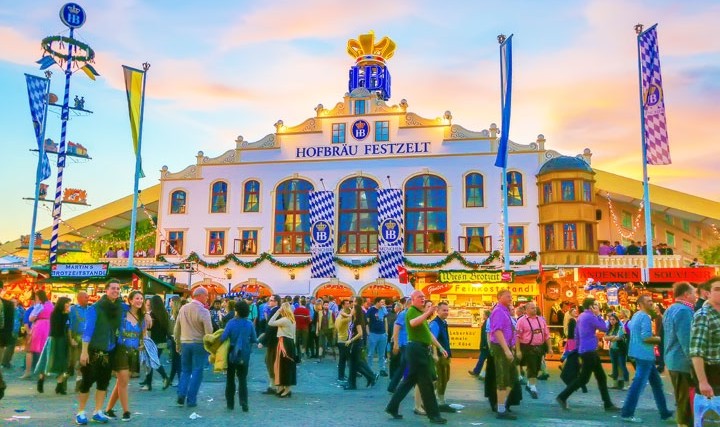
By 1910, Oktoberfest turned 100—and the party was as grand as you’d expect. An eye-popping 120,000 liters of beer were served, and a new legend was born: the Bräurosl tent, which could hold an incredible 12,000 thirsty guests. Today’s heavyweight is the Hofbräu-Festhalle, packing in 10,000 merrymakers.

The Dark Years: When the Taps Went Dry
Oktoberfest hasn’t always been a guaranteed good time. Between 1914 and 1918, World War I put a full stop to the celebration. Post-war austerity turned Oktoberfest into a humbler “Autumn Fest” for a couple of years. Then came the 1920s and a nasty bout of hyperinflation that put another dent in the keg.

By 1933, politics crept in as the Bavarian flag was replaced with the swastika under Nazi rule. World War II brought yet another halt from 1939 to 1945. Even in the late 1940s, Munich had to make do with low-alcohol beer and toned-down “Autumn Fests.” All told, Oktoberfest has been canceled 24 times due to war, disease, or disaster—but never for lack of spirit.
The Modern Era: Big Tents, Big Beers, and Big Changes
Since 1950, a boisterous and beloved tradition has kicked things off: At noon on opening day, the Mayor of Munich taps the first keg and shouts, “O’zapft is!” (“It’s tapped!”). With a 12-gun salute and the ceremonial passing of the first beer to the Bavarian Minister-President, the festivities begin. The honor of that first tap went to Mayor Thomas Wimmer—and the ritual still kicks off Oktoberfest today.

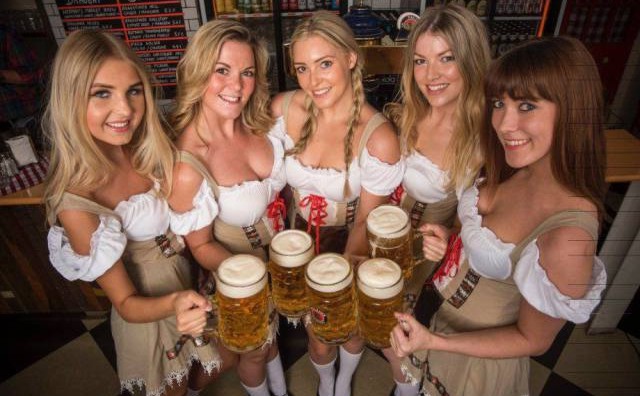
By the 1960s, Oktoberfest was an international sensation. Tourists began associating Germans with feathered Sennerhüte, Lederhosen, and women in Dirndls—and, for better or worse, the stereotype stuck. That same year marked the end of the original horse races, but no one seemed to miss them amid the sea of pretzels and polkas.

Of course, with millions of beers being poured, a few overzealous drinkers always end up going down for the count. Enter the term “Bierleichen”—beer corpses. These are the partygoers who pass out and are gently carted off to medical tents for a nap and a recovery snack.

To make the festival more family-friendly, 2005 introduced the idea of a “quiet Oktoberfest.” Before 6 PM, tents limit their music to mellow brass bands playing traditional tunes at no more than 85 decibels—loud enough to lift your spirits, but soft enough for Grandma to enjoy her stein in peace. After dark, things ramp up with Schlager and pop music, keeping the late-night crowd grooving (and hopefully not brawling).

Also returning in 2005 was a beloved blast from the past: the Mondlift, Germany’s last traveling Enterprise ride. It’s the perfect thrill after a liter or two—if your stomach can handle it.

In 2008, things got a little less smoky. A Bavarian law banned smoking in enclosed public spaces, including the beer tents. But Oktoberfest found a loophole: since the tents are technically temporary structures, smoking was allowed, though selling tobacco inside was a no-go. That rule held firm into 2009 and beyond, with the smoke slowly clearing out of the beer halls.

Oktoberfest Today: A Global Icon
From royal weddings to wartime interruptions, from candlelit tents to laser-lit beer halls, Oktoberfest has seen it all. Today, it’s a glorious mix of old-school charm and modern flair—where tradition meets turbo-charged fun. Whether you’re hoisting a Maß in Munich or throwing your own backyard Oktoberfest, remember: It’s not just a festival—it’s a feeling.

 
Top 10 Oktoberfest Celebrations in the U.S.
Oktoberfest Zinzinnati – Cincinnati, Ohio

As the largest Oktoberfest celebration in the United States, Oktoberfest Zinzinnati transforms downtown Cincinnati into a vibrant Bavarian village each September. Drawing nearly a million visitors annually, the festival is famous for its quirky events like the Running of the Wieners dachshund race and the World’s Largest Chicken Dance. Featuring more than 50 varieties of beer, authentic German food, and nonstop polka music, Zinzinnati delivers the closest American experience to Munich’s original.
Address: Sawyer Point Park and Yeatman’s Cove, Cincinnati, OH 45202
Website: oktoberfestzinzinnati.com

Nashville Oktoberfest – Nashville, Tennessee
Held in the historic Germantown district, the Nashville Oktoberfest blends Southern hospitality with Bavarian tradition. Spanning multiple city blocks, this four-day celebration offers authentic German beers, bratwursts, schnitzels, and plenty of festive entertainment. Highlights include the massive beer garden, live German bands, a 5K Bier Run, and the wildly popular Dachshund Derby. It’s one of the South’s liveliest fall festivals, attracting hundreds of thousands each year.
Address: Historic Germantown, Nashville, TN 37219
Website: thenashvilleoktoberfest.com

Wurstfest – New Braunfels, Texas
Wurstfest is a unique Texas twist on a traditional German celebration, taking place along the Comal River in New Braunfels—a town founded by German settlers. This 10-day “Salute to Sausage” combines carnival rides, oompah bands, polka dancing, and a smorgasbord of German and Texan cuisine. The atmosphere is electric, with thousands gathering each night to raise steins and dance in dirndls and lederhosen.
Address: 120 Landa St, New Braunfels, TX 78130
Website: wurstfest.com

Frankenmuth Oktoberfest – Frankenmuth, Michigan
Often called “Michigan’s Little Bavaria,” Frankenmuth boasts a charming Bavarian aesthetic that makes it the perfect backdrop for an Oktoberfest celebration. In fact, its Oktoberfest is the only one outside Germany officially sanctioned by Munich’s original organizers. Guests can expect Hofbräuhaus beer, traditional German folk dancing, and plenty of pretzels and schnitzel—all set within a storybook town that feels like a European escape.
Address: Heritage Park, Frankenmuth, MI 48734
Website: frankenmuthfestivals.com

La Crosse Oktoberfest – La Crosse, Wisconsin
One of the oldest and most respected Oktoberfest events in the Midwest, La Crosse Oktoberfest began in 1961 and has been a staple of Wisconsin tradition ever since. The multi-day festival includes grand parades, tapping of the golden keg, live performances, and a large Oktoberfest grounds with food stalls and beer tents. Nestled along the Mississippi River, La Crosse delivers a scenic and spirited atmosphere that keeps locals and tourists coming back year after year.
Address: 1 Oktoberfest Strasse, La Crosse, WI 54602
Website: oktoberfestusa.com

Helen Oktoberfest – Helen, Georgia
Nestled in the Blue Ridge Mountains, Helen is a recreated Bavarian village that feels tailor-made for Oktoberfest. The celebration here spans multiple weeks from mid-September to late October, making it the longest-running Oktoberfest in the United States. The Helen Festhalle becomes the heart of the action, where polka bands, hearty food, and beer flow freely in a uniquely picturesque setting.
Address: Helen Festhalle, 1074 Edelweiss Strasse, Helen, GA 30545
Website: helenchamber.com/oktoberfest

Leavenworth Oktoberfest – Leavenworth, Washington
Leavenworth, a charming Alpine-style village in the Cascades, hosts one of the most beloved Oktoberfests in the Pacific Northwest. The festival features traditional German bands flown in from Europe, a Kinderplatz for families, and three massive beer gardens. With its cobblestone streets, half-timbered architecture, and mountain views, Leavenworth offers a picture-perfect setting for fall festivities.
Address: Festhalle & Front Street Park, Leavenworth, WA 98826
Website: leavenworth.org/oktoberfest

Mount Angel Oktoberfest – Mount Angel, Oregon
This Oregon town with deep German roots has been celebrating Oktoberfest since 1966, and it’s one of the most family-friendly and culturally rich in the country. The festival features multiple venues, each with its own theme, live entertainment, and food offerings. From the Weingarten to the Biergarten, Mount Angel Oktoberfest celebrates music, dancing, and culinary traditions in the shadow of a beautiful Benedictine Abbey.
Address: 5 N Garfield Street, Mount Angel, OR 97362
Website: oktoberfest.org

Fredericksburg Oktoberfest – Fredericksburg, Texas
In the heart of Texas Hill Country, Fredericksburg’s German heritage comes alive each fall during Oktoberfest. Known for its welcoming charm, this three-day event features craft beer, local wine, Bavarian bands, and artisan markets. With a laid-back pace and scenic surroundings, Fredericksburg Oktoberfest is ideal for those seeking a more relaxed and intimate experience.
Address: Marktplatz, 100 W. Main Street, Fredericksburg, TX 78624
Website: oktoberfestinfbg.com

Oktoberfest Denver – Denver, Colorado
Held over two weekends in the historic Ballpark neighborhood, Denver’s Oktoberfest has become a Rocky Mountain tradition. Founded in 1969, the event features stein-hoisting competitions, keg bowling, bratwurst eating contests, and plenty of German beer. With the Denver skyline as its backdrop, this high-altitude celebration fuses Colorado craft with Old World tradition.
Address: Larimer St between 20th & 22nd, Ballpark neighborhood, Denver, CO 80205
Website: thedenveroktoberfest.com


For Brewing fun fact, trivia, movies and more, Click Here.
Filed Under: Beer, craftbeer, Oktoberfest

DESTIHL Launches “Normal Beer,” a No-Frills American Light Lager Brewed in Normal, Illinois

August 30, 2026 by Dow Scoggins

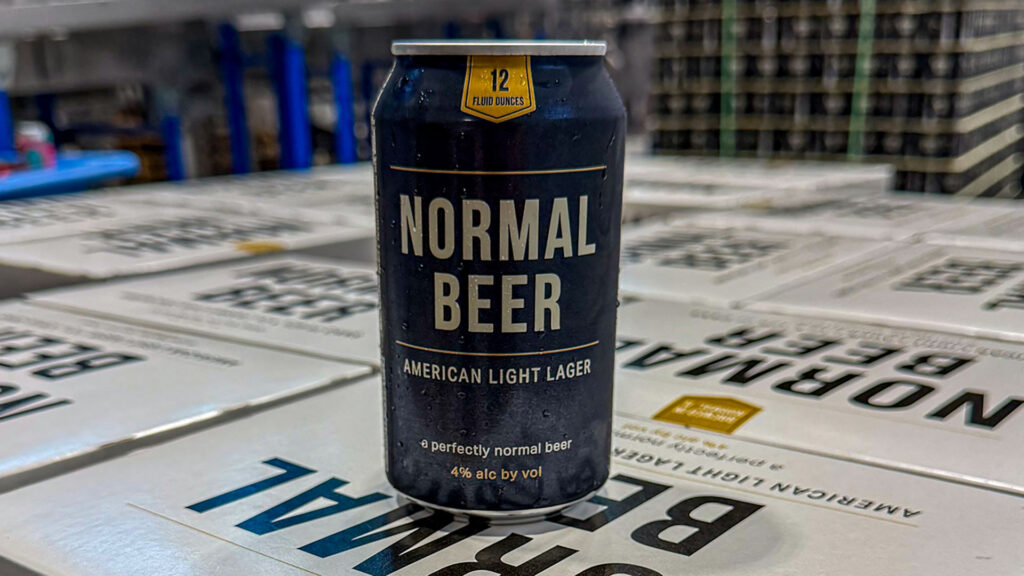
DESTIHL Launches "Normal Beer," a No-Frills American Light Lager New standalone brand skips the tasting notes and trend-chasing for a straightforward, all-malt light lager — debuting across Illinois this September ahead of a wider rollout through DESTIHL’s national footprint.

NORMAL, Ill. — DESTIHL Holdings, LLC, the Central Illinois beverage and hospitality company behind DESTIHL Brewery, DESTIHL Spirits, and its Canopolis co-manufacturing arm, has introduced Normal Beer, a new standalone American Light Lager built on one simple premise: beer doesn’t have to be complicated. The rollout starts in Illinois this September, with expansion planned into DESTIHL’s roughly 40-state distribution network in the months that follow.

The launch leans into a growing appetite for less noise — fewer influencers, fewer fads, fewer opinions on what you’re “supposed” to drink — and more of what’s familiar. Normal Beer is pitched as exactly that: a normal beer for normal occasions.

It’s also a clear break from DESTIHL’s usual playbook. The brewery built its name on bold, adventurous styles — its DeadHead IPA Series and Wild Sour Series among them — so Normal Beer intentionally goes the other direction: light, easy-drinking, lower ABV, and priced for everyday use.

Where it does keep a craft-brewer’s touch is the grain bill: 100% barley malt, no rice or corn adjuncts, a detail that sets it apart from most light lagers on the shelf. It checks in at 4.0% ABV and 99 calories per 12 oz. serving.

Normal Beer will ship in 12-packs of 12 oz. cans (suggested retail $15.99–$16.99) and in draft kegs for bars and restaurants.

“Beer got complicated somewhere along the way — tasting notes, star ratings, everyone telling you what to drink,” said Matt Potts, Founder and CEO of DESTIHL Holdings. “Normal Beer is a clean, all-malt lager with no shortcuts, made for the stuff people actually do — cookouts, fishing trips, tailgates, firepits, golf, yard work, every cooler worth opening. It’s a perfectly normal beer, and we think that’s exactly what people are craving right now.”

Sold and produced by DESTIHL Brewery, Normal Beer carries its own name, packaging, and identity apart from the company’s craft portfolio. It launches first in its namesake hometown of Normal, Illinois, before expanding statewide and beyond.

More on the brand, including photos and backstory, is available at getnormalbeer.com. Learn more about DESTIHL Brewery at destihl.com.

About Normal Beer
Normal Beer is an American Light Lager brewed with 100% barley malt and no adjuncts, produced by DESTIHL Brewery in Normal, Illinois. It’s built for drinkers who just want a beer to be a beer — clean, crisp, and uncomplicated. #DrinkNormalBeer | getnormalbeer.com

More about DESTIHL Brewery
DESTIHL Brewery traces its roots to a five-gallon home-brew kit founder and CEO Matt Potts received as a Christmas gift from his wife, Lyn, in 1995. That hobby eventually grew into DESTIHL Restaurant & Brew Works, which opened in Normal, Illinois, on November 23, 2007, pairing scratch-made pub food with beers built to push past the ordinary. As demand grew, the company opened a production brewery in Bloomington in May 2013, then moved operations into a new 47,000-square-foot Brewery & Beer Hall in Normal in May 2017 — a facility centered on a 120-barrel brewhouse capable of producing over 150,000 barrels a year. Today, DESTIHL ranks among the top 100 regional breweries by volume out of nearly 10,000 U.S. breweries, with distribution in close to 40 states.

Beyond its flagship brewery, DESTIHL has built out a wider beverage and hospitality portfolio. Its beer lineup runs from bold, boundary-pushing releases like the DeadHead IPA Series and Wild Sour Series to local collaborations such as Redbird Ale and Battle Bird Lager, officially licensed beers made with Illinois State University. The company has also expanded into spirits through DESTIHL Spirits and into contract beverage production through its Canopolis co-manufacturing division, which brews and packages for other brands. With its newly launched Normal Beer, DESTIHL now spans everything from experimental craft styles to a stripped-down, easy-drinking lager — all rooted in the same Normal, Illinois, brewery that started it all. Website: https://destihl.com/

For Brewing fun fact, trivia, movies and more, Click Here.
Filed Under: Beer, breweries

Cider Summit Seattle Toasts 15 Years of Bubbles, Bites, and Big Crowds in South Lake Union

August 17, 2026 by Dow Scoggins


Mark your calendars, cider lovers — Cider Summit Seattle is turning 15, and the Emerald City’s favorite fizzy celebration is bringing its biggest party yet to the Lawn at Discovery Center. On September 11 and 12, 2026, more than 40 cidermakers will pour upwards of 125 different ciders, meads, cider cocktails, and fruit spirits for a weekend that’s part tasting room, part block party, and part love letter to Pacific Northwest craft beverage culture. Since its founding, Cider Summit has grown into the region’s signature cider event, and this year’s milestone anniversary comes loaded with extras: a hosted four-course cider-and-cupcake pairing, a dog-friendly lounge, a fruit cider showdown decided by festival-goers themselves, and enough Seattle food-truck fare to fuel a full day of sipping. Whether you’re a cider die-hard or just cider-curious, this is the kind of event where you show up for the drinks and stay for the discovery.

Details worth raising a glass to:

  • Friday, September 11: 3–8 p.m. (VIP entry starts at 2 p.m.)
  • Saturday, September 12: Noon–5 p.m., plus an 11 a.m. cider-and-cupcake pairing session
  • Where: The Lawn at Discovery Center, 101 Westlake Ave. N, South Lake Union
  • Tickets: VIP from $45, General Admission from $35 (prices rise closer to the event and at the gate)
  • Bonus: Designated driver tickets available at the gate for $10–$11, complimentary water included
  • 21+ event — no minors allowed

Beyond the pours, festivalgoers can wander the Heritage Cider Pavilion for small-batch, farm-based ciders, vote in the Oregon Fruit Co. Fruit Cider Challenge, browse festival merch at the event store, and let their pups relax at the Dog Lounge, hosted by Seattle Humane Society. Proceeds from the weekend help support the Institute for Myeloma & Bone Cancer Research, Seattle Humane Society, and the NW Cider Association — so every sip does a little good, too.

History of Cider Summit
Long before “craft cider” was a household phrase, Cider Summit founder Alan Shapiro was cutting his teeth in the beverage world as one of the earliest sales reps for Pete’s Brewing Company, the outfit behind Pete’s Wicked Ale — one of America’s original craft beer brands. Those years forged a relationship with industry friend Mark Browner, who Shapiro credits with planting the seed for today’s Cider Summit. Cider itself entered the picture in 2003, when Shapiro founded SBS Imports and secured U.S. rights to import Aspall Cyder from Suffolk, England. A visit to the historic cidery left a lasting impression, sparking his mission to build American craft cider into a category as vibrant as craft beer. After a couple years of planning, Shapiro partnered with the team behind Seattle Beer Week, and the very first Cider Summit launched in Seattle in September 2010 — an instant hit that quickly expanded to Portland, Chicago, and the San Francisco Bay Area. Fifteen years later, Shapiro is still at the helm, still introducing new producers to curious drinkers, and still proving cider deserves just as much spotlight as beer or wine.

Address: 101 Westlake Ave N, Seattle, WA 98109
Website: https://cidersummitseattle.com

Filed Under: Cider, Seattle, Washington

Celebrating National S’mores Day with Short’s Brewing S’more Stout

August 10, 2026 by Dow Scoggins

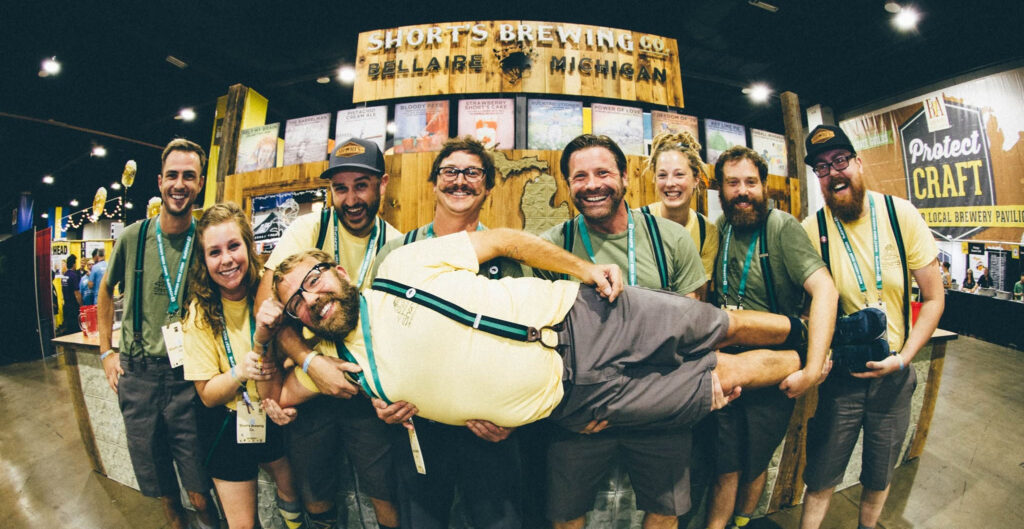
There’s no wrong way to celebrate National S’mores Day, but there might be a best way — and it involves a beer that was built to taste like the treat itself. Short’s Brewing Company out of Bellaire, Michigan, has been perfecting its S’more Stout since 2008, brewing it with graham cracker, chocolate, marshmallow, and smoked malt so that every sip hits the same notes as the real thing: sweet marshmallow cream, milk chocolate, and a lingering whisper of campfire smoke. Legend has it the beer was a joint effort between Short’s founders, and nobody can quite agree who gets the credit — but everyone agrees it’s one of the brewery’s most beloved stouts.
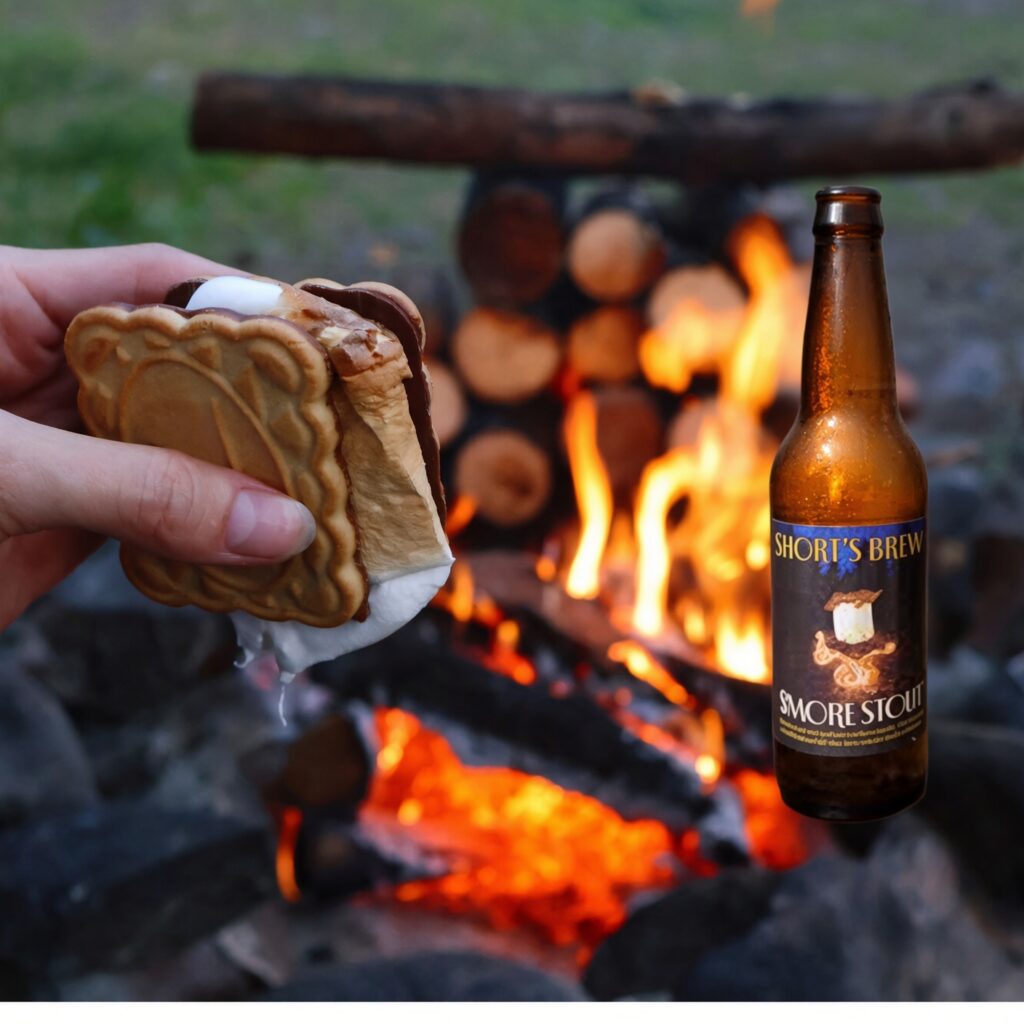
So here’s the move for August 10th: build a proper s’more — toasted marshmallow, a square of milk chocolate, two graham crackers, the works — and pour a S’more Stout right alongside it. If you really want to do it right, do what Short’s does at the pub and top your glass with a marshmallow set on fire with a match. It sounds like a party trick, but that flash of caramelized sugar and smoke is exactly what makes the beer sing. Between the actual dessert and the beer that mimics it, you get a double dose of campfire nostalgia without needing to build an actual fire.

What makes this stout a legend in the s’mores-beer category isn’t just the flavor — it’s the origin story. Short’s first attempted the recipe back in 2008, and it was one of the most challenging beers they’d ever brewed — tracking down five-gallon buckets of marshmallow fluff and 20-pound bars of milk chocolate isn’t exactly standard brewery shopping. A year later they dialed in the smoked malt for that extra campfire kick, and a beer that started as a pub inside joke turned into one of Short’s most popular stouts ever made. Drink it fireside in the fall, or just close your eyes and pretend — either way, don’t skip the flaming marshmallow. Short’s really means it.

Address: 121 N. Bridge St, Bellaire, MI 49615
Website: https://www.shortsbrewing.com/beers/smore-stout/

Filed Under: imperial stout, s'more, shorts brewing, stout

Terrapin Beer Co. Will Stop Production in Athens, Georgia; Taproom to Remain Open

August 10, 2026 by Dow Scoggins

Terrapin Beer Athens Facility Will Stop Production Next Month; Taproom to Remain Open
Big news out of the Classic City: Terrapin Beer Co. will stop brewing at its longtime Newton Bridge Road facility in Athens, Georgia, effective September 25, 2026. The move comes from parent company Tilray Brands, which is rolling out a sweeping corporate restructuring plan disclosed in its annual report filed July 28. The good news for Athens beer lovers: the taproom, beer garden, warehouse, and repack operations will all keep running as usual — so you can still grab a pint where it all started, even though the beer itself will be brewed somewhere else in the Tilray network going forward.

The shutdown is part of what Tilray is calling Project 420, a business optimization plan aimed at consolidating brewing capacity and streamlining operations, with Redhook, Atwater, Hop Valley, and Revolver also swept into the same consolidation push. The closures are intended to consolidate production, streamline operations and improve the company’s cost structure, according to the filing, and the filing does not indicate the Terrapin brand itself is being discontinued — just the on-site Athens brewing.

 A Look Back at Terrapin’s History
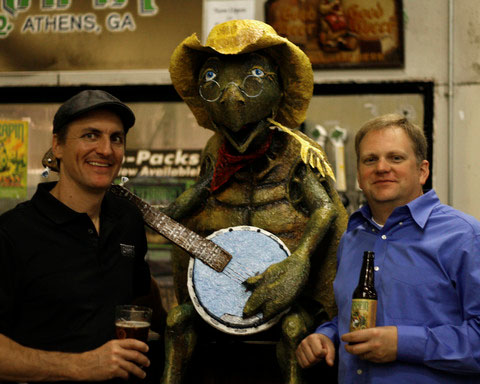
Terrapin’s story is a classic Athens craft beer tale. The brewery was founded in 2002 by Brian “Spike” Buckowski and John Cochran, and the pair debuted their first beer at the Classic City Brew Fest in April 2002. That first beer, Rye Pale Ale, made an immediate splash — just six months after debuting locally, it brought home the Gold medal in the American Pale Ale category at the Great American Beer Festival, even though it was only being sold in Athens at the time.

The brewery grew quickly from there. In 2006, Terrapin secured an $800,000 investment from a pool of Athens investors, which let them buy brewing equipment and lease a small production facility in town. By 2008, they’d outgrown that space and moved into the larger 45,000-square-foot facility at 265 Newton Bridge Road, capable of producing up to 18,500 barrels a year — the very building now stepping back from full-scale production. Over the years, that facility became a true Athens institution, drawing an average of 30,000 visitors annually for tastings and tours.

Ownership shifted over time too: Molson Coors announced a majority stake in Terrapin in July 2016, ending its run as an independent craft brewery, and more recently Tilray Beverages acquired the brand in September 2024, followed by a rebrand in February 2025.

Through it all, the Newton Bridge Road taproom has remained the heartbeat of the brand — a gathering spot known for its indoor taproom, sprawling outdoor beer garden, seasonal releases, live music, and pet-friendly events that built a devoted following well beyond Athens. And that heartbeat keeps going. While the brewing kettles on-site will go quiet next month, the taproom stays open, the beer garden stays lively, and Terrapin beer will still flow freely to fans across the Southeast. For a brand built on innovation and reinvention since day one, this next chapter looks less like an ending and more like Terrapin doubling down on what made it special in the first place — the community, the experience, and that unmistakable Athens spirit. Here’s to many more pints on Newton Bridge Road.

Address: 265 Newton Bridge Rd, Athens, GA 30607
Website: https://www.terrapinbeer.com/

For Brewing fun fact, trivia, movies and more, Click Here.

Filed Under: Beer, Beer Competition, Terrapin Beer

Indian Creek Tavern Reopens in Reily, Ohio — Bringing Back a Legendary Music Venue’s Storied Past

August 7, 2026 by Dow Scoggins


After four long years of silence, the music is playing again at one of Butler County’s most beloved gathering spots. The Indian Creek Tavern in Reily Township officially threw open its doors on July 27, 2026, marking the return of a restaurant and amphitheater that has been a cornerstone of local nightlife — and a surprising stop for national touring acts — for nearly two decades.

From Farmers’ Pit Stop to Neighborhood Landmark
The building at 6206 Main St. has been serving travelers and locals since long before “Indian Creek Tavern” was ever painted on a sign. Dating back to the 1800s, the structure originally operated as the Spring Hill Tavern, believed to have been established around 1859. In its earliest days, it served a far more practical purpose than live music — it was a waypoint for farmers hauling goods to trade in Cincinnati, with the barkeeper living upstairs above the bar.

The Spring Hill name stuck for well over a century until three local residents purchased the property in January 2006, when it sat on the verge of closing for good. They renovated the space, and by 2007 it reopened under a new name: the Indian Creek Tavern.

The tavern isn’t the only slice of 19th-century bar history in the immediate area, either. Just a few miles away in Darrtown sits the Hitching Post, founded in 1817 and widely recognized as the oldest continuously operating bar in Ohio. Between the two of them, this stretch of Butler County holds onto a rare concentration of historic tavern life — country roads dotted with buildings that have been pouring drinks since long before Ohio’s small towns looked anything like they do today.

Building the Amphitheater
The tavern’s transformation into a true entertainment destination came in 2010, when then-owners Doug Lyon and Brian Campbell cleared the wooded area behind the building to construct an amphitheater with a proper stage. The very first show under the new setup brought in outlaw country legend David Allan Coe, backed by two local bands, drawing an estimated 900 people to what had, until then, been a quiet corner of Reily Township.
That first big night set the tone for what came next. Word spread, and the amphitheater quickly built a reputation for landing acts far bigger than a small-town Ohio venue usually sees.

The Big Names Who Played Reily
Over the years, the Indian Creek Tavern amphitheater welcomed a lineup that would surprise anyone unfamiliar with the venue’s pull. Country star Travis Tritt performed at the tavern during Campbell’s ownership — a show remembered so fondly that the steps leading up beside the property were built specifically to accommodate him. Classic rock guitarist Ted Nugent also brought his high-energy show to the Reily stage, part of a run of national acts that also included rock band Three Days Grace and former Poison frontman Bret Michaels. Local favorites like Thunder Bay and the band Red Ice — recalled by co-owner Brannon Osterberger as a group his own father played in — also packed the grounds over the years, giving the venue deep roots in the community even between the marquee shows.

The Closure and the Comeback
The music stopped in 2021, when the tavern closed its doors following the death of its most recent owner that September. For four years, the building sat quiet — a fact that stuck with Bryon Spencer, who moved to Oxford and kept noticing the shuttered property. He mentioned it to his coworker, Osterberger, who had grown up nearby in Darrtown and had his own history with the place, having watched bands play there “hundreds of times.” When the property finally came up for sale, the two decided to take the leap, purchasing it in October 2025 and keeping the beloved Indian Creek Tavern name intact.
Much of the existing equipment was already in solid shape, but the pair spent months on repairs, cleaning, and upgrades before welcoming the public back. A soft opening on July 26 was meant for 100 to 200 invited guests — instead, 250 to 300 people showed up. The grand reopening followed the next day, with doors opening at 11 a.m. and every table, bar stool, and inch of standing room full by evening. The kitchen reportedly ran out of several menu items as orders poured in.

Longtime regulars like Jason Buttery, who once worked the tavern as a bouncer and bartender, came back just to see if it still felt the same — and found familiar faces, including former bartenders, right back behind the bar.

What’s Next for Indian Creek Tavern
With the restaurant fully staffed and the restored amphitheater ready for action, Osterberger says they’ll likely need to bring on even more help as concerts and outdoor events get booked. For a venue with a history of pulling in acts like Ted Nugent and Travis Tritt, the bar for what comes next in Reily Township is already set high — and after four years of silence, the community sounds ready for it.
Address: 6206 Main St, Reily Township, OH 45056
Website: https://indiancreektavern.net

Filed Under: Bars, Beer

The Great Beer Float Rivalry: How a Few Too Many Beers Became a World Record

August 6, 2026 by Dow Scoggins

The Great Beer Float Rivalry: How a Few Too Many Beers Became a World Record
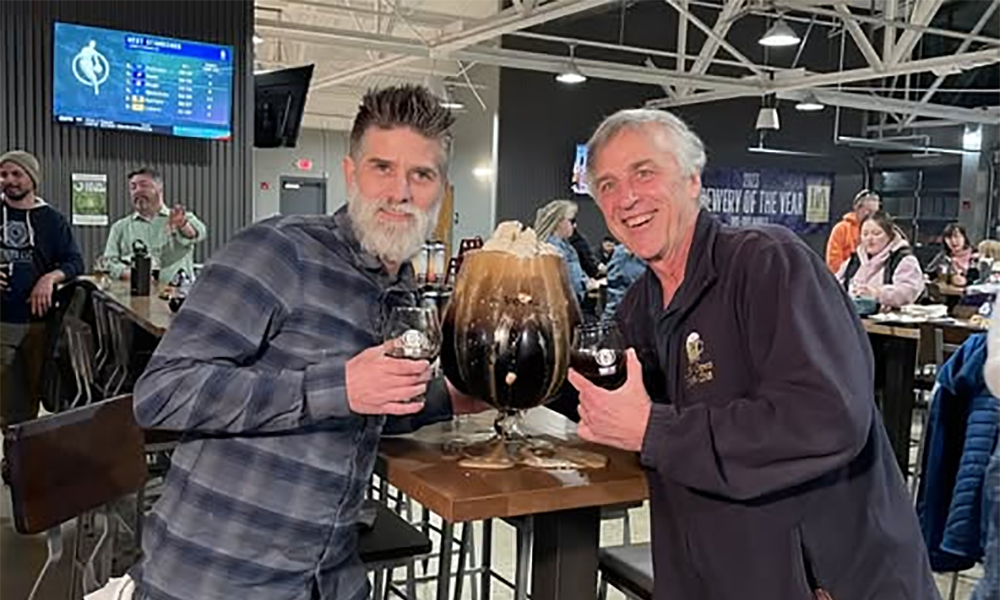
2024 World Record for a “Stout Ice Cream Float” at Third Eye Brewing

It all began with an idea that, by their own admission, may have been born after “one too many beers.” Kelly Montgomery, head brewer and co-owner of Third Eye Brewing in Hamilton, Ohio, and Dow Scoggins, founder of the U.S. Open Beer Championship, had always wanted to hold a world record. So in February 2024, to celebrate National Stout Month, they decided to stop talking about it and start scooping. Using 9 liters — 27 twelve-ounce cans — of Third Eye’s Higher Purpose Milk Stout and 36 scoops of Graeter’s vanilla ice cream, the pair built what they declared the World’s Largest Beer Float. The attempt wasn’t yet a certified Guinness title, but the documentation went in, and Hamilton, Ohio quietly staked its claim to frozen-and-fermented history.

The record didn’t last long. That June, a Texas brewery caught wind of the Ohio upstart and decided the Lone Star State needed the title back home. Lakewood Brewing Co. in Garland, Texas, went bigger, combining 50 scoops of Andy’s Frozen Custard with 50 pints — a full keg — of Temptress, their top-selling craft milk stout in Texas. Crowds gathered at the taproom to watch, with a kid-friendly version made with root beer on hand for anyone not yet 21.

It’s the kind of rivalry that could only exist in craft beer: two breweries, a thousand miles apart, one-upping each other with stout and ice cream instead of trophies. And somewhere in Hamilton, Ohio, the guy who started it all isn’t done yet — word is a new attempt to reclaim the title is already in the works, with details expected in the next month or two. Stay tuned.


For Brewing fun fact, trivia, movies and more, Click Here.

Filed Under: Beer, Beer Competition

Primary Sidebar

Follow us

  • Email
  • Facebook
  • Instagram
  • Twitter
  • YouTube

2026 U.S. Open Beer Championship Registration is now open  

 
2025 U.S. Open Cider Championship  
Medal Winners

Archives

  • September 2026
  • August 2026
  • July 2026
  • June 2026
  • May 2026
  • April 2026
  • March 2026
  • February 2026
  • January 2026
  • December 2025
  • November 2025
  • October 2025
  • September 2025
  • August 2025
  • July 2025
  • June 2025
  • May 2025
  • April 2025
  • March 2025
  • February 2025
  • January 2025
  • December 2024
  • November 2024
  • October 2024
  • September 2024
  • August 2024
  • July 2024
  • May 2024
  • April 2024
  • March 2024
  • November 2023
  • October 2023
  • August 2023
  • July 2023
  • June 2023
  • May 2023
  • April 2023
  • October 2022
  • May 2022
  • February 2022
  • January 2022
  • June 2021
  • March 2021
  • December 2020
  • September 2020
  • August 2020
  • July 2020
  • June 2020
  • February 2020
  • November 2019
  • February 2019
  • May 2018
  • April 2018

Copyright © 2026 · BeerInfo.com. All Rights Reserved.