• Skip to secondary menu
  • Skip to main content
  • Skip to primary sidebar

Beer Info

Beer News, Beer Releases and New Breweries

  • Home
  • Top 10 Beers
    • Ales
    • Lagers
    • Barrel Aged
    • Hybrid
    • Specialty
  • GABF
    • 2024 GABF
    • 2023 GABF
    • 2021 GABF
    • 2022 GABF
    • 2020 GABF
    • 2019 GABF
    • 2018 GABF
    • 2017 GABF
    • 2015 GABF
    • 2014 GABF
    • 2013 GABF
    • 2012 GABF
    • 2011 GABF
    • 2010 GABF
    • 1987 GABF
  • World Beer Cup
    • 2025 World Beer Cup
    • 2022 World Beer Cup
    • 2018 World Beer Cup
    • 2016 World Beer Cup
    • 2014 World Beer Cup
    • 2012 World Beer Cup
    • 2010 World Beer Cup
    • 2008 World Beer Cup
    • 2006 World Beer Cup
    • 2004 World Beer Cup
    • 2002 World Beer Cup
    • 2000 World Beer Cup
    • 1998 World Beer Cup
    • 1996 World Beer cup
  • U.S. Open
    • 2022 U.S. Open
    • 2021 U.S. Open
    • 2020 U.S. Open
    • 2019 U.S. Open
    • 2018 U.S. Open
    • 2017 U.S. Open
    • 2016 U.S. Open
    • 2015 U.S. Open
    • 2014 U.S. Open
    • 2013 U.S. Open
    • 2012 U.S. Open
    • 2011 U.S. Open
    • 2010 U.S. Open
    • 2009 U.S. Open
  • U.S. Open Cider
    • 2021 U.S. Open Cider
    • 2020 U.S. Open Cider
    • 2019 U.S. Open Cider
    • 2018 U.S. Open Cider
    • 2017 U.S. Open Cider
    • 2016 U.S. Open Cider
    • 2015 U.S. Open Cider
  • More
    • Schools
      • United States
      • Canada
      • Europe
    • Writers
      • Edwin Arnaudin
        • Zebulon Artisan Ales
        • Highland Brewing
      • Morgan Forsyth
      • Paul Leone
      • Austin Foster
      • Anne-Fitten Glenn
    • Books
      • Starting a Brewery
      • Homebrew
      • History
      • Fun & Games
    • Fun Facts

Dow Scoggins

Brewers Association Announces The 2024 Top 50 Craft Brewers

April 15, 2025 by Dow Scoggins

Top 50 Craft Brewers
The 2024 Craft Brewing Report – Breweries, Sales, Production, and Top 50 Craft Brewers
The Brewers Association, the national trade group representing small and independent American craft brewers, has released its 2024 industry report, highlighting key shifts in production, employment, and market dynamics across the U.S. craft beer landscape.

In 2024, U.S. craft brewers produced 23.1 million barrels of beer, marking a 4.0% decline from 2023. Despite this drop in production, craft beer’s market share by volume held steady at 13.3%, mirroring last year’s figures. This occurred in the context of a broader 1.2% decline in total U.S. beer volume.

While production decreased, the retail dollar value of craft beer grew 3%, reaching an estimated $28.9 billion. Craft beer now accounts for 24.7% of the U.S. beer market in retail dollar sales, thanks in part to pricing adjustments and the continued strength of taproom and brewpub sales.

The craft brewing workforce expanded to 197,112 jobs, a 3.0% increase over 2023. Much of this growth is tied to the rise of hospitality-focused models like taprooms and brewpubs, which support more jobs in local communities.

Number of U.S. Breweries Sees First Decline Since 2005
At the end of 2024, there were 9,612 active U.S. craft breweries, including:

1,934 microbreweries
3,389 brewpubs
3,695 taproom breweries
266 regional craft breweries

The total number of breweries in the U.S. dropped slightly to 9,680, down from 9,747 in 2023. This marks the first nationwide brewery count decline since 2005. Over the past year, 434 new breweries opened while 501 closed, reflecting a challenging yet competitive market. Still, the closure rate remained relatively low at around 5%.

“In a mature market, not every year brings growth in volume,” said Matt Gacioch, staff economist at the Brewers Association. “Progress is now measured in operational efficiency, innovation, and beer quality. Despite headwinds, small brewers continue to adapt and persevere.”

Pressures Mount, But Craft Brewers Remain Resilient
Craft brewers are navigating rising ingredient costs, supply chain pressures, and changing consumer preferences. Tariffs on imported brewing equipment, aluminum cans, steel kegs, and core ingredients like hops and malt have only added to the financial burden—especially for small brewers working with slim margins.

These challenges have led many breweries to postpone expansion, raise prices, or absorb financial losses, but the Brewers Association remains optimistic about the sector’s adaptability.

“Craft brewers’ ability to connect with local communities and respond to evolving tastes continues to be a strong point,” added Gacioch. “There’s still room for innovation and success in today’s market.”

2024 Rankings Highlight Top Craft Brewers
As part of its annual report, the Brewers Association also released the 2024 Top 50 U.S. Craft Brewing Companies by Sales Volume. Of the top 50 overall U.S. brewing companies, 41 are small and independent craft brewers. Notably, eight new breweries entered the top 50 craft list in 2024, signaling that growth opportunities still exist.

“These companies represent some of the most resilient and recognizable names in craft beer,” said Gacioch. “They’re finding ways to stay relevant and grow, even as competition intensifies.”

For more data and insights, visit www.BrewersAssociation.org.

Top 50 Craft Breweries in the United States in 2024 

1. D.G. Yuengling and Son
Based in Pottsville, Pennsylvania, D.G. Yuengling and Son is America’s oldest operating brewery, founded in 1829. Known for its iconic Yuengling Traditional Lager, the family-owned brewery has expanded its reach through a partnership with Molson Coors to distribute on the West Coast. Producing over 2 million barrels annually, Yuengling maintains its craft status despite its scale, emphasizing quality and tradition. Its portfolio includes Black & Tan, Lord Chesterfield Ale, and seasonal offerings like Hershey’s Chocolate Porter.

2. Boston Beer Co
Boston Beer Company, headquartered in Boston, Massachusetts, was founded in 1984 by Jim Koch with a family recipe for Samuel Adams Boston Lager. The brewery popularized craft beer with its flavorful, accessible brews like Samuel Adams OctoberFest and Summer Ale. It also owns brands like Dogfish Head, Truly Hard Seltzer, and Angry Orchard. Producing around 1.75 million barrels annually, Boston Beer is a craft beer pioneer, blending innovation with widespread distribution.

3. Sierra Nevada Brewing Co
Sierra Nevada Brewing Co, located in Chico, California, was founded in 1980 by Ken Grossman. Its flagship Pale Ale is a benchmark for American craft beer, known for its balanced hoppy flavor. The brewery produces a wide range, including Hazy Little Thing IPA and Bigfoot Barleywine. With a focus on sustainability, Sierra Nevada operates solar-powered facilities and remains a leader in the craft beer movement, producing over 1 million barrels in 2024.

4. Tilray Beer Brands
Tilray Beer Brands, based in New York, NY, is a collective of craft breweries acquired by Tilray, including 10 Barrel Brewing, Widmer Brothers, and Redhook Brewery. Known for beers like 10 Barrel’s Apocalypse IPA and Widmer’s Hefeweizen, the group emphasizes diverse styles and innovation. Tilray’s acquisition from Anheuser-Busch has boosted its distribution, ranking it fourth in craft beer production in 2024.

5. Duvel Moortgat USA
Duvel Moortgat USA, based in Cooperstown, New York, is the American arm of the Belgian brewery, owning brands like Brewery Ommegang, Boulevard Brewing, and Firestone Walker. Notable beers include Ommegang’s Game of Thrones series and Firestone Walker’s 805 Blonde Ale. Producing over 1 million barrels annually, the group blends European brewing traditions with American craft innovation.

6. Gambrinus
The Gambrinus Company, based in Shiner, Texas, is best known for its Spoetzl Brewery, producing Shiner Beers like Shiner Bock, a Bavarian-style lager. Founded in 1909, Gambrinus has grown into a major craft player, producing 605,000 barrels in 2024. Its focus on approachable, flavorful beers and nationwide distribution has solidified its place in the craft beer industry.

7. Matt Brewing Co
Matt Brewing Co, located in Utica, New York, is a historic brewery founded in 1888. Known for its Saranac and Utica Club brands, it produces beers like Saranac Adirondack Lager and seasonal Pumpkin Ale. The brewery’s commitment to quality and community engagement has kept it a staple in the Northeast, ranking seventh in craft beer production.

8. Athletic Brewing Company
Athletic Brewing Company, based in Milford, Connecticut, is the leading non-alcoholic craft brewery, climbing to eighth in 2024. Founded in 2017, it produces award-winning beers like Run Wild IPA and Free Wave Hazy IPA, all under 0.5% ABV. Its focus on health-conscious consumers and innovative brewing techniques has driven rapid growth in the non-alcoholic beer market.

9. Brooklyn Brewery
Brooklyn Brewery, located in Brooklyn, New York, was founded in 1988 and is known for Brooklyn Lager and a variety of innovative beers like Black Ops Imperial Stout. With a new VP of sales in 2024, the brewery continues to expand its global presence while maintaining a strong local fanbase, ranking ninth in production volume.

10. Monster Brewing
Monster Brewing, based in Longmont, Colorado, is a collective of craft brands including Oskar Blues, Cigar City, and Deep Ellum. Known for beers like Dale’s Pale Ale and Jai Alai IPA, the group produces nearly 500,000 barrels annually. Its collaborative model and bold flavors have made it a powerhouse in the craft beer scene.

11. Deschutes Brewery
Deschutes Brewery, founded in 1988 in Bend, Oregon, is renowned for Black Butte Porter and Mirror Pond Pale Ale. With a strong Pacific Northwest presence, it ranks 11th in 2024, producing a diverse lineup including Fresh Squeezed IPA. Deschutes emphasizes sustainability and community, maintaining a loyal following.

12. New Glarus Brewing Co
New Glarus Brewing Co, based in New Glarus, Wisconsin, is famous for Spotted Cow, a farmhouse ale sold exclusively in Wisconsin. Founded in 1993, its unique distribution model and beers like Moon Man Pale Ale have made it a cult favorite, ranking 12th in craft beer production.

13. Barrel One Collective
Barrel One Collective, based in Boston, Massachusetts, is a group of craft breweries focusing on innovative and experimental beers. While specific brand details are less prominent, its inclusion in the top 50 reflects strong production and market presence in 2024, emphasizing quality and creativity.

14. Georgetown Brewing Co
Georgetown Brewing Co, located in Seattle, Washington, is known for Manny’s Pale Ale, a local favorite since 2003. Its focus on approachable, high-quality beers and a strong taproom culture has earned it the 14th spot in 2024, reflecting its regional dominance.

15. Gordon Biersch Brewing Co
Gordon Biersch Brewing Co, based in San Jose, California, specializes in German-style lagers like Märzen and Hefeweizen. Founded in 1988, its brewpub model combines craft beer with a restaurant experience, ranking 15th in 2024 for its consistent quality and broad appeal.

16. Rhinegeist Brewery
Rhinegeist Brewery, based in Cincinnati, Ohio, jumped to 16th in 2024 from 22nd, driven by beers like Truth IPA and Cincy Light lager. Founded in 2013, its charitable Beer For Humans program supports over 300 organizations, enhancing its community impact and national distribution.

17. Craft ‘Ohana (Maui/Modern Times)
Craft ‘Ohana, based in Kihei, Hawaii, includes Maui Brewing and Modern Times, known for Bikini Blonde Lager and Black House Stout. Its focus on tropical-inspired beers and sustainability has earned it the 17th spot in 2024, reflecting strong growth in the craft sector.

18. Great Lakes Brewing Company
Great Lakes Brewing Company, based in Cleveland, Ohio, rose to 18th in 2024. Founded in 1988, it’s known for Dortmunder Gold and Edmund Fitzgerald Porter. Its commitment to sustainability and Northeast Ohio’s craft scene has solidified its reputation as a regional leader.

19. Narragansett Brewing Co
Narragansett Brewing Co, located in Pawtucket, Rhode Island, is famous for its classic Narragansett Lager and seasonal Del’s Shandy. Founded in 1890, its revival in 2005 has driven its 19th ranking in 2024, blending heritage with modern craft trends.

20. Tröegs Brewing Co
Tröegs Brewing Co, based in Hershey, Pennsylvania, is known for Troegenator Double Bock and Perpetual IPA. Founded in 1997 by brothers John and Chris Trogner, its innovative seasonals and 20th ranking in 2024 highlight its strong presence in the Mid-Atlantic.

21. Allagash Brewing Company
Allagash Brewing Company, located in Portland, Maine, is renowned for its Belgian-inspired Allagash White and barrel-aged beers like Curieux. Founded in 1995, its focus on quality and innovation has earned it the 21st spot in 2024, with a strong Northeast following.

22. August Schell Brewing Company
August Schell Brewing Company, founded in 1860 in New Ulm, Minnesota, is one of the oldest craft breweries in the U.S. Known for Schell’s Pilsner and Grain Belt Premium, its 22nd ranking in 2024 reflects its enduring legacy and regional popularity.

23. Fiddlehead Brewing
Fiddlehead Brewing, based in Shelburne, Vermont, is known for its Second Fiddle Double IPA and Fiddlehead IPA. Founded in 2011, its rapid rise to the 23rd spot in 2024 showcases its strong regional fanbase and focus on hop-forward beers.

24. Stevens Point Brewery
Stevens Point Brewery, located in Stevens Point, Wisconsin, was founded in 1857 and produces beers like Point Special Lager and Snow Pilot Pistachio Nut Brown Ale. Ranking 24th in 2024, its long history and diverse portfolio maintain its craft beer prominence.

25. Pittsburgh Brewing Co
Pittsburgh Brewing Co, based in Pittsburgh, Pennsylvania, is known for Iron City Beer and IC Light. Founded in 1861, its 25th ranking in 2024 reflects its strong regional loyalty and recent growth in distribution, maintaining a classic American lager focus.

26. Three Floyds Brewing
Three Floyds Brewing, located in Munster, Indiana, is famous for its bold, hop-heavy beers like Zombie Dust Pale Ale and Gumballhead. Founded in 1996, its cult following and 26th ranking in 2024 highlight its influence in the craft beer world.

27. Odell Brewing Co
Odell Brewing Co, founded in 1989 in Fort Collins, Colorado, is known for 90 Shilling Amber Ale and Odell IPA. Its commitment to quality and innovation, including small-batch releases, has earned it the 27th spot in 2024’s craft beer rankings.

28. Great Frontier Holdings
Great Frontier Holdings, based in Oregon, includes Ninkasi Brewing and Ecliptic Brewing, known for beers like Total Domination IPA and Carina Peach Sour. Ranking 28th in 2024, the collective emphasizes Pacific Northwest flavors and craft innovation.

29. Abita Brewing Co
Abita Brewing Co, located in Abita Springs, Louisiana, is known for Purple Haze and Abita Amber. Founded in 1986, its Southern-inspired beers and 29th ranking in 2024 reflect its strong regional identity and growing national presence.

30. BrewDog Brewing Co
BrewDog Brewing Co, based in Canal Winchester, Ohio, is the U.S. arm of the Scottish brewery, known for Punk IPA and Elvis Juice. Its 30th ranking in 2024, up from 36th, reflects its aggressive expansion and bold, hoppy beers.

31. Creature Comforts Brewing Co
Creature Comforts Brewing Co, based in Athens, Georgia, is known for Tropicalia IPA and Classic City Lager. Founded in 2014, its rapid rise to 31st in 2024 showcases its focus on vibrant, flavorful beers and strong Southeast market presence.

32. Hendler Family Brewing Company
Hendler Family Brewing Company, based in Maryland, is a lesser-known but growing player in the craft beer scene. Its 32nd ranking in 2024 reflects a focus on quality and local appeal, though specific beer details are less documented in national reports.

33. Alaskan Brewing Co.
Alaskan Brewing Co., founded in 1986 in Juneau, Alaska, is known for Alaskan Amber and Smoked Porter. Ranking 33rd in 2024, its focus on Alaskan-inspired beers and sustainability, including glacier-powered brewing, maintains its unique market position.

34. Summit Brewing Co
Summit Brewing Co, based in St. Paul, Minnesota, is known for Summit EPA and Saga IPA. Founded in 1986, its 34th ranking in 2024 reflects its strong Midwest presence and consistent production of classic craft styles.

35. Saint Arnold Brewing Co
Saint Arnold Brewing Co, Houston, Texas, founded in 1994, is known for Art Car IPA and Santo Kölsch. Its 35th ranking in 2024 highlights its role as Texas’s oldest craft brewery, with a focus on bold, local flavors.

36. Revolution Brewing
Revolution Brewing, based in Chicago, Illinois, is known for Anti-Hero IPA and Eugene Porter. Founded in 2010, its 36th ranking in 2024 reflects its rapid growth and strong Chicago taproom culture, emphasizing hoppy and dark beers.

37. Kona Brewing
Kona Brewing, located in Kailua-Kona, Hawaii, is famous for Big Wave Golden Ale and Longboard Island Lager. Founded in 1994, its 37th ranking in 2024 reflects its tropical-inspired beers and wide distribution under Craft Brew Alliance.

38. Pizza Port
Pizza Port, based in Carlsbad, California, is known for Swami’s IPA and Chronic Ale. Founded in 1987, its brewpub model and 38th ranking in 2024 highlight its influence on San Diego’s craft beer scene and consistent quality.

39. Surly Brewing Company
Surly Brewing Company, based in Minneapolis, Minnesota, is known for Furious IPA and Darkness Russian Imperial Stout. Founded in 2005, its 39th ranking in 2024 reflects its bold, high-ABV beers and strong Midwest following.

40. pFriem Family Brewers
pFriem Family Brewers, located in Hood River, Oregon, is known for its pFriem IPA and Belgian Strong Blonde. Founded in 2012, its 40th ranking in 2024 showcases its rapid rise and focus on balanced, European-inspired beers.

41. Fremont Brewing
Fremont Brewing, based in Seattle, Washington, is known for Lush IPA and Dark Star Oatmeal Stout. Founded in 2009, its 41st ranking in 2024 reflects its commitment to sustainability and hop-forward beers popular in the Northwest.

42. The Florida Brewery
The Florida Brewery, based in Auburndale, Florida, focuses on regional distribution with beers like Cigar City’s Florida Man IPA. Its 42nd ranking in 2024 reflects its growing presence in the Southeast, though specific beer details are less prominent.

43. BJ’s Restaurants, Inc.
BJ’s Restaurants, Inc., based in Huntington Beach, California, operates brewpubs nationwide, producing beers like Jeremiah Red and Nutty Brewnette. Ranking 43rd in 2024, its brewpub model combines craft beer with casual dining, appealing to a broad audience.

44. Russian River Brewing Co
Russian River Brewing Co, located in Santa Rosa, California, is famous for Pliny the Elder and Supplication sour ales. Founded in 1997, its 44th ranking in 2024 reflects its cult status among craft beer enthusiasts for innovative, high-quality beers.

45. Shipyard Brewing Co
Shipyard Brewing Co, based in Portland, Maine, is known for Shipyard Export Ale and Pumpkinhead. Founded in 1994, its 45th ranking in 2024 highlights its New England roots and seasonal beers with widespread appeal.

46. New Trail Brewing Company
New Trail Brewing Company, located in Williamsport, Pennsylvania, is known for Broken Heels IPA and Lazy River Pils. Founded in 2018, its 46th ranking in 2024 reflects its rapid growth and focus on outdoor-inspired beers.

47. Zero Gravity Craft Brewery
Zero Gravity Craft Brewery, based in Burlington, Vermont, is known for Green State Lager and Conehead IPA. Founded in 2004, its 47th ranking in 2024 showcases its strong Vermont presence and commitment to balanced, approachable beers.

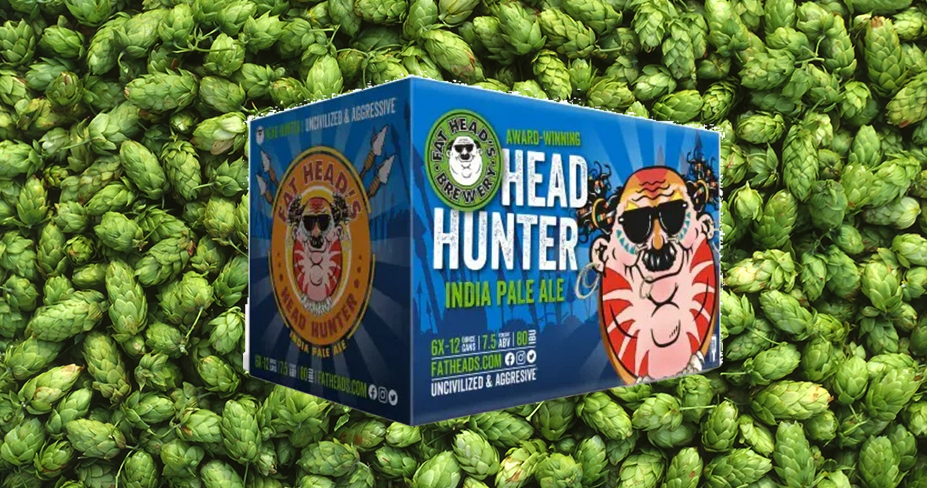
48. Fat Head’s Brewery
Fat Head’s Brewery, based in Middleburg Heights, Ohio, is known for Head Hunter IPA and Bumble Berry Honey Blueberry Ale. Founded in 2009, its 48th ranking in 2024 reflects its strong Ohio presence and hop-forward portfolio.

49. Drake’s Brewing Co/Bear Republic
Drake’s Brewing Co, based in San Leandro, California, and Bear Republic, known for Denogginizer IPA and Racer 5 IPA, form a collective ranked 49th in 2024. Their focus on bold West Coast IPAs and innovative brews drives their craft beer prominence.

50. Rogue Ales Brewery
Rogue Ales Brewery, located in Newport, Oregon, is known for Dead Guy Ale and Hazelnut Brown Nectar. Founded in 1988, its 50th ranking in 2024 reflects its pioneering role in craft beer and a diverse portfolio with a Pacific Northwest flair.


Top 10 Beer Festivals in America plus a few more: Click Here!

Filed Under: Beer, breweries

Homebrewing Law Signed by Jimmy Carter – October 14th, 1978

April 14, 2025 by Dow Scoggins

Homebrewing Law

On October 14, 1978, President Jimmy Carter signed into law H.R. 1337, a bill that included a provision legalizing the home production of a certain amount of beer and wine for personal use. This was a significant moment in American brewing history, as it lifted restrictions that had been in place since the Prohibition era.

While the law itself didn’t immediately spark a homebrewing revolution, it allowed individuals to brew up to 100 gallons per person (or 200 gallons per household) of beer or wine each year without paying taxes on it. This created the legal groundwork for the homebrewing movement, which eventually contributed to the craft beer boom in the U.S.

Homebrewing had been illegal in the U.S. since Prohibition (1920–1933), and while winemaking had been re-legalized after Prohibition ended, brewing beer at home remained illegal until Carter’s law passed.

Though Carter is credited with signing the bill, the push for homebrewing legalization was largely driven by California Senator Alan Cranston, who added the homebrewing provision to H.R. 1337, which primarily dealt with taxation on transportation fuels.

This change in the law encouraged a rise in the hobby of homebrewing, and many of today’s successful craft brewers got their start in homebrewing.

In 1978, a seemingly minor legislative act signed by President Jimmy Carter set off a seismic shift in American culture, one that would transform the beer industry and give rise to the craft beer revolution. On October 14, 1978, Carter signed H.R. 1337, a bill primarily focused on excise taxes for trucks and buses, but tucked within it was an amendment that legalized homebrewing at the federal level for the first time since Prohibition. This moment, often overlooked in the broader scope of Carter’s presidency, became a catalyst for the vibrant craft beer scene we know today.

The Historical Context: Prohibition’s Long Shadow
To understand the significance of H.R. 1337, we need to step back to the era of Prohibition (1920–1933), when the 18th Amendment banned the manufacture, sale, and transportation of alcohol in the United States. While the 21st Amendment repealed Prohibition in 1933, it left a curious omission: home winemaking was legalized, but homebrewing beer remained illegal at the federal level. Federal regulators were wary of homebrewers potentially using brewing grains to produce moonshine, a dangerous and toxic homemade liquor. This fear kept homebrewing in a legal gray area, with hobbyists risking fines or even jail time for brewing small batches of beer at home.

By the 1960s and 1970s, a small but passionate homebrewing community began to emerge, driven by enthusiasts like Charlie Papazian, who learned to brew while studying at the University of Virginia. These hobbyists, often operating covertly, formed clubs and shared recipes, seeking to create beers with more flavor and character than the mass-produced light lagers dominating the American market. At the time, fewer than 100 breweries operated in the U.S., with giants like Anheuser-Busch, Miller, and Coors controlling the industry.

The Legislative Push: Unsung Heroes Behind H.R. 1337
While Jimmy Carter is often hailed as the “homebrew hero,” the real architects of the homebrewing legalization were Senator Alan Cranston (D-CA) and Representative William Steiger (R-WI). In 1976, California homebrewers, including members of the Maltose Falcons and San Andreas Malts, lobbied Cranston, a member of the Senate Ways and Means Committee, to champion their cause. Cranston, who was notably skeptical of the Bureau of Alcohol, Tobacco, and Firearms (ATF), introduced Amendment No. 5354 to H.R. 1337, a tax bill that had little to do with alcohol. Steiger co-sponsored the amendment, advocating for homebrewers’ rights.

The amendment faced resistance. The ATF proposed that homebrewers register with the agency and limit their production to just 30 gallons per household annually—a restriction that hobbyists found impractical. Cranston and Steiger pushed back, arguing that such regulations were overly burdensome and would stifle the hobby. Their advocacy led to a compromise: the amendment allowed adults to brew up to 100 gallons per person or 200 gallons per household annually for personal use, tax-free, without registration. This victory was a significant deregulation, removing barriers that had long suppressed homebrewing.

Carter signed H.R. 1337 into law on October 14, 1978, and it took effect on February 1, 1979. The signing was a quiet affair, with little fanfare, and Carter himself, a Southern Baptist who rarely drank, likely had minimal personal investment in the homebrewing provision. Yet, his signature on this bill would have a profound impact.

The Ripple Effect: From Homebrewing to Craft Brewing
The legalization of homebrewing unleashed a wave of creativity and entrepreneurship. In December 1978, just months after the bill’s passage, Charlie Papazian and Charlie Matzen founded the American Homebrewers Association (AHA) in Boulder, Colorado, and launched Zymurgy magazine to share brewing knowledge. The AHA became a hub for the growing homebrewing community, which today estimates that 500,000 to 750,000 Americans brew at least one batch of beer annually.

Homebrewing became the training ground for many of the craft beer industry’s pioneers. Approximately 90–95% of craft brewers started as homebrewers, including Ken Grossman and Paul Camusi of Sierra Nevada Brewing Company (founded in 1980) and Jim Koch of Boston Beer Company (founded in 1984). These early craft breweries challenged the dominance of macrobreweries, introducing bold flavors like hoppy IPAs and rich stouts to American palates. By 2025, the U.S. boasts nearly 10,000 breweries, a stark contrast to the 90 or so in 1979, with craft breweries driving much of this growth.

The law’s impact extended beyond federal boundaries, though state-level legalization was a slower process. While some states quickly adopted the federal standard, others crafted their own regulations, and it wasn’t until 2013 that Mississippi and Alabama became the final states to legalize homebrewing. Even today, the AHA continues to advocate for fair homebrewing laws, particularly around transporting and sharing homebrew.

Carter’s Legacy: An Unlikely Beer Icon
Jimmy Carter’s role in the homebrewing revolution is both celebrated and debated. Critics argue that his contribution was overstated, as he merely signed a bill driven by Cranston, Steiger, and passionate homebrewers. The broader craft beer boom also owed much to state-level reforms, like the legalization of brewpubs in the 1980s, and innovations such as the development of the Cascade hop. Yet, it’s undeniable that Carter’s signature removed a critical barrier, giving homebrewers the legal freedom to experiment and innovate.

For a man who avoided alcohol due to his faith, Carter’s legacy as a craft beer icon is delightfully ironic. The AHA and brewers across the country have toasted him as a hero, with many crediting H.R. 1337 for enabling the diversity of beers available today. In 2010, Georgia homebrewers even gifted Carter a bottle of honey lager, to which he responded with a handwritten note: “The honey lager has a great taste. It should be on the market.” His understated pride in the law’s impact reflects his broader commitment to small businesses and individual freedoms.

Raising a Glass to Carter
As we sip on a crisp IPA or a velvety porter, it’s worth pausing to honor Jimmy Carter’s small but pivotal role in the craft beer revolution. H.R. 1337 was more than a tax exemption; it was a spark that ignited a movement, empowering hobbyists to dream big and reshape an industry. So, the next time you enjoy a craft beer, raise a glass to Carter, Cranston, Steiger, and the countless homebrewers who turned a once-illegal pastime into a cornerstone of American culture.

Cheers to an American homebrew hero, President Jimmy Carter.

Beer Quotes – A collection of famous beer quotes

Filed Under: Beer, homeberw

Beer ice cream now legal in New York State

April 4, 2025 by Dow Scoggins

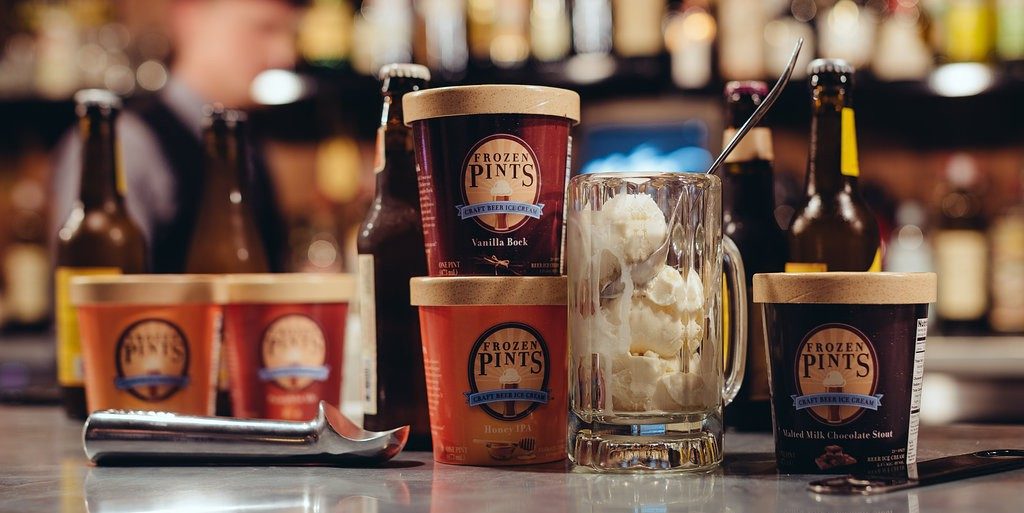
Beer ice creamALBANY, New York – Move over, wine slushies—beer ice cream is coming to New York. A newly passed state law will allow the sale of ice cream made with beer or cider. The frozen treats must contain no more than 5% alcohol by volume and can only be sold to those 21 and older. While wine ice cream has been legal in New York for over a decade, lawmakers voted earlier this year to expand the offering, hoping to tap into growing consumer interest. The bill’s sponsor, Republican Senator James Seward, noted that the legislation blends two of New York’s signature industries: dairy and locally crafted beer and cider.

What is Beer Ice Cream?
Beer ice cream is a frozen dessert that incorporates beer as an ingredient, blending the flavors of hops, malt, and sometimes even the specific notes of the beer style (like chocolate stout, IPA, or pumpkin ale) into a creamy, sweet treat. It typically has a subtle beer flavor and often pairs well with ingredients like caramel, chocolate, or vanilla.

Here are a few key things to know:
Alcohol Content: Most commercial beer ice creams are made with very low alcohol content—often under 5% ABV—to comply with food safety and legal regulations. Some are even cooked to remove most of the alcohol while keeping the flavor.

Taste Profile: The flavor can range from malty and nutty to citrusy and hoppy, depending on the type of beer used. Brewers and ice cream makers may use stouts for a rich, coffee-like profile or IPAs for a slight bitterness and citrusy twist.

Availability: It’s still considered a novelty item but is growing in popularity at specialty creameries, craft breweries, and in states where it’s legal.

Variations: Beer ice cream can be found as:
A churned, creamy dessert like traditional ice cream
A soft-serve style in taprooms or beer festivals
A beer float (ice cream served in a pint of beer)

In 2015, Ben and Jerry’s made a beer ice cream
​Ben & Jerry’s New Belgium Salted Caramel Brown-ie Ale ice cream was a limited-edition flavor released in 2015 as part of a collaboration between Ben & Jerry’s and New Belgium Brewing. The ice cream featured a brown ale–infused base with fudge brownies and salted caramel swirls, and a portion of the proceeds supported the nonprofit Protect Our Winters. ​

This flavor is no longer in production and has been discontinued. It is listed among Ben & Jerry’s retired flavors, often referred to as the “Flavor Graveyard.”

Fun Beer Facts, Breweries and More: Click Here

Filed Under: Beer, breweries

Brewers Association Names Glitter Beer ‘Official’ Beer Style – April Fools Joke

April 1, 2025 by Dow Scoggins

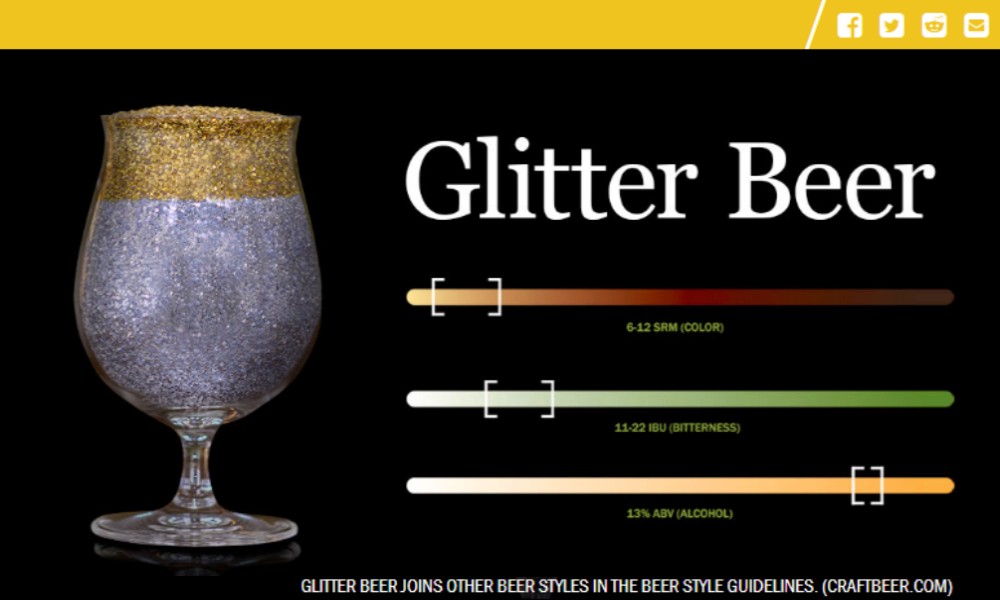
Glitter Beer

BOULDER, Colorado — April 1, 2019 — The Brewers Association (BA), the not-for-profit trade organization championing America’s small and independent craft brewers, today announced an exciting update to its 2025 Beer Style Guidelines, officially adding Glitter Beer as a new category. This vibrant, eye-catching beer style, which surged in popularity for its shimmering, edible-glitter-infused appearance, is now recognized in response to its growing presence in the craft beer scene.

The BA’s Beer Style Guidelines, updated annually, serve as a key resource for brewers, beer judges, and competition organizers, showcasing the diverse world of craft beer. This rare mid-cycle amendment reflects the rapid rise of Glitter Beer, driven by consumer enthusiasm and widespread adoption by breweries nationwide. “Our guidelines evolve with the industry, and Glitter Beer’s dazzling popularity demanded swift recognition,” said BA spokesperson Lisa Frank. “This addition brings a fun, innovative spark to our competitions and celebrates the creativity of craft brewers.” Starting in 2025, Glitter Beer will be eligible for gold, silver, and bronze medals at prestigious BA events like the Great American Beer Festival and World Beer Cup.

Quantitative Style Statistics
Original Gravity: 1.111 — 1.053
Final Gravity: 1.021 — 0.900
ABV: 13%
IBU: 11-22
SRM: 6-12
Volumes of CO2: 4.98
Apparent Attenuation: 81%

Pairing Suggestions
Peeps
Nicholas Sparks Novels
Mariah Carey’s “Glitter” Soundtrack
Construction paper and glue

More about the The Brewers Association
The Brewers Association (BA), established in 1978, is the not-for-profit trade organization dedicated to promoting and protecting America’s small and independent craft brewers. Based in Boulder, Colorado, the BA supports over 9,000 craft breweries through advocacy, education, and resources like the annual Beer Style Guidelines, fostering innovation and quality in the industry. It organizes prestigious events such as the Great American Beer Festival and World Beer Cup, celebrating the diversity and creativity of craft beer. Committed to community and sustainability, the BA empowers brewers to thrive in a competitive market while championing the cultural and economic impact of craft brewing across the United States.

Top 10 Beer Festivals in America plus a few more: Click Here!

Filed Under: Beer, Beer Competition

The Top 10 Drunkest Cities in America

March 18, 2025 by Dow Scoggins

Based on available data, the “drunkest” cities in the United States are primarily identified by the percentage of adults who report excessive drinking, defined by the CDC as binge drinking (four or more drinks for women, five or more for men on a single occasion) or heavy drinking (eight or more drinks per week for women, 15 or more for men). Here’s a rundown of the top cities, drawing from recent analyses, with a focus on Wisconsin’s dominance and other notable areas:

  1. Green Bay, Wisconsin – Frequently cited as the drunkest city, Green Bay tops the list with 26.5% of adults reporting excessive drinking. About 50.5% of driving deaths here involve alcohol, reflecting a strong drinking culture. Wisconsin’s low alcohol taxes and harsh winters are often mentioned as contributing factors.
  2. Eau Claire, Wisconsin – Tied for second with 26.2% of adults drinking excessively. The city’s Midwest location and vibrant bar scene contribute to its ranking.
  3. Appleton, Wisconsin – Also at 26.2% for excessive drinking, Appleton is another Wisconsin city with a robust drinking culture, bolstered by its brewery presence.
  4. Madison, Wisconsin – With 25.5% of adults reporting excessive drinking and 38.7% of driving deaths involving alcohol, Madison, home to the University of Wisconsin, ranks high due to its college-town vibe.
  5. Fargo, North Dakota – The only non-Wisconsin city in the top five, Fargo has 25.2% of adults drinking excessively, with 29.5% of driving deaths alcohol-related. Its 63 drinking establishments add to the scene.
  6. La Crosse, Wisconsin – Boasting more bars per capita than any other U.S. city, La Crosse has 25.1% of adults reporting excessive drinking.
  7. Fond du Lac, Wisconsin – With 24.6% of adults drinking excessively and 25.9% of driving deaths involving alcohol, this city continues Wisconsin’s trend.
  8. Milwaukee, Wisconsin – Often cited as a top contender, Milwaukee has an excessive drinking rate of 24.6%. Its beer gardens and major breweries, combined with low alcohol taxes, make it a drinking hub.
  9. Ames, Iowa – Home to Iowa State University, Ames has 24.4% of adults reporting excessive drinking, though its alcohol-related driving deaths are lower at 11.8%.
  10. Minneapolis, Minnesota – With a 23.5% excessive drinking rate, Minneapolis ranks high globally as a drinking city, with 1,100 alcohol-related deaths in Minnesota in 2021.

Additional Notable Cities:
Iowa City, Iowa (23.1% excessive drinking) and Grand Forks, North Dakota (24.2%) also rank high, reflecting the Midwest’s heavy drinking trend.
Boston, Massachusetts (23.1%), Buffalo, New York (22.8%), and Chicago, Illinois (22.7%) round out top lists, with Boston’s bar culture and Chicago’s nightlife contributing.
Sacramento, California (21.6%) and New Orleans, Louisiana (21.9%) appear in some rankings, with New Orleans’ Mardi Gras and Sacramento’s proximity to wine regions playing roles.

Why Wisconsin Dominates:
Wisconsin claims seven of the top 10 drunkest cities, with factors like low alcohol taxes, a strong brewing history (think Milwaukee’s beer legacy), and cultural influences from German and Polish settlers. The state’s 26.2% excessive drinking rate is the highest in the U.S., and its cities like Green Bay, Eau Claire, and Appleton consistently top rankings. Harsh winters and a festival-heavy culture (Milwaukee’s “city of festivals”) further fuel the trend.

Filed Under: Beer Competition

Top 10 Cities in the United States to celebrate St. Patrick’s Day

March 17, 2025 by Dow Scoggins

Top 10 Cities in the United States to celebrate St. Patrick's DayHistory of Saint Patrick’s Day
Since the mid-20th century, St. Patrick’s Day has evolved from a primarily religious and cultural observance into a global celebration of Irish identity, driven by commercialization, tourism, and the Irish diaspora. In Ireland, the holiday shifted significantly after the 1930s, when Dublin’s parade grew into a national event to promote Irish pride. By the 1990s, the Irish government launched the St. Patrick’s Festival, a multi-day event in Dublin featuring music, dance, and cultural showcases, capitalizing on tourism and global interest. This marked a turning point, as Ireland embraced the holiday’s economic potential, with over 1 million visitors attending Dublin’s festivities annually by the 2010s.

In the United States, where Irish-Americans number over 30 million, St. Patrick’s Day became a cultural juggernaut. Cities like New York, Boston, and Chicago amplified traditions—New York’s parade, the world’s largest, draws up to 2 million spectators, while Chicago’s river-dyeing, started in 1962, became a viral symbol. The holiday also grew commercial, with green beer, shamrock merchandise, and leprechaun imagery fueling a multi-billion-dollar industry. However, this commercialization sparked debates, with critics arguing it perpetuates stereotypes, like drunkenness, over authentic Irish culture.

Globally, St. Patrick’s Day expanded through “greening” initiatives, where landmarks like the Sydney Opera House or the Colosseum turn green, a campaign Ireland began in 2010 to boost tourism. By 2025, over 70 countries host parades or events, from Tokyo to Buenos Aires, reflecting the diaspora’s reach and globalization’s impact. Yet, tensions persist—some Irish communities push back against caricatures, advocating for focus on traditional music, language, and history. The modern holiday, while festive, balances cultural pride with the challenges of commodification and identity.

Top 10 U.S. Cities to Celebrate St. Patrick’s Day(according to US News and World Report)
1. Boston, MA
2. Savannah, GA
3. New London, Wisconsin
4. Chicago
5. Hot Springs, Arkansas
6. North Kansas City, Missouri
7. New York City
8. O’Neill, Nebraska
9. Enterprise, Alabama
10. New Orleans

Boston, Massachusetts
Boston, with its deep Irish-American heritage, is a St. Patrick’s Day powerhouse. The South Boston parade, one of the oldest in the U.S., fills the streets with bagpipes, colorful floats, and cheering crowds. Iconic pubs like The Black Rose pour green beer and serve corned beef, while céilí dances and cultural events along the Irish Heritage Trail add authenticity. The city’s vibrant community spirit and historical ties to Ireland create an electric, welcoming atmosphere, making Boston a top spot to celebrate March 17.

Savannah, Georgia
Savannah’s St. Patrick’s Day is a Southern gem, hosting one of the largest parades in the region since 1824. The historic district, with its oak-lined squares, becomes a sea of green as floats and bands march through. River Street’s open-container vibe fuels a laid-back party with live music and Irish whiskey. The mild March weather and Savannah’s charm—think cobblestone streets and warm hospitality—make it an inviting, festive destination for a unique St. Patrick’s Day experience.

New London, Wisconsin
New London, Wisconsin, offers a quirky, small-town St. Patrick’s Day with its “Shamrock Club” celebration, one of the state’s oldest. The town transforms into “New Dublin” for the week, hosting a parade with Irish dancers, pipe bands, and leprechaun-themed floats. Local taverns like Finn’s Pub serve green beer, and community events like Irish breakfasts foster a cozy, family-friendly vibe. New London’s heartfelt, grassroots festivities make it a charming choice for an authentic, low-key holiday.

Chicago, Illinois
Chicago’s St. Patrick’s Day is iconic, thanks to the surreal tradition of dyeing the Chicago River emerald green, a spectacle that draws thousands. The downtown parade bursts with Irish pride, featuring shamrock-decorated floats and bagpipers, while South Side Irish neighborhoods like Beverly host their own marches. Pubs citywide pour green beer and Irish stout, keeping the party going late. Chicago’s bold, festive energy and unique traditions make it a must-visit for an unforgettable March 17.

Hot Springs, Arkansas
Hot Springs, Arkansas, claims the “World’s Shortest St. Patrick’s Day Parade,” a 98-foot spectacle on Bridge Street that’s as whimsical as it gets. Expect Elvis impersonators, green-clad marchers, and a dose of Southern eccentricity. The town’s historic bathhouses and lively bars, like Maxine’s Live, serve up green cocktails and Irish tunes. Hot Springs’ compact, quirky celebration, paired with its spa-town charm, offers a fun, offbeat St. Patrick’s Day experience.

North Kansas City, Missouri
North Kansas City’s St. Patrick’s Day shines with its Snake Saturday Parade, a beloved local tradition blending Irish and reptilian themes to celebrate St. Patrick’s snake-banishing legend. Floats, bagpipers, and green-bedecked crowds fill the streets, while breweries like Cinder Block tap special green beers. The community’s laid-back, Midwestern warmth and creative spin on the holiday make North Kansas City a delightful, under-the-radar spot for March 17 festivities.

New York City, New York
New York City’s St. Patrick’s Day is a global spectacle, anchored by the world’s oldest and largest parade, running since 1762 along Fifth Avenue. Green-clad crowds pass St. Patrick’s Cathedral as bagpipes blare and Irish dancers perform. From Hell’s Kitchen pubs to cultural events like step-dancing showcases, the city pulses with energy. NYC’s sheer scale, diversity, and Irish pride deliver a St. Patrick’s Day that’s both historic and exhilarating.

O’Neill, Nebraska
O’Neill, Nebraska, dubbed the “Irish Capital of Nebraska,” delivers a heartfelt St. Patrick’s Day rooted in its Irish settler history. The town paints a shamrock on its main intersection and hosts a lively parade with tractors, horses, and green floats. Local bars like The Mint serve Irish coffee, and community events include Irish music and dance. O’Neill’s small-town charm and proud heritage make it a cozy, authentic spot for a traditional celebration.

Enterprise, Alabama
Enterprise, Alabama, hosts a surprisingly spirited St. Patrick’s Day with its “World’s Smallest St. Patrick’s Day Parade,” a tongue-in-cheek event featuring a single kilted marcher and a bagpiper. The town leans into the fun with green-themed festivals, live music, and pub crawls at spots like The Barrel. Enterprise’s warm weather and quirky, community-driven vibe offer a lighthearted, sunny twist on the holiday, perfect for a relaxed celebration.

New Orleans, Louisiana
New Orleans brings its Mardi Gras flair to St. Patrick’s Day, with the Irish Channel parade tossing cabbages, carrots, and beads from vibrant floats. The French Quarter buzzes with green cocktails, Irish jigs, and block parties, while bars like Parasol’s serve Guinness and po’boys. The city’s love for revelry, combined with its Irish-American roots, creates a raucous, soulful celebration. New Orleans’ festive chaos makes it an unbeatable St. Patrick’s Day destination.


Top 10 Beer Festivals in America plus a few more: Click Here!

Filed Under: Beer Festival

St. Patrick’s Day by the Numbers

March 16, 2025 by Dow Scoggins

St. Patrick’s Day by the Numbers


St. Patrick’s Day by the Numbers

On St. Patrick’s Day, an estimated 13 million pints of Guinness are consumed worldwide, fueling celebrations from Dublin to Dubai. In the United States, about 60% of Americans plan to join the festivities, contributing to a staggering $5.9 billion in total spending. The average reveler shells out around $40 on green attire, drinks, and food.

Iconic traditions shine in Chicago, where 45 pounds of eco-friendly vegetable dye have turned the river a brilliant emerald since the practice began in 1962. Meanwhile, a leprechaun’s mythical pot of gold—holding 1,000 one-ounce coins—would be worth roughly $1.3 million at current gold prices. St. Patrick’s Day ranks as the fourth-most popular drinking holiday in the U.S., trailing only New Year’s Eve, Christmas, and the Fourth of July. Sixteen American cities bear the name Dublin, and the nation’s first St. Patrick’s Day parade marched through Boston in 1737—decades before Ireland held its own.

American St. Patrick’s Day
St. Patrick’s Day in the United States is a boisterous, emerald-hued spectacle that transforms cities into Irish wonderlands every March 17. Rooted in the veneration of Ireland’s patron saint, the holiday arrived with waves of Irish immigrants in the 18th and 19th centuries and quickly evolved from solemn religious observances into a full-throated celebration of Irish heritage and general revelry. In cities with large Irish-American populations—Boston, Chicago, New York, and Savannah—parades draw hundreds of thousands of spectators. Chicago famously dyes its river a vivid green using an environmentally safe vegetable-based dye, a tradition started in 1962 by plumbers who noticed the color lingering after testing for pollution. Bagpipers in kilts, step dancers with lightning-fast feet, and floats sponsored by local unions and businesses wind through downtown streets while spectators, many sporting shamrock antennae or “Kiss Me, I’m Irish” pins (regardless of actual ancestry), cheer and toss beads.

The day is as much about communal indulgence as cultural pride. Bars open early, serving green beer, Irish car bombs, and corned beef with cabbage to crowds decked out in every shade of green imaginable. House parties spill onto porches, and even non-Irish Americans join in, turning the holiday into a universal excuse for daytime drinking and good-natured mischief. In New York, the St. Patrick’s Day Parade—dating back to 1762 and billed as the world’s oldest and largest—marches up Fifth Avenue past St. Patrick’s Cathedral, where the Archbishop offers a blessing. Though the festivities can get rowdy, with police managing overflowing sidewalks and occasional overindulgers, the overwhelming mood is one of inclusive joy, a mid-March reminder that, for one day, everyone claims a drop of Irish blood.

Top 10 Beer Festivals in America plus a few more: Click Here!


Filed Under: Beer, Beer Festival

Iditarod Trail Sled Dog Race: America’s Last Great Race

March 9, 2025 by Dow Scoggins

Photo by Jeff Schultz
Jeff Schultz Photography

Iditarod Trail Sled Dog Race: America’s Last Great Race
Every March, teams of mushers and their sled dogs embark on one of the most grueling endurance races in the world—the Iditarod Trail Sled Dog Race. Spanning approximately 1,000 miles across the harsh Alaskan wilderness, the race tests the limits of human and canine endurance, skill, and determination. Known as The Last Great Race on Earth, the Iditarod is a defining event in sled dog racing and a cherished Alaskan tradition.

The Origins of the Iditarod
The race traces its roots back to Alaska’s early history, when dog sledding was the primary mode of winter transportation. The Iditarod Trail, originally a mail and supply route between coastal towns and remote mining camps, became legendary in 1925 during the famous Serum Run to Nome. A deadly diphtheria outbreak threatened the town of Nome, and a relay of dog sled teams raced to deliver life-saving medicine across nearly 700 miles in brutal Arctic conditions. The heroic efforts of mushers and their dogs, including the famous Balto and Togo, cemented sled dog racing as an iconic part of Alaskan heritage.

However, with the rise of snowmobiles, dog sledding declined, and the historic trail was at risk of being forgotten. In 1973, Alaskan musher Joe Redington Sr. organized the first official Iditarod race to honor the legacy of sled dogs and preserve the tradition of long-distance mushing.

The Racecourse: A Journey Through Alaska’s Wildest Terrain
The modern Iditarod follows the historic trail between Anchorage and Nome, traversing some of the most rugged and remote landscapes in the world. The race alternates between two routes:

The Northern Route (even-numbered years)
The Southern Route (odd-numbered years)

Both routes cover over 1,000 miles, passing through dense forests, frozen rivers, windswept tundra, and treacherous mountain ranges. Racers must navigate blizzards, whiteouts, subzero temperatures (as low as -50°F), and gale-force winds, all while ensuring the health and safety of their sled dog teams.

Notable Checkpoints Along the Trail
🔹 Anchorage – The ceremonial start of the race, full of festivities and fanfare.
🔹 Rainy Pass – One of the most dangerous stretches, as mushers cross the Alaska Range.
🔹 Rohn – A remote checkpoint in the heart of the wilderness.
🔹 Iditarod – The ghost town that gives the race its name.
🔹 Shaktoolik – A brutal, wind-battered section along the Bering Sea coast.
🔹 Nome – The legendary finish line where victory is celebrated.

The Mushers & Their Teams
Mushers are the heart of the Iditarod, spending months (or even years) training for the race. They must be skilled in survival, navigation, and dog care, as they guide their 12 to 16 sled dogs across the perilous landscape. Each team must carefully manage supplies, food, and rest, as well as mandatory checkpoints where veterinarians check the health of the dogs.

Legendary mushers such as Rick Swenson (five-time champion), Susan Butcher (four-time champion and the first woman to dominate the race), Lance Mackey, and Dallas Seavey have left their mark on Iditarod history.

The Sled Dogs: True Canine Athletes
The true stars of the Iditarod are the Alaskan Huskies, a breed known for its incredible endurance, strength, and cold-weather adaptability. These dogs can run up to 100 miles per day and thrive in extreme winter conditions. Each sled dog burns an astonishing 10,000+ calories daily, requiring a diet rich in meat, fish, and fat to sustain their energy levels.

Veterinarians monitor the health of the dogs at every checkpoint, ensuring they receive proper care and rest. Mushers also take pride in their bond with the dogs, treating them as both athletes and beloved companions.

Challenges & Controversies
The Iditarod is a race of survival, but it has also faced criticism over dog welfare concerns. While many mushers prioritize their dogs’ health, some organizations have raised questions about racing conditions and potential risks. The race has implemented strict veterinary checks, mandatory rest periods, and disqualification rules to promote the safety of the dogs.

Additionally, climate change has begun to affect the course, with warmer temperatures and melting snow creating unpredictable trail conditions.

A Lasting Legacy
Despite its challenges, the Iditarod remains an enduring symbol of Alaska’s history, resilience, and pioneering spirit. It honors the traditions of early mushers, the incredible athleticism of sled dogs, and the thrill of adventure in one of the most extreme environments on Earth.

Whether it’s the drama of a neck-and-neck finish or the sheer determination of a musher and their team battling through a storm, the Iditarod continues to captivate the world each year. For those who dare to take on The Last Great Race, the journey is not just about winning—it’s about survival, teamwork, and the unbreakable bond between human and dog.

List of winners of all the Iditarod Trail Sled Dog Race 
Year Musher
1973 Dick Wilmarth
1974 Carl Huntington
1975 Emmitt Peters
1976 Gerald Riley
1977 Rick Swenson
1978 Dick Mackey
1979 Rick Swenson
1980 Joe May
1981 Rick Swenson
1982 Rick Swenson
1983 Rick Mackey
1984 Dean Osmar
1985 Libby Riddles
1986 Susan Butcher
1987 Susan Butcher
1988 Susan Butcher
1989 Joe Runyan
1990 Susan Butcher
1991 Rick Swenson
1992 Martin Buser
1993 Jeff King
1994 Martin Buser
1995 Doug Swingley
1996 Jeff King
1997 Martin Buser
1998 Jeff King
1999 Doug Swingley
2000 Doug Swingley
2002 Martin Buser
2003 Robert Sørlie
2004 Mitch Seavey
2005 Robert Sørlie
2006 Jeff King
2007 Lance Mackey
2008 Lance Mackey
2009 Lance Mackey
2010 Lance Mackey
2011 John Baker
2012 Dallas Seavey
2013 Mitch Seavey
2014 Dallas Seavey
2015 Dallas Seavey
2016 Dallas Seavey
2017 Mitch Seavey
2018 Joar Leifseth
2019 Peter Kaiser
2020 Thomas Wærner
2021 Dallas Seavey
2022 Brent Sass
2023 Ryan Redington
2024 Dallas Seavey


For Brewing fun facts, trivia, movies and more, Click Here.

Filed Under: Uncategorized

George Washington’s Beer Recipe, Brewery and Distillery at Mount Vernon

February 18, 2025 by Dow Scoggins

George Washington’s Beer Recipe

George Washington’s Beer Recipe and His Brewing and Distilling Legacy at Mount Vernon
George Washington, America’s first president and a Revolutionary War hero, was also a passionate brewer and distiller. Beyond his political achievements, Washington’s ventures into crafting beer and whiskey at his Mount Vernon estate reveal a lesser-known side of his character—one rooted in innovation, practicality, and a keen business sense. From a handwritten recipe for “small beer” to a thriving whiskey distillery, Washington’s contributions to early American beverage culture are both fascinating and enduring. This article delves into the details of his beer recipe, his brewing practices, and the distillery that became a profitable enterprise, optimized for historical accuracy and modern relevance.

The Small Beer Recipe: A Taste of Colonial Life

In 1757, while serving as a young colonel in the Virginia militia at Fort Loudoun, Pennsylvania, George Washington jotted down a recipe for “small beer” in a personal notebook, now housed at the New York Public Library. Small beer was a staple in 18th-century America, prized for its low alcohol content (typically 2-4%) and safety compared to often-contaminated water. It was consumed by soldiers, workers, and even children, making it a practical choice for military camps and households.

Washington’s recipe is straightforward, reflecting the resourcefulness of colonial brewing:
The recipe uses simple ingredients: wheat bran, hops for bitterness, molasses as a fermentable sugar, and yeast to drive fermentation. The process involves boiling the bran and hops for three hours, straining the wort (unfermented beer), and adding molasses to create a sweet, porter-like ale. The mixture ferments for 24 hours at a temperature described as “little more than Blood warm” (about 80-90°F), with a blanket used in cold weather to maintain warmth. After a week, the beer is bottled, ready for consumption.

This small beer was likely brewed for Washington’s troops or household rather than commercial sale. Its sweet, molasses-heavy flavor and quick production time made it ideal for frontier conditions. Modern brewers, like the Coney Island Brewing Company in 2011, have recreated the recipe, tweaking it with less molasses and modern hops to produce a roasty, cherry-brown porter that appeals to contemporary tastes.

Brewing at Mount Vernon: A Household Staple

At Mount Vernon, Washington’s sprawling Virginia estate, beer was a daily necessity. Washington himself was fond of dark, English-style porters, often enjoying a pint with dinner. He imported large quantities of beer, including 492 bottles of Dorsetshire beer in 1762, but was occasionally disappointed by the quality of shipments, which spurred his interest in local production.

Brewing at Mount Vernon was likely managed by enslaved workers and hired servants, with hops supplied by individuals like Boatswain, an enslaved ditcher. Martha Washington’s cookbook included brewing instructions, suggesting that beer-making was a collaborative effort, possibly overseen by estate managers like Lund Washington, who once experimented with persimmon beer. Beer was not only for personal enjoyment but also served practical purposes, such as hydrating workers and entertaining guests. During Washington’s 1758 campaign for the House of Burgesses, he provided 43 gallons of strong beer to voters, a common practice in colonial politics.

While Washington’s small beer recipe was not a commercial product, it underscores the importance of brewing in colonial life. The process was labor-intensive but essential, ensuring a steady supply of safe, nourishing drink for the estate.

The Mount Vernon Distillery: A Business Triumph

Washington’s most significant contribution to beverage production came later in life with the establishment of a whiskey distillery at Mount Vernon. In 1797, his Scottish farm manager, James Anderson, proposed building a distillery to capitalize on the estate’s surplus grain and proximity to the Potomac River. Washington, ever the astute businessman, approved the project, and construction began using local river rocks and sandstone. The distillery was strategically placed next to Washington’s gristmill, which supplied ground grain for whiskey production.

The distillery focused on rye whiskey, made from a recipe of 60% rye, 35% corn, and 5% malted barley. Unlike modern whiskeys, it was unaged, bottled directly from the still for immediate sale. By 1799, the distillery was producing 11,000 gallons annually, yielding a profit of $7,500—a substantial sum for the era. The operation was staffed by six enslaved men—Daniel, Hanson, James, Nat, Peter, and Timothy—who worked alongside other laborers under Anderson’s direction. The use of Oliver Evans’ automated gristmill system allowed year-round production, setting Mount Vernon apart from smaller, seasonal distilleries.

Washington himself preferred beer or Madeira wine over whiskey, but he recognized the distillery’s economic potential. After his death in 1799, the distillery ceased operations, but it was meticulously reconstructed in 2007 by the Mount Vernon Ladies’ Association. Today, it produces small batches of rye whiskey, which earned a silver medal at the 2019 American Craft Spirits Association Awards. Visitors can tour the distillery, sample the whiskey, and explore this overlooked facet of Washington’s legacy.

Modern Relevance and How to Recreate the Beer

Washington’s beer recipe and distillery offer a unique lens into colonial ingenuity and early American industry. For homebrewers, recreating the small beer is a rewarding challenge. A scaled-down 5-gallon batch might include 6 pounds of molasses, 0.25 pounds of flaked wheat, East Kent Goldings hops, and Nottingham ale yeast. Boil for 60-180 minutes, ferment at 65°F, and bottle after a week for a sweet, lightly carbonated ale with historical flair. Note that the molasses can create a syrupy, slightly bitter finish, so modern adjustments may enhance drinkability.

The reconstructed Mount Vernon distillery also inspires modern craft distillers, showcasing the timeless appeal of rye whiskey. Its historical significance, combined with Washington’s entrepreneurial spirit, makes it a compelling story for food and history enthusiasts alike.

Conclusion: A Toast to Washington’s Legacy

George Washington’s small beer recipe and Mount Vernon distillery highlight his multifaceted legacy as a farmer, innovator, and businessman. The beer recipe, born of necessity, reflects the resourcefulness of colonial life, while the distillery underscores Washington’s ability to seize new opportunities. Together, they paint a picture of a man who not only shaped a nation but also left an indelible mark on America’s beverage culture. Whether you’re sipping a modern recreation of his porter or touring the Mount Vernon distillery, Washington’s brewing and distilling endeavors invite us to raise a glass to his enduring influence.

For Fun Beer Facts, Trivia and more: Click Here

Filed Under: Beer, craftbeer

Top 10 Strong Scottish Ales Brewed in America

February 15, 2025 by Dow Scoggins

Top 10 Strong Scottish Ales Brewed in America
This Top Ten Strong Scottish Ales list is from the U.S. Open Beer Championship, Great American Beer Festival, and World Beer Cup. The top 10 Strong Scottish Ales are overwhelmingly malty and full bodied. Perception of hop bitterness is very low. Hop flavor and aroma are very low or nonexistent. Color ranges from deep copper to brown. The clean alcohol flavor balances the rich and dominant sweet maltiness in flavor and aroma A caramel character is often a part of the profile. Dark roasted malt flavors and aroma may be evident at low levels. ABV: 6.5 – 10%. IBU: 25-35.


1. Cinnaster Scotch Ale – Badger State Brewing – Wisconsin
2. Founders Dirty Bastard – Founders Brewing – Michigan
3. Wulver – Thirsty Dog Brewing Company – Ohio
4. Wee Heavy – AleSmith Brewing – California
5. Real Heavy – Real Ale Brewing – Texas
6. Twisted Whisker Scotch Ale – Barley Brown’s Brewpub – Oregon
7. Kilt Lifter Scotch Ale – Moylan’s Brewery – California
8. Wee Heavy Scotch Style Ale – The Duck-Rabbit Craft Brewery – North Carolina
9. Gravedigger Billy – Revolution Brewing – Illinois
10. Scotty Karate Scotch Ale – Dark Horse Brewing – Michigan


History of Strong Scottish Ales

Strong Scottish ales, often referred to as “wee heavy” or Scotch ales, trace their origins to the brewing traditions of Scotland, particularly in the 18th and 19th centuries. These robust, malt-forward beers emerged as a response to the harsh climates and economic conditions of the region, where hearty, warming beverages were prized. Brewers in Edinburgh and other Scottish cities capitalized on the abundance of local barley and the skill of caramelizing malt through extended boiling, which imparted the ales’ signature rich, toffee-like sweetness and deep amber-to-mahogany hues. The style was influenced by the shilling system, a pricing structure based on strength, with higher-shilling beers like 90/- (ninety shilling) denoting stronger, more expensive brews. By the 19th century, these ales gained prominence not only in Scotland but also as exports, particularly to the British Empire, where their high alcohol content (typically 6-10% ABV) and robust flavors made them a favorite in colder colonies like Canada.

The evolution of strong Scottish ales was shaped by both tradition and adaptation. While the style remained rooted in Scotland’s brewing heritage, the Industrial Revolution brought advancements in brewing technology, allowing for greater consistency and scale. However, the two World Wars and subsequent economic pressures led to a decline in the production of high-strength beers, as resources were diverted and tastes shifted toward lighter ales and lagers. Despite this, the style persisted, with breweries like Traquair House and Belhaven keeping the tradition alive. In the late 20th century, the craft beer movement in North America sparked renewed interest, with American brewers experimenting with the style, often amplifying its maltiness or adding smoky or peaty notes inspired by whisky. Today, strong Scottish ales remain a beloved niche, celebrated for their complex, warming character and historical ties to Scotland’s rugged spirit.

Top 10 Beers in America – Ales  Lagers  Specialty  Barrel Aged

 

Filed Under: Uncategorized

  • « Go to Previous Page
  • Page 1
  • Interim pages omitted …
  • Page 21
  • Page 22
  • Page 23
  • Page 24
  • Page 25
  • Interim pages omitted …
  • Page 28
  • Go to Next Page »

Primary Sidebar

Follow us

  • Email
  • Facebook
  • Instagram
  • Twitter
  • YouTube

2026 U.S. Open Beer Championship Registration is now open  

 
2025 U.S. Open Cider Championship  
Medal Winners

Archives

  • September 2026
  • August 2026
  • July 2026
  • June 2026
  • May 2026
  • April 2026
  • March 2026
  • February 2026
  • January 2026
  • December 2025
  • November 2025
  • October 2025
  • September 2025
  • August 2025
  • July 2025
  • June 2025
  • May 2025
  • April 2025
  • March 2025
  • February 2025
  • January 2025
  • December 2024
  • November 2024
  • October 2024
  • September 2024
  • August 2024
  • July 2024
  • May 2024
  • April 2024
  • March 2024
  • November 2023
  • October 2023
  • August 2023
  • July 2023
  • June 2023
  • May 2023
  • April 2023
  • October 2022
  • May 2022
  • February 2022
  • January 2022
  • June 2021
  • March 2021
  • December 2020
  • September 2020
  • August 2020
  • July 2020
  • June 2020
  • February 2020
  • November 2019
  • February 2019
  • May 2018
  • April 2018

Copyright © 2026 · BeerInfo.com. All Rights Reserved.