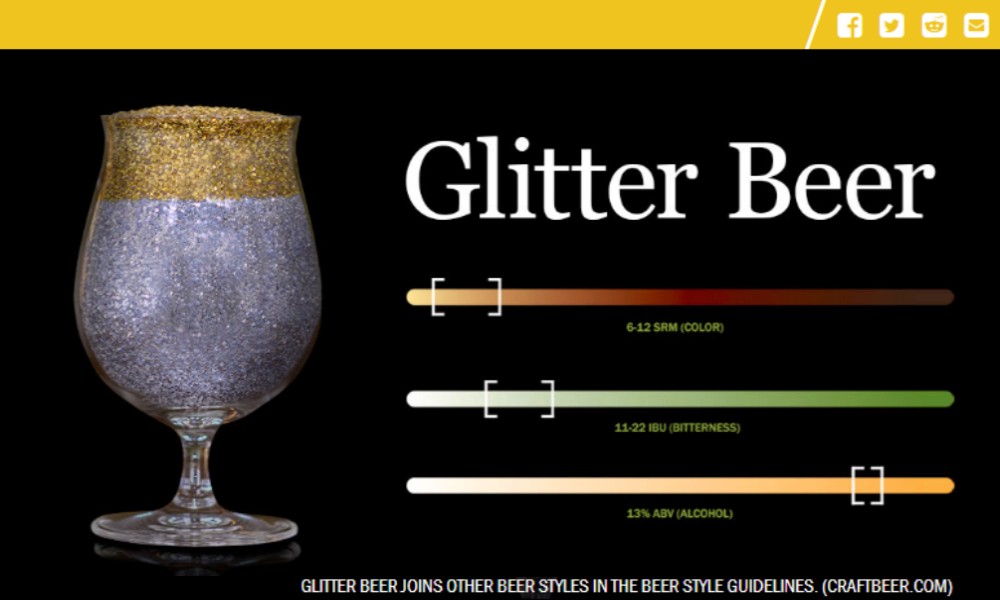
 BOULDER, Colorado — April 1, 2019 — The Brewers Association (BA), the not-for-profit trade organization championing America’s small and independent craft brewers, today announced an exciting update to its 2025 Beer Style Guidelines, officially adding Glitter Beer as a new category. This vibrant, eye-catching beer style, which surged in popularity for its shimmering, edible-glitter-infused appearance, is now recognized in response to its growing presence in the craft beer scene.
The BA’s Beer Style Guidelines, updated annually, serve as a key resource for brewers, beer judges, and competition organizers, showcasing the diverse world of craft beer. This rare mid-cycle amendment reflects the rapid rise of Glitter Beer, driven by consumer enthusiasm and widespread adoption by breweries nationwide. “Our guidelines evolve with the industry, and Glitter Beer’s dazzling popularity demanded swift recognition,” said BA spokesperson Lisa Frank. “This addition brings a fun, innovative spark to our competitions and celebrates the creativity of craft brewers.” Starting in 2025, Glitter Beer will be eligible for gold, silver, and bronze medals at prestigious BA events like the Great American Beer Festival and World Beer Cup.
Quantitative Style Statistics
Original Gravity: 1.111 — 1.053
Final Gravity: 1.021 — 0.900
ABV: 13%
IBU: 11-22
SRM: 6-12
Volumes of CO2: 4.98
Apparent Attenuation: 81%
Pairing Suggestions
Peeps
Nicholas Sparks Novels
Mariah Carey’s “Glitter” Soundtrack
Construction paper and glue
More about the The Brewers Association
The Brewers Association (BA), established in 1978, is the not-for-profit trade organization dedicated to promoting and protecting America’s small and independent craft brewers. Based in Boulder, Colorado, the BA supports over 9,000 craft breweries through advocacy, education, and resources like the annual Beer Style Guidelines, fostering innovation and quality in the industry. It organizes prestigious events such as the Great American Beer Festival and World Beer Cup, celebrating the diversity and creativity of craft beer. Committed to community and sustainability, the BA empowers brewers to thrive in a competitive market while championing the cultural and economic impact of craft brewing across the United States.
Top 10 Beer Festivals in America plus a few more: Click Here!

 Ursula Brewery(2015-2024)
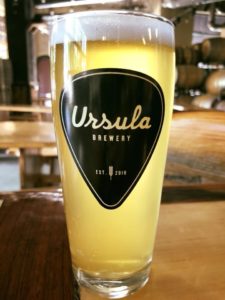 Named after Ben’s grandmother Ursula (a tough-as-nails German immigrant who loved her lager), the brewery’s identity has always been “refined classics with a Colorado twist.” From day one, Ursula specialized in crisp, clean lagers (a rarity in IPA-crazed Colorado at the time) alongside English-style bitters, German altbiers, and the occasional big barrel-aged stouts. Their flagship Frauline Ursula German Pilsner became an instant local favorite for its snappy noble-hop bite and bone-dry finish, while Phantasmagoria (a rotating series of barrel-aged imperial stouts and barleywines) paid direct homage to their Phantom Canyon’s iconic old program.


 PICKERINGTON, OH – “We will have an amazing selection of unique offerings pouring in the Combustion Private Event Space on the 22nd for Pick Ohio Beer Fest! Tickets are on sale now!” said Combustion owner Sarah Jackson.
 Brew Master Patrick Dakin is proud to welcome you to the Brewery at the Norwich Inn, home of Jasper Murdock Ales. Our Ales have won 4 silver and a gold medal in the last 3 years at the Great International Beer Competition.
 President James Monroe dined at the Norwich Inn in 1817 while on a horseback tour of the New England frontier. Alas, history does not record whether he had a beer. But if he did, it was most likely brewed at the Inn. Vermont had no commercial breweries at the time, and the local beers were brewed in very small batches. Even the biggest copper kettle provided just enough ale for the brewer and his guests.
 Alaska, with its rugged landscapes and vibrant communities, has long been a haven for craft beer enthusiasts. The AK Beer Awards Competition, an annual showcase of the state’s finest brews, brings together brewers, judges, and beer lovers to celebrate the artistry and innovation of Alaskan craft beer. Held in the heart of Anchorage, this competition highlights the unique flavors and bold creativity that define Alaska’s brewing scene, from crisp lagers to smoky porters crafted with local ingredients.
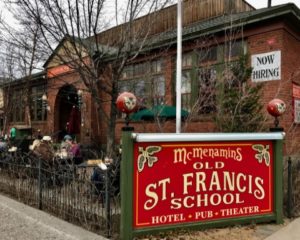 The Old St. Francis School, Pub and Theater