• Skip to secondary menu
  • Skip to main content
  • Skip to primary sidebar

Beer Info

Beer News, Beer Releases and New Breweries

  • Home
  • Top 10 Beers
    • Ales
    • Lagers
    • Barrel Aged
    • Hybrid
    • Specialty
  • GABF
    • 2024 GABF
    • 2023 GABF
    • 2021 GABF
    • 2022 GABF
    • 2020 GABF
    • 2019 GABF
    • 2018 GABF
    • 2017 GABF
    • 2015 GABF
    • 2014 GABF
    • 2013 GABF
    • 2012 GABF
    • 2011 GABF
    • 2010 GABF
    • 1987 GABF
  • World Beer Cup
    • 2025 World Beer Cup
    • 2022 World Beer Cup
    • 2018 World Beer Cup
    • 2016 World Beer Cup
    • 2014 World Beer Cup
    • 2012 World Beer Cup
    • 2010 World Beer Cup
    • 2008 World Beer Cup
    • 2006 World Beer Cup
    • 2004 World Beer Cup
    • 2002 World Beer Cup
    • 2000 World Beer Cup
    • 1998 World Beer Cup
    • 1996 World Beer cup
  • U.S. Open
    • 2022 U.S. Open
    • 2021 U.S. Open
    • 2020 U.S. Open
    • 2019 U.S. Open
    • 2018 U.S. Open
    • 2017 U.S. Open
    • 2016 U.S. Open
    • 2015 U.S. Open
    • 2014 U.S. Open
    • 2013 U.S. Open
    • 2012 U.S. Open
    • 2011 U.S. Open
    • 2010 U.S. Open
    • 2009 U.S. Open
  • U.S. Open Cider
    • 2021 U.S. Open Cider
    • 2020 U.S. Open Cider
    • 2019 U.S. Open Cider
    • 2018 U.S. Open Cider
    • 2017 U.S. Open Cider
    • 2016 U.S. Open Cider
    • 2015 U.S. Open Cider
  • More
    • Schools
      • United States
      • Canada
      • Europe
    • Writers
      • Edwin Arnaudin
        • Zebulon Artisan Ales
        • Highland Brewing
      • Morgan Forsyth
      • Paul Leone
      • Austin Foster
      • Anne-Fitten Glenn
    • Books
      • Starting a Brewery
      • Homebrew
      • History
      • Fun & Games
    • Fun Facts

craftbeer

The History of D. G. Yuengling & Son Brewery and Timeline

May 7, 2025 by Dow Scoggins

The History of D. G. Yuengling & Son Brewery and TimelineYuengling in the coal-rich town of Pottsville, Pennsylvania. Originally named the Eagle Brewery, the company began with a modest operation and a strong commitment to traditional German brewing methods. David Yuengling later renamed it to D.G. Yuengling & Son in 1873 when his son Frederick joined the business—establishing the family legacy that continues to this day.

1829: A German Immigrant’s Dream
David Gottlieb Yuengling, a brewer from Aldingen, Württemberg (present-day Germany), arrived in the United States seeking opportunity. Just 30 years old, he settled in Pottsville, Pennsylvania—then a booming coal town—and founded the Eagle Brewery in 1829 on Centre Street. This location was ideal, as it sat near anthracite coal mines and a growing working-class population in need of refreshment after long shifts underground.

Early production was modest and largely based on traditional European-style ales and porters. The brewery utilized cool local caves for fermentation and storage, a common practice in the pre-refrigeration era.

1830s–1850s: A Fire and a Rebuild
In 1831, just two years after opening, a devastating fire destroyed the original brewery. Rather than give up, Yuengling rebuilt the operation just a block away at its current Mahantongo Street location. This resilience established a theme that would echo throughout the brewery’s long history.

The new facility offered greater capacity and closer proximity to the town’s resources. As railroads began linking Pottsville with major East Coast cities, Yuengling gained access to new markets and ingredients, positioning the brewery for long-term success.

1860s–1870s: A Time of Growth and Family Legacy
By the time of the Civil War, Eagle Brewery had grown into a respected regional beer maker. Following the war, David Yuengling’s son, Frederick Yuengling, joined the business. In 1873, as a reflection of the generational partnership, the company was renamed D.G. Yuengling & Son.

Frederick brought education and modern business acumen to the operation. He was a graduate of the Manhattan Business School and had studied brewing in Munich, Germany—one of the premier brewing centers of the world. This infusion of technical skill helped improve product quality and expand operations.

1880s–1890s: Surviving the Rise of Lager
The late 1800s saw the explosion in popularity of lager beer, which was lighter, crisper, and easier to drink than traditional British-style ales. Thanks to Frederick’s German brewing education, Yuengling was well-positioned to pivot to lagers.

Yuengling introduced several lager styles, expanding its appeal. While lager production required expensive refrigeration systems, Yuengling’s Mahantongo Street facility was already using caves to maintain stable temperatures, giving it a cost-effective advantage during this transition.

In 1899, Frederick Yuengling died at the young age of 51. Control of the company passed to his son, Frank D. Yuengling, who was just 21 years old at the time.

1900–1920: Preparing for Tough Times
Under Frank’s leadership, the brewery continued to grow, becoming a cornerstone of Pottsville’s economy. He expanded production, introduced new beer styles, and managed to keep the business modernized through the turn of the century.

But storm clouds were forming: the temperance movement was gaining traction, and national Prohibition loomed.

As the 1910s progressed, Frank began preparing for the worst. Like other breweries, Yuengling looked into diversifying its operations in anticipation of Prohibition, including experimenting with non-alcoholic products and building a dairy to support alternative business models.

By 1920, when the 18th Amendment officially banned the manufacture and sale of alcohol, D.G. Yuengling & Son was a well-established, family-run brewery with over 90 years of history, poised to fight for survival during the most challenging era in American brewing history.

1920–1933: Surviving Prohibition
When the 18th Amendment went into effect in January 1920, most American breweries were forced to shut down or pivot drastically. Frank D. Yuengling, now leading the brewery into its second century, made the bold decision to diversify rather than close.

Yuengling began producing several legal products:

Yuengling “Near Beer” – Containing less than 0.5% alcohol by volume, this product complied with the Volstead Act. They made brands like Yuengling Special, Yuengling Juvo (a “health tonic” drink), and Yuengling Por-Tor.

Yuengling Dairy Products – In 1920, Yuengling built a dairy across from the brewery, producing ice cream, chocolate milk, and other dairy goods. The dairy business would remain successful and continue for decades, even after Prohibition ended.

These pivots didn’t just help Yuengling stay afloat—they solidified its place as a community institution and created brand loyalty that paid dividends in the decades to come.

1933: The Return of Real Beer
With the repeal of Prohibition in December 1933, many breweries rushed to re-establish their operations. Yuengling was one of the first to get a license and immediately brewed and shipped a celebratory beer called:

“Winner Beer” – a lager sent by truck to President Franklin D. Roosevelt at the White House.

The brewery capitalized on the renewed demand by reintroducing its pre-Prohibition recipes and expanding output. Its reputation for quality and its status as a survivor of Prohibition made Yuengling a regional favorite once again.

1930s–1950s: The Regional Beer Boom
Under Frank’s continued leadership, Yuengling modernized its equipment, added bottling lines, and expanded distribution throughout eastern Pennsylvania and into New Jersey. During this period, the brewery produced a variety of beer styles including:

Yuengling Premium Beer
Yuengling Porter
Chesterfield Ale
Yuengling Bock (a seasonal offering)

Porter, in particular, was popular with local coal miners, who enjoyed the rich, hearty style after a day in the mines. It remains one of the few American porters with unbroken production dating back to the 1800s.

Despite the brewery’s size, Yuengling maintained a local, family-owned identity, which helped it navigate the industry’s postwar consolidation. While major brewers like Anheuser-Busch and Schlitz expanded nationally with massive advertising budgets, Yuengling remained loyal to its regional roots.

1963: Frank Yuengling’s Death and Succession
Frank D. Yuengling passed away in 1963 after nearly 64 years at the helm—a remarkable tenure. His son, Richard Yuengling Sr., took over the business. Although the brewery was now facing increased pressure from national beer brands and a changing American palate, Richard Sr. continued the tradition of independence and conservative growth.

Throughout the 1960s and 70s, Yuengling’s beers remained local favorites in Pennsylvania bars and taverns, known for their affordability and traditional flavor profiles.

1985: A Turning Point – Dick Yuengling Jr. Takes Over
In 1985, Dick Yuengling Jr., the fifth generation of the Yuengling family, bought the company from his father. Having worked in the brewery from a young age and later managing a beer distributorship, Dick had both operational knowledge and a clear vision for modernization.

At the time, Yuengling was struggling. With dated equipment, a declining customer base, and intense competition from national beer brands, the brewery was producing only around 137,000 barrels annually—tiny compared to major brewers.

Dick brought energy, investment, and strategic thinking. He upgraded brewing equipment, revamped packaging, and introduced a sales-driven approach while keeping the brewery family-owned and independent.

1987: The Return of Traditional Lager
Perhaps the most pivotal move in the company’s modern history came in 1987, when Yuengling reintroduced an old recipe: Yuengling Traditional Lager.

Unlike the lighter macrobrews dominating the market, Traditional Lager had a rich amber color, a bready malt profile, and a crisp hop finish. It immediately resonated with drinkers who wanted a flavorful, affordable alternative. Soon, bars were installing “Lager” handles—in many East Coast regions, asking for a “lager” meant getting a Yuengling.

This beer became the cornerstone of Yuengling’s success and catapulted the company into a new era.

1990s–2000s: Expansion Without Compromise
With demand skyrocketing, Dick Yuengling responded decisively but cautiously:

1999: Yuengling purchased a former Stroh’s Brewery in Tampa, Florida, massively expanding capacity and enabling the brand to serve the Southeastern U.S.

2001: A second Pottsville facility—adjacent to the original—opened to meet increasing demand in the Mid-Atlantic.

Distribution grew slowly but steadily, always prioritizing supply chain reliability over unchecked expansion.

Yuengling began appearing in new states like New York, Ohio, and North Carolina, with loyal fans traveling across state lines to stock up before it officially arrived in their area.
2000s–2010s: The “Craft” Powerhouse
Despite its size, Yuengling remained fiercely independent and continued to be classified as a craft brewery by the Brewers Association due to its family ownership and traditional brewing methods.

During this era, Yuengling introduced:
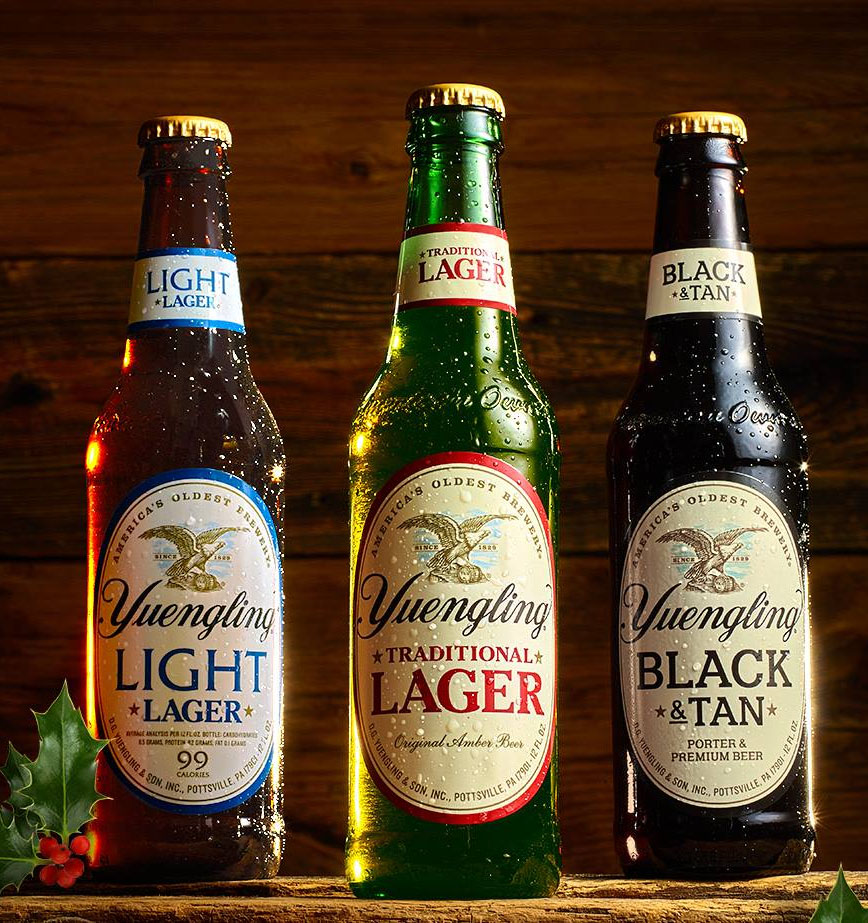
Yuengling Light Lager (2001)
Yuengling Black & Tan
Seasonal Bocks and Oktoberfest
Re-releases of historic brews, like its Porter and Chesterfield Ale

Yuengling’s flagship Traditional Lager consistently ranked among the top-selling beers in the country—not just among craft brews, but overall.

2020s: New Horizons and a Sixth Generation
In 2021, Yuengling entered into a joint venture with Molson Coors to expand distribution west of the Mississippi for the first time. This strategic alliance brought Yuengling to Texas and set the stage for broader national growth without giving up ownership or production control.

Meanwhile, Dick Yuengling’s four daughters—Wendy, Jennifer, Debbie, and Sheryl—have taken active roles in the company. Wendy Yuengling currently serves as Chief Administrative Officer, helping to guide the brand into the future while preserving its heritage.

In 2025, Yuengling celebrated its 196th anniversary, making it not only America’s oldest brewery but also one of its most enduring family businesses.

Today: A National Legacy with Local Roots
Now producing over 2.5 million barrels per year, Yuengling remains headquartered in Pottsville, PA, and continues to brew beer in both Pennsylvania and Florida. It’s still known for its consistent quality, historic character, and proud independence.

Whether enjoyed in a hometown bar in Pennsylvania or a backyard in Austin, Yuengling represents more than just beer—it’s a piece of American brewing history that continues to grow, five generations strong.


For Brewing fun fact, trivia, movies and more, Click Here.

Filed Under: Beer, craft lager, craftbeer

History of Corn Beer in North America before the European settlers

May 6, 2025 by Dow Scoggins

History of Corn Beer in North America before the European settlers

Long before European settlers set foot on North American soil, the continent’s indigenous peoples were brewing a beer that bubbled with the spirit of the land itself—corn beer. Maize, a staple crop domesticated in the Americas thousands of years ago, wasn’t just food; it was a sacred gift, a source of sustenance, and, in the hands of skilled brewers, a pathway to celebration and ritual. From the Andes to the American Southwest, corn beer wove itself into the cultural fabric, and its legacy endures in North America’s brewing history.

In the pre-Columbian era, corn beer was a cornerstone of indigenous life. In the Andes, the Wari culture (600–1000 AD) relied on elite women to brew chicha, a fermented maize beverage, for feasts and ceremonies. Archaeological digs at Cerro Baúl in Peru reveal sprawling breweries where sprouted corn kernels were malted, not chewed, as some myths suggest, to convert starches into fermentable sugars. These brews, sometimes flavored with Peruvian pink peppercorns, were potent enough to fuel social bonds and religious rites. Farther north, in what is now Mexico, the Tarahumara people crafted tesguino, a sacred corn beer brewed for Holy Week celebrations, using sprouted maize and wild herbs. The Apache and Chiricahua, in the American Southwest, fermented tiswin, a “yellow water” made from ground, sprouted corn flavored with locoweed or lignum vitae roots, often after days of fasting to amplify its intoxicating kick.

When Europeans arrived, they brought barley-based brewing traditions, but corn was already king in the New World. The Pilgrims, landing at Plymouth Rock in 1620, ran low on beer and learned from Native Americans to ferment maize with birch sap and water. By 1622, John Winthrop Jr. presented a paper to the Royal Society on malting maize, signaling early colonial interest in corn as a brewing grain. In Virginia, settlers like John Smith reported brewhouses producing beer from native corn by 1629, a practical choice when barley was scarce and imports costly. These early beers, often flavored with molasses, sassafras, or spruce, were rough but vital, sipped from waxed leather tankards called “black jacks.”

Corn’s role grew in the 19th century as German immigrants reshaped American brewing. Their beloved Bavarian lagers, made with two-row barley, didn’t translate well to America’s protein-heavy six-row barley, which produced hazy, unstable beers prone to spoilage. Enter corn, abundant and cheap, with a low-protein profile that lightened body and color. By the 1870s, brewers like John Glatz in Oshkosh, Wisconsin, and the Pabst Brewing Company were adding corn grits—about 20% of the grain bill—to their mashes, guided by brewing scientist Anton Schwarz’s influential articles in The American Brewer. The result was the quintessential American lager: pale, clear, and crisp, perfect for hot summers and rapid drinking. In 1878, Anheuser-Busch’s corn-infused lager won a grand prize in France, outshining European rivals despite Germany’s strict Reinheitsgebot purity laws.

Corn wasn’t just a fix for barley’s flaws; it was a cultural fit. North America’s vast cornfields made it a natural choice, unlike barley, which farmers loathed for its spiny awns and low market value. Brewers experimented with forms—grits, flaked corn, even cornmeal—to achieve a smooth, dry finish with a neutral sweetness. Beers like Krueger’s Finest, canned in 1935, and mass-market lagers from Budweiser and Coors leaned on corn for their light, approachable profiles, often using up to 30% corn to keep flavors clean and calories low.

But corn’s reputation took a hit. By the mid-20th century, craft beer purists scorned it as a cheap filler, blaming corn syrup (like NU-BRU, used by Oshkosh Brewing in the 1960s) for bland, mass-produced lagers. A 2019 Bud Light Super Bowl ad mocking rivals’ corn syrup use didn’t help. Yet, the tide is turning. Craft brewers like Fonta Flora and Black Narrows in Virginia are reviving corn’s legacy with heirloom varieties like Bloody Butcher and Hopi Blue, grown by Native farmers. Trillium’s Crib lager, brewed with Valley Malt’s malted corn, and Cruz Blanca’s Mexican-style lager, with 70% Bloody Butcher, showcase corn’s spicy, peppery depth. These beers, often gluten-free like Dos Luces’ chicha-inspired brews, honor indigenous traditions while pushing flavor boundaries.

Corn beer’s journey in North America is a story of adaptation and resilience. From sacred tiswin to colonial experiments, from 19th-century lagers to modern craft revivals, maize has been more than an ingredient—it’s a thread connecting cultures across centuries. So, on National Beer Lover’s Day, crack open a corn lager and toast to the grain that’s been brewing history since the dawn of the Americas.

For Brewing fun fact, trivia, movies and more, Click Here.

Filed Under: Beer, craftbeer

America’s Top 10 Beer Cities For Beer Drinkers

May 3, 2025 by Rick Roberts

Top 10 Beer Cities

Grab your pint glass and buckle up, beer lovers! The U.S. is a frothy paradise for craft beer enthusiasts, with cities bubbling over with breweries, taprooms, and festivals that celebrate the art of the brew. From hop-heavy IPAs to funky sours and crisp lagers, these 10 cities are the ultimate destinations for anyone who thinks life’s too short for bad beer. Let’s dive into the sudsy goodness of America’s top 10 beer cities!

Top 10 American Beer Cities for 2025

  1. Chicago, IL – Still the undisputed king. Over 100 breweries, from Revolution’s Deep Wood monsters to the wild-mouse sours at Off Color. Goose Island keeps cranking out Bourbon County while the neighborhood joints fight for your taproom dollar. Deep-dish + hazy IPA = religious experience.
  2. Pittsburgh, PA – Cheap pints ($4–$5 in many places), 76 breweries, and a ridiculous 9.4 breweries per 100,000 people. Penn Brewery lagers, Grist House weirdness, and a city that still treats beer like a blue-collar birthright. The Steel City quietly became a monster.
  3. Asheville, NC – 28+ breweries per 100,000 residents. Burial, Wicked Weed Funk House, and Hi-Wire’s circus-themed taproom are mandatory. If you leave without drinking something wild aged in bourbon barrels, you did it wrong.
  4. Denver, CO – Home of GABF and 90+ breweries. Great Divide Yeti variants, Cerebral’s haze bombs, and more mountain water clarity than you can shake a hydrometer at. Altitude + ABV is a real combo—just hydrate, champ.
  5. Portland, OR – The city that taught America to care. Cascade sours, Great Notion berry-milkshake IPAs, and more beard-to-beer ratios than anywhere else. Still weird, still proud, still one of the best beer towns on the planet.
  6. San Diego, CA – 150 breweries and the spiritual home of the modern West Coast IPA. Stone, Pure Project, Modern Times, and a hundred others are all within a burrito’s throw. Sunshine, tacos, and 7.5% juicy doubles—life could be worse.
  7. Grand Rapids, MI – Founders put it on the map, but Brewery Vivant, Mitten Brewing, and 80+ others keep it there. The Ale Trail is legit, the beer fests are nonstop, and the people are so nice you’ll almost feel guilty crushing five imperial stouts.
  8. Milwaukee, WI – Yeah, yeah, Miller and the old giants, but Lakefront, Good City, and Eagle Park are doing the real work now. Cheap, delicious, and you can literally drink on the lakefront while watching cargo ships. Midwest swagger at its peak.
  9. Cincinnati, OH – Over-the-Rhine is one of the densest, most beautiful beer districts in America. Rhinegeist’s rooftop, MadTree’s pizza-beer paradise, and the biggest Oktoberfest outside Munich. Bonus points for putting chili on spaghetti and still winning.
  10. Bend, OR – Tiny town, absurd beer-per-capita ratio. Deschutes, Crux fermentation project, Ale Apothecary’s $40 wild ales—doesn’t matter, it’s all stupidly good. Sip a fresh Abyss on the river, then go climb a volcano.

Why These Cities Actually Rule

It’s not just the raw numbers (though the brewery counts are stupid). It’s the whole package: brewers who still geek out over every batch, taprooms that feel like someone’s ridiculously talented living room, and festivals where you walk in alone and leave with twelve new friends and a mild hangover. Pittsburgh and Cincinnati dominate because beer is still cheap and everywhere—SmartAsset didn’t lie. Asheville and Grand Rapids earned their “Beer City, USA” crowns the old-fashioned way: people voted with their livers. From West Coast hop bombs to Midwest lager love, these places aren’t playing around. They’re the real deal.

Plan the Damn Trip Already

Grab the keys, book the flight, whatever. Download the Denver Beer Trail, the Grand Rapids Ale Trail, or just wing it—every one of these cities makes it impossible to choose poorly. Hit GABF in Denver, Oktoberfest Zinzinnati in Cincinnati, or any random weekend in Bend and thank me later. Pair the pints with whatever the locals swear by: brats and Lakefront lager in Milwaukee, al pastor tacos and a hazy in San Diego, or a giant slice of deep-dish while you wait for your table at Revolution in Chicago.

Point is, the beer’s ice-cold, the people are unreasonably friendly, and 2025 is begging for an epic American beer road trip. Your couch isn’t going anywhere. Go drink these cities dry. Cheers.


Filed Under: Beer, craftbeer

The History of the August Schell Brewing Company

May 3, 2025 by Andrew Innes

The History of the August Schell Brewing

Nestled along the Cottonwood River in New Ulm, Minnesota, the August Schell Brewing Company stands as a testament to family tradition, German heritage, and unwavering resilience. Founded in 1860 by German immigrant August Schell, it is the second-oldest family-owned brewery in the United States, surpassed only by D.G. Yuengling & Son. As one of the few pre-Prohibition breweries still operating under family control, Schell’s has weathered wars, economic turmoil, and the 13-year ordeal of Prohibition, emerging as a cornerstone of American brewing history. This article delves into the brewery’s origins, its survival through Prohibition, and its enduring legacy as a craft beer pioneer.

The History of August Schell Brewing Company
August Schell was born on February 15, 1828, in Durbach, in the Grand Duchy of Baden, Germany. At age 20, he immigrated to the United States in 1848, seeking opportunity amid the political unrest following the failed revolutions in Europe. After working as a machinist in Cincinnati, Ohio, Schell joined a group of German immigrants from the Turner Society, a cultural and gymnastic organization, to co-found the town of New Ulm, Minnesota, in 1857. Recognizing the growing German population’s thirst for traditional beer, Schell partnered with Jacob Bernhardt, a former brewmaster, to establish a small brewery in 1860. They chose a scenic site two miles from New Ulm’s center, where spring water and ice from the Cottonwood River provided ideal brewing conditions.

The brewery began modestly, producing about 200 barrels annually. In 1866, Schell bought out Bernhardt, assuming sole ownership and initiating an unbroken chain of family stewardship. Despite challenges like the Dakota War of 1862, which damaged much of New Ulm but spared the brewery, Schell’s operation grew steadily. By the 1880s, the family built a grand mansion, gardens, and a deer park on the brewery grounds, now listed on the National Register of Historic Sites. August invested in advanced equipment, including a $25,000 copper brew kettle, optimizing production for the acidic wort and beer. When August died in 1891, his wife, Theresa, inherited the brewery, with their son Otto, who had studied brewing in Germany, taking over management.

Modernization and Pre-Prohibition Growth
Otto Schell modernized the brewery, introducing refrigeration by 1900, which replaced the reliance on river ice stored in caves to control fermentation temperatures. This allowed year-round brewing, boosting production. The brewery was incorporated in 1902 as the August Schell Brewing Company, with Otto as president, Theresa as vice-president, and George Marti, August’s son-in-law, as secretary-treasurer. The company thrived, serving the region’s German-American communities, though it faced competition from larger breweries like Anheuser-Busch and local rivals in New Ulm, such as Hauenstein Brewery. Otto’s sudden death in 1911, followed by Theresa’s four months later, left George Marti in charge, steering the brewery toward its greatest challenge: Prohibition.

Surviving Prohibition: Adaptation and Grit
The passage of the 18th Amendment in 1919, enacting Prohibition, banned the manufacture, sale, and transportation of alcoholic beverages, devastating the American brewing industry. Of the roughly 1,900 breweries operating in 1915, only about 600 survived by 1934. Schell’s was among the fortunate few, thanks to strategic adaptation led by George Marti. The brewery shifted to producing “near-beer” (a low-alcohol beverage with less than 0.5% ABV, legal during Prohibition), soft drinks, and candy. It also began making 1919 Root Beer, named for the year Prohibition began, which remains a popular product today.

To generate income, Schell’s sold off taverns and properties it owned in nearby towns, which had previously ensured exclusive distribution of its beer. A ledger from the 1920s, displayed in the brewery’s museum, records inventories of these non-alcoholic products, while an ebulliometer used to verify near-beer’s alcohol content underscores the scrutiny breweries faced. Despite these efforts, survival was precarious, and the brewery nearly closed. Family lore recounts illicit moonshining, with a still—later destroyed by George Marti to avoid federal detection—kept in the brewery museum as a relic of those desperate times.

When Prohibition ended with the 21st Amendment in 1933, Schell’s swiftly resumed brewing. Having maintained its equipment, the transition was smoother than for many competitors. George Marti’s leadership ensured the brewery’s survival, but he died in 1934, passing the reins to his wife, Emma, and son, Alfred (“Al”) Marti, who became president and manager.

Post-Prohibition Recovery and Challenges
Al Marti led Schell’s through the post-Prohibition era, a time of industry consolidation. By the 1950s, large breweries like Budweiser and Miller dominated, out-advertising smaller operations. Schell’s maintained a regional foothold, bolstered by New Ulm’s tight-knit German community. Al added local flair by founding the Schell’s Hobo Band, a community ensemble still active today. However, by the 1970s, only 42 U.S. breweries remained, and Schell’s faced severe financial strain. In a desperate move, the brewery sold lumber from a massive black walnut tree on its grounds to keep its doors open.

In 1969, Al retired, and his son Warren Marti took over. Warren diversified the product line with Schell’s Export Beer, Schell’s Light Beer, and the continued production of 1919 Root Beer. Despite these efforts, the rise of “mega-breweries” threatened small operations. Warren’s persistence and the brewery’s historical grounds, including the sale of the walnut tree, were critical to its survival.

The Craft Beer Renaissance and Modern Success
The turning point came in 1984 when Warren’s son, Ted Marti, assumed operations, becoming president in 1985. Trained at the Siebel Institute of Brewing and having studied under German brewers, Ted spearheaded Schell’s entry into the craft beer movement. In 1984, Schell’s brewed the first American wheat beer since Prohibition, a German-style Weiss Beer that evolved into its seasonal Hefeweizen. Ted introduced craft brews like Schell’s Pilsener, which won a gold medal at the Great American Beer Festival in 1988, and others, such as Alt and Pale Ale, which earned medals for their quality. By the 1990s, Schell’s produced 38 different beers, establishing a reputation for innovation.

In 2002, Schell’s acquired the Grain Belt brand after the Minnesota Brewing Company’s bankruptcy, expanding its portfolio with varieties like Grain Belt Nordeast (2010) and Southwest Cerveza (2019). A state-of-the-art brewhouse added in 1999 enhanced production capacity, while a gift shop and taproom opened in 2005, boosting tourism. The brewery’s grounds, with their historic mansion and gardens, draw thousands annually for tours, beer tastings, and events like Bock Fest and Oktoberfest, reinforcing its cultural significance.

Ted’s sons—Jace, Kyle, and Franz—represent the sixth generation, with Jace leading the Noble Star Collection of sour Berliner Weisse beers until his departure in 2024 to pursue distilling. The Starkeller facility, opened for these sour ales, now serves as a taproom. In 2020, Schell’s celebrated its 160th anniversary with the “Shift Happens” series, honoring its adaptability and Ted’s transition to his sons’ leadership. Today, Schell’s brews about 110,000 barrels annually, with 85% of sales in Minnesota, and distributes to several Midwestern states.

Legacy and Cultural Impact
The August Schell Brewing Company’s endurance is remarkable in an industry where most pre-Prohibition breweries vanished. Its survival stems from family dedication, strategic adaptation, and a deep connection to German heritage. The brewery’s focus on traditional German-style lagers and ales, combined with craft beer innovation, has earned it accolades, including a national reputation for Pilsners and Weiss beers. Its grounds, listed on the National Register of Historic Sites, and events like Bock Fest embody its role as a cultural hub in New Ulm.

Schell’s also reflects broader themes of German-American entrepreneurship. August’s involvement with the Turner Society highlights the role of ethnic networks in building businesses, while the brewery’s navigation of Prohibition and industry consolidation showcases resilience. Unlike many contemporaries, such as Mankato Brewing Co., which closed in 1969, Schell’s thrived by anticipating trends and maintaining regional loyalty.

As Ted Marti steps back, his sons are poised to carry the brewery forward, blending tradition with innovation. From August’s frontier vision to Ted’s craft beer revolution, Schell’s remains a beacon of family-owned brewing, proving that, as their 2020 campaign declared, “Shift Happens.” Here’s to a brewery that has poured history, one beer at a time, for over 160 years.

For today’s beer news: Click Here

Filed Under: Beer, craft lager, craftbeer

Princess Wears Girlpants Golden Ale – Craft Beer of the Day

May 2, 2025 by Dow Scoggins

The Princes Wears GirlpantsPrincess Wears Girlpants Golden Ale – Craft Beer of the Day
Nestled in Gravenhurst, Ontario, the gateway to Muskoka, Sawdust City Brewing Company has carved out a reputation for crafting exceptional beers that capture the spirit of their region. Among their standout offerings is The Princess Wears Girlpants, a bold and unique Muskokan Saison that defies traditional beer styles while celebrating friendship, locality, and the joys of sharing a pint. This article dives into the story, flavor profile, and cultural significance of this 9% ABV hoppy Belgian-inspired golden ale, a seasonal favorite that’s as aromatic as it is easy-drinking.

The Origin Story: A Beer for Friends

The Princess Wears Girlpants was born from a desire to please two friends with distinct tastes—one a fan of hoppy ales, the other enamored with Belgian ales and saisons. Rather than compromising, Sawdust City’s brew team, led by Brewmaster Sam Corbeil, decided to blend these preferences into something entirely new. The result? A beer that doesn’t fit neatly into any style but embodies the essence of Muskoka’s spring and summer seasons. As the brewery describes it, this is a beer about “our hometown, our friends, and our history.” It’s a tribute to the moments spent outdoors, enjoying nature and good company.

The name itself, The Princess Wears Girlpants, reflects the brewery’s playful yet defiant approach to convention. It’s a nod to owning one’s identity and creating something that speaks to who they are—a Muskokan Saison, a term coined by Sawdust City to capture its regional and stylistic uniqueness. Available from March to August, this seasonal release is designed for sharing, encouraging drinkers to grab a can, a few glasses, and their closest friends.

Flavor Profile and Brewing Process

The Princess Wears Girlpants is a hazy golden ale that pours with a chunky, pure white head and leaves behind impressive lacing. Its aroma is a vibrant mix of fruity, citrusy hops and spicy, fruity yeast esters, with notes of tropical fruit, pear, lemon, cloves, and cotton candy. The flavor follows suit, balancing hoppy bitterness with Belgian-inspired complexity. Loaded with Ella, Galaxy, and Amarillo hops, the beer delivers a juicy citrus and tropical fruit character, complemented by a spicy clove backbone and a moderately dry, highly carbonated finish. At 9% ABV and 35 IBU, it’s a “huge” yet surprisingly drinkable beer, with the alcohol heat present but not overpowering.

Reviewers on platforms like BeerAdvocate and Untappd praise its complexity, with some noting its lean toward Tripel territory due to its light bitterness and lingering fruitiness. Others highlight the hop-forward nature, with Galaxy and Amarillo hops stealing the show, while Ella adds a distinctive twist. However, not all reviews are glowing—some find the bitterness more pronounced than expected or the Belgian character lacking, suggesting it feels more like an IPA than a traditional saison. Despite these critiques, the beer’s unique profile and bold execution make it a standout.

The brewing process reflects Sawdust City’s adventurous spirit. The beer began as a hoppy Belgian golden ale but evolved into a Muskokan Saison, a style the brewery defines on its own terms. The use of New Zealand and American hops, combined with Belgian yeast strains, creates a fusion of Old World and New World flavors. Over the years, Sawdust City has experimented with variations, such as The Princess Wears Girlpants Saison with Guava and The Princess & Girlpants Meet the ODB, a barrel-aged version with oak and funk notes, showcasing their willingness to push boundaries.

Cultural and Community Impact

The Princess Wears Girlpants is more than just a beer—it’s a celebration of Muskoka’s identity and Sawdust City’s commitment to community. The brewery, founded by Sam Corbeil and Rob Engman, draws heavily on the region’s pioneer spirit, and this beer embodies that ethos. It’s a reminder to appreciate the simple pleasures of life—friends, nature, and a well-crafted brew. The beer’s seasonal release aligns with Muskoka’s vibrant spring and summer, making it a staple at cottages, patios, and gatherings across Ontario.

Available at Sawdust City’s retail shop, online store, and select beer bars in Ontario, The Princess Wears Girlpants has become a fan favorite since its debut. Its return each year, as noted in a 2019 Canadian Beer News announcement, is a highlight of the brewery’s 52-week release schedule. The beer’s versatility also makes it a great pairing for a wide range of foods, from spicy dishes to creamy cheeses, further cementing its place in Ontario’s craft beer culture.

The beer has also inspired spin-offs and collaborations, such as The Princess Wears Hot Pants, a Belgian Blonde with a peppery twist, and Bizarro The Princess Wears Girlpants, a wild ale. These variations highlight Sawdust City’s innovative approach and willingness to experiment while staying true to the core identity of the original.

Why It Stands Out

In a crowded craft beer market, The Princess Wears Girlpants distinguishes itself through its bold flavors, unique style, and heartfelt story. It’s a beer that doesn’t aim to conform but instead creates its own category—a Muskokan Saison that’s as much about place and people as it is about taste. With an average rating of 3.7/5 on Untappd and 85/100 on BeerAdvocate, it’s clear that this beer resonates with many, even if it occasionally divides opinions due to its unconventional profile.

For those looking to experience Muskoka in a glass, The Princess Wears Girlpants is a must-try. It’s a testament to Sawdust City Brewing’s dedication to crafting beers that tell a story, challenge expectations, and bring people together. So, as the brewery suggests, grab a can, pour a few glasses, and toast to the friends and moments that make life special.

Filed Under: Beer, craftbeer

BarrelHouse Brewing Co. Acquires Iconic Sherwood Field Hangar for Ambitious Expansion in Paso Robles

April 18, 2025 by Spencer Mapes

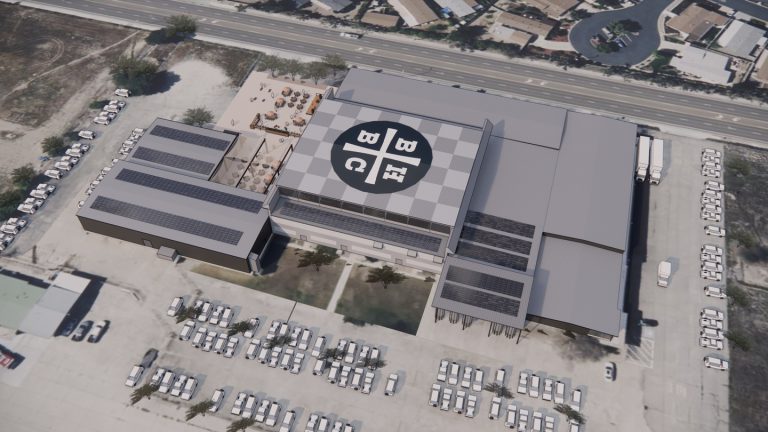
PASO ROBLES, CA — BarrelHouse Brewing Co., a cornerstone of Central Coast craft brewing, has acquired the historic Sherwood Field Hangar, marking a significant milestone in its growth. Located at the bustling intersection of Niblick and Creston Roads, this 10-acre site in East Paso Robles will soon transform into a vibrant hub for craft beer enthusiasts and the local community.

The newly dubbed “Hangar Project” signals an exciting new chapter for BarrelHouse Brewing Co. The expansive 100,000-square-foot facility will house a cutting-edge brewhouse, advanced packaging systems, and increased production capacity. By integrating sustainable technologies like solar power, water conservation systems, and CO2 recapture, BarrelHouse is committed to crafting exceptional beers while prioritizing environmental responsibility.

“We’re thrilled to bring our passion for great beer and community connection from Tin City to this incredible new space,” said Jason Carvalho, Owner and Founder of BarrelHouse Brewing Co. “The Hangar Project allows us to scale our operations while staying true to our values of quality, sustainability, and bringing people together.”

The Hangar Project’s five-year vision extends beyond brewing. BarrelHouse plans to create an open-market destination that celebrates Paso Robles’ rich culinary and artisanal culture. By partnering with local food vendors, artisans, and businesses, the reimagined 1940s hangar and its grounds will become a lively gathering place for families, friends, and visitors to enjoy premium food, drinks, and entertainment.

Steeped in history, the Sherwood Field Hangar was originally constructed in 1940 by the Army Corps of Engineers as a key Central Coast base for the U.S. Army Air Force and Navy during World War II. Post-war, it served as the operational hub for the Ennis Paper Company, employing generations of local families. BarrelHouse’s design plans will honor this legacy by incorporating vintage airplanes and printing presses into the space, creating a unique blend of history and modern innovation.

BarrelHouse Brewing
BarrelHouse Brewing Co., the Central Coast’s premier family-owned craft brewery, continues to redefine the art of brewing with its unwavering commitment to quality, sustainability, and community engagement. Nestled in the heart of Paso Robles, BarrelHouse has become a beloved destination for locals and visitors alike, offering a dynamic taproom experience that pairs innovative, handcrafted beers with live music and a welcoming atmosphere. With a focus on eco-conscious practices, including water-efficient brewing and solar energy initiatives, BarrelHouse is not only crafting award-winning beers but also fostering a vibrant community hub where good people come together for great times. Stay tuned for exciting updates as BarrelHouse continues to elevate the craft beer scene in California’s wine country. For more details, visit  https://barrelhousebrewing.com/.


For Brewing fun facts, trivia, movies and more, Click Here.
Filed Under: Beer, craftbeer Tagged With: BarrelHouse, BarrelHouse Brewing, California, california beer, Paso Robles Beer, The Hangar

Boulevard Brewing Co. Turns 35: Kansas City Craft Beer Icon Unleashes Barrel-Aged 35th Anniversary Ale

February 20, 2025 by Spencer Mapes

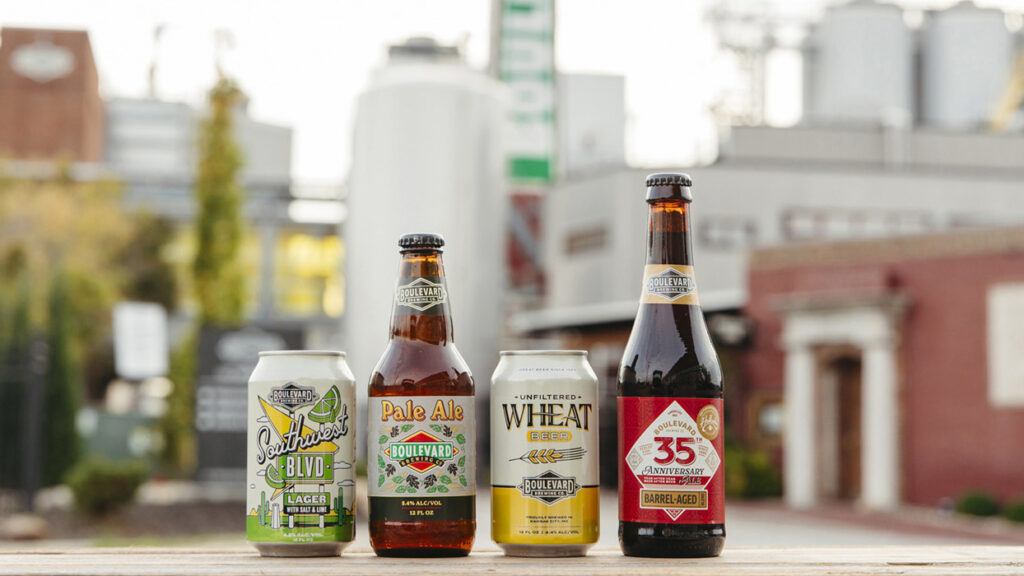
KANSAS CITY, MO – Raise a glass, Kansas City! Boulevard Brewing Co., the hometown hero that kicked off the Midwest craft beer boom, is popping corks (and barrels) for its 35th birthday with a limited-edition 35th Anniversary Ale – a bourbon-barrel-aged beast that’s equal parts nostalgia and liquid luxury.
Born on November 17, 1989, when founder John McDonald hand-delivered the first keg of Boulevard Pale Ale, the brewery has spent three and a half decades pushing boundaries, building community, and proving that great beer belongs in every celebration. Now, they’re toasting their legacy with a 12.5% ABV monster aged in Soft Red Wheat Bourbon barrels and Ben Holladay Bottled-in-Bond barrels from Missouri’s historic Holladay Distillery in Weston.

“This isn’t just a beer – it’s a love letter to 35 years of bold ideas and local pride,” says Boulevard Brand Manager Adam Hall. “We teamed up with Holladay to blend our brewing magic with their 160-year bourbon legacy. The result? A sip of Missouri history.”

Holladay Distillery’s VP of Marketing and Sales, Patrick Fee, adds: “Boulevard is Missouri beverage royalty. Pairing our Real Missouri Bourbon with their barrel-aged mastery? That’s a collab written in oak and stars.”
What’s in the glass?

Aroma: Warm caramel, vanilla-kissed bourbon, fresh-baked bread
Flavor: Molasses, dark plum, toffee, and a velvet-soft finish
Pairs with: Sharp aged cheddar, slow-roasted brisket, or dulce de leche cheesecake (yes, really)
Vibe: Big, round, and dangerously drinkable despite the ABV

35th Anniversary Party Alert! 🎉
Friday, Nov 15, 5–7 PM: Happy Hour at Boulevard Brewery – first pours of 35th Anniversary Ale + throwback beer flights
Nov 16–17: Ride the KC Wheel with a Boulevard beer for just $19.89 (nod to the founding year!)
All November: Pale Ale = Beer of the Month at every Tanner’s Bar & Grill in KC

Grab Yours Before It’s Gone
The 35th Anniversary Ale is rolling out now in 4-packs of 12-oz bottles across Greater Kansas City and select markets. Use the Boulevard Beer Finder to track it down near you.
Cheers to 35 years of craft, community, and Kansas City pride – here’s to the next pour!


About Boulevard Brewing Company
Boulevard Brewing Company, Kansas City’s craft beer pioneer, kicked off its legacy on November 17, 1989, when founder John McDonald personally delivered the first keg of Boulevard Pale Ale to a local bar. What started in a modest brick warehouse with a single 35-barrel brewhouse has grown into the Midwest’s largest independent craft brewery, now boasting a 200-barrel system and distribution across 40+ states. From the hoppy, citrus-kissed Pale Ale that ignited the region’s craft revolution to iconic staples like Unfiltered Wheat Beer—a hazy, lemony crowd-pleaser—and Tank 7 Farmhouse Ale, with its bold Belgian yeast and grapefruit zest, Boulevard blends tradition with fearless experimentation. Smokestack Series limited releases, such as bourbon barrel-aged quads and rye whiskey-finished stouts, showcase the brewery’s mastery of wood and time, earning medals at FoBAB and GABF alike.

Over 35 years, Boulevard has stayed true to its Kansas City roots while pushing boundaries—collaborating with local distillers like Holladay for barrel-aged gems, launching the 35th Anniversary Ale in 2024, and fostering community through tours, a sprawling Beer Hall, and sustainability initiatives like solar power and water reclamation. With a portfolio spanning crisp lagers, juicy IPAs, tart sours, and decadent imperial stouts, Boulevard remains a gateway for new drinkers and a benchmark for craft veterans. Every pour reflects McDonald’s original mantra: brew bold, drink local, celebrate together.

About Holladay Distillery
Nestled in the rolling hills of Weston, Missouri, Holladay Distillery stands as the oldest continuously operating distillery west of the Mississippi River, a living testament to American ingenuity since its founding in 1856 by the audacious brothers Ben and Major David Holladay. Inspired by a pristine limestone spring first charted by Lewis and Clark in 1804, the siblings transformed a former meat-packing site into a bourbon powerhouse, harnessing the mineral-rich water to distill their inaugural batch from a mash of corn, rye, wheat, and barley—sold in 1857 for a mere 35 cents per gallon. Ben, the “Stagecoach King” who built an empire spanning Wells Fargo lines and the Pony Express, became America’s largest private employer by 1864, yet it was this humble distillery that endured as his true legacy, weathering ownership changes, a 1957 fire, and a rebranding as McCormick Distilling Company in 1942 before a 1993 revival by local investors. Revitalized in 2016 to honor its roots, the site—listed on the National Register of Historic Places—underwent a $10 million renovation in 2015, resuming on-site bourbon production after decades away, now crafting Bottled-in-Bond expressions like the flagship Ben Holladay Missouri Straight Bourbon Whiskey and Soft Red Wheat, aged in historic ironclad rickhouses under Missouri’s dramatic seasonal swings for a depth of caramel, vanilla, and spice that whispers of 169 years of craft.

For Brewing fun facts, trivia, movies and more, Click Here.
Filed Under: Beer, Collaboration Beers, craftbeer Tagged With: Anniversary Ale, Boulevard Brewing, Holladay Distillery

George Washington’s Beer Recipe, Brewery and Distillery at Mount Vernon

February 18, 2025 by Dow Scoggins

George Washington’s Beer Recipe

George Washington’s Beer Recipe and His Brewing and Distilling Legacy at Mount Vernon
George Washington, America’s first president and a Revolutionary War hero, was also a passionate brewer and distiller. Beyond his political achievements, Washington’s ventures into crafting beer and whiskey at his Mount Vernon estate reveal a lesser-known side of his character—one rooted in innovation, practicality, and a keen business sense. From a handwritten recipe for “small beer” to a thriving whiskey distillery, Washington’s contributions to early American beverage culture are both fascinating and enduring. This article delves into the details of his beer recipe, his brewing practices, and the distillery that became a profitable enterprise, optimized for historical accuracy and modern relevance.

The Small Beer Recipe: A Taste of Colonial Life

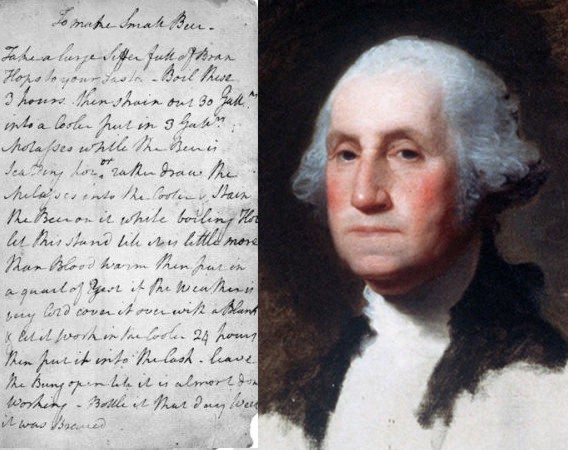
In 1757, while serving as a young colonel in the Virginia militia at Fort Loudoun, Pennsylvania, George Washington jotted down a recipe for “small beer” in a personal notebook, now housed at the New York Public Library. Small beer was a staple in 18th-century America, prized for its low alcohol content (typically 2-4%) and safety compared to often-contaminated water. It was consumed by soldiers, workers, and even children, making it a practical choice for military camps and households.

Washington’s recipe is straightforward, reflecting the resourcefulness of colonial brewing:
The recipe uses simple ingredients: wheat bran, hops for bitterness, molasses as a fermentable sugar, and yeast to drive fermentation. The process involves boiling the bran and hops for three hours, straining the wort (unfermented beer), and adding molasses to create a sweet, porter-like ale. The mixture ferments for 24 hours at a temperature described as “little more than Blood warm” (about 80-90°F), with a blanket used in cold weather to maintain warmth. After a week, the beer is bottled, ready for consumption.

This small beer was likely brewed for Washington’s troops or household rather than commercial sale. Its sweet, molasses-heavy flavor and quick production time made it ideal for frontier conditions. Modern brewers, like the Coney Island Brewing Company in 2011, have recreated the recipe, tweaking it with less molasses and modern hops to produce a roasty, cherry-brown porter that appeals to contemporary tastes.

Brewing at Mount Vernon: A Household Staple

At Mount Vernon, Washington’s sprawling Virginia estate, beer was a daily necessity. Washington himself was fond of dark, English-style porters, often enjoying a pint with dinner. He imported large quantities of beer, including 492 bottles of Dorsetshire beer in 1762, but was occasionally disappointed by the quality of shipments, which spurred his interest in local production.

Brewing at Mount Vernon was likely managed by enslaved workers and hired servants, with hops supplied by individuals like Boatswain, an enslaved ditcher. Martha Washington’s cookbook included brewing instructions, suggesting that beer-making was a collaborative effort, possibly overseen by estate managers like Lund Washington, who once experimented with persimmon beer. Beer was not only for personal enjoyment but also served practical purposes, such as hydrating workers and entertaining guests. During Washington’s 1758 campaign for the House of Burgesses, he provided 43 gallons of strong beer to voters, a common practice in colonial politics.

While Washington’s small beer recipe was not a commercial product, it underscores the importance of brewing in colonial life. The process was labor-intensive but essential, ensuring a steady supply of safe, nourishing drink for the estate.

The Mount Vernon Distillery: A Business Triumph

Washington’s most significant contribution to beverage production came later in life with the establishment of a whiskey distillery at Mount Vernon. In 1797, his Scottish farm manager, James Anderson, proposed building a distillery to capitalize on the estate’s surplus grain and proximity to the Potomac River. Washington, ever the astute businessman, approved the project, and construction began using local river rocks and sandstone. The distillery was strategically placed next to Washington’s gristmill, which supplied ground grain for whiskey production.

The distillery focused on rye whiskey, made from a recipe of 60% rye, 35% corn, and 5% malted barley. Unlike modern whiskeys, it was unaged, bottled directly from the still for immediate sale. By 1799, the distillery was producing 11,000 gallons annually, yielding a profit of $7,500—a substantial sum for the era. The operation was staffed by six enslaved men—Daniel, Hanson, James, Nat, Peter, and Timothy—who worked alongside other laborers under Anderson’s direction. The use of Oliver Evans’ automated gristmill system allowed year-round production, setting Mount Vernon apart from smaller, seasonal distilleries.

Washington himself preferred beer or Madeira wine over whiskey, but he recognized the distillery’s economic potential. After his death in 1799, the distillery ceased operations, but it was meticulously reconstructed in 2007 by the Mount Vernon Ladies’ Association. Today, it produces small batches of rye whiskey, which earned a silver medal at the 2019 American Craft Spirits Association Awards. Visitors can tour the distillery, sample the whiskey, and explore this overlooked facet of Washington’s legacy.

Modern Relevance and How to Recreate the Beer

Washington’s beer recipe and distillery offer a unique lens into colonial ingenuity and early American industry. For homebrewers, recreating the small beer is a rewarding challenge. A scaled-down 5-gallon batch might include 6 pounds of molasses, 0.25 pounds of flaked wheat, East Kent Goldings hops, and Nottingham ale yeast. Boil for 60-180 minutes, ferment at 65°F, and bottle after a week for a sweet, lightly carbonated ale with historical flair. Note that the molasses can create a syrupy, slightly bitter finish, so modern adjustments may enhance drinkability.

The reconstructed Mount Vernon distillery also inspires modern craft distillers, showcasing the timeless appeal of rye whiskey. Its historical significance, combined with Washington’s entrepreneurial spirit, makes it a compelling story for food and history enthusiasts alike.

Conclusion: A Toast to Washington’s Legacy

George Washington’s small beer recipe and Mount Vernon distillery highlight his multifaceted legacy as a farmer, innovator, and businessman. The beer recipe, born of necessity, reflects the resourcefulness of colonial life, while the distillery underscores Washington’s ability to seize new opportunities. Together, they paint a picture of a man who not only shaped a nation but also left an indelible mark on America’s beverage culture. Whether you’re sipping a modern recreation of his porter or touring the Mount Vernon distillery, Washington’s brewing and distilling endeavors invite us to raise a glass to his enduring influence.

For Fun Beer Facts, Trivia and more: Click Here

Filed Under: Beer, craftbeer

Norwich Inn and Brewery-Norwich, Vermont

February 6, 2025 by Dustin Scoggins

Norwich Inn and Brewery-Norwich, VermontBrew Master Patrick Dakin is proud to welcome you to the Brewery at the Norwich Inn, home of Jasper Murdock Ales. Our Ales have won 4 silver and a gold medal in the last 3 years at the Great International Beer Competition.

Norwich Inn VermontPresident James Monroe dined at the Norwich Inn in 1817 while on a horseback tour of the New England frontier. Alas, history does not record whether he had a beer. But if he did, it was most likely brewed at the Inn. Vermont had no commercial breweries at the time, and the local beers were brewed in very small batches. Even the biggest copper kettle provided just enough ale for the brewer and his guests.

In 1993, this Vermont brewery tradition was revived at the Norwich Inn when Jasper Murdock’s Alehouse began producing traditional English-style ales in 5-gallon glass jugs. By 1995, an historic livery building was renovated and outfitted with a new four-barrel brew house, enabling 125-gallon batches. Though the vessels are now larger, we remain perhaps the smallest brewery in America. Jasper Murdock’s Ales are sold only at the Norwich Inn and you can take some home. Bottled brew is available by the 22 ounce bottle, by the case, or by the 5 gallon keg.

Jasper Murdock’s Ales are crafted from fine English malts, with hops grown in England and in our own hop garden at the Inn. Because filtration can strip flavor and body from a beer, the ale yeast is allowed to settle out naturally in an extended cold-aging period to ensure that all the goodness reaches your palate. The beer is then pumped underground from the beer cellars to our pub at the Inn.

Jasper Murdock’s Ales
Of the many styles we rotate at the beer taps, we usually have at least 2 of these four for takeout by the bottle or the case:

Whistling Pig Red Ale
Inspired by an Irish classic. Garnet-red in color with a rounded malty flavor and a lingering hop aftertaste.

Old Slipperyskin India Pale Ale
A strong amber ale, full bodied, with a hearty hop flavor and a pronounced hop finish.

Stackpole Porter
A dark ale style dating back to the 1700’s. Roasted malt lends chocolate and coffee-like flavors and aromas.

Second Wind Oatmeal Stout
This black ale has the characteristic flavor of dark roasted barley, the sweetness of caramel malt, a full body contributed by oatmeal, and an intense but balanced hop flavor.

Other styles served on tap at Jasper Murdock’s Alehouse
Jasper Murdock’s Extra Special Bitter
Fuggle & Barleycorn
Oh Be Joyful
Last Pick Pale Ale
Dr. Bowles’ Elixir
Jasper Murdock’s Private Stock
Famous Sidekick
Two Patrick Stout
Sweet Barley
Another Ale

Information
The Norwich Inn
325 Main Street
P.O. Box 908
Norwich, Vermont 05055
Phone: (802)-649-1143
Email: innkeeper@norwichinn.com

More about Norwich, Vermont
Nestled along the scenic Connecticut River, Norwich, Vermont, beckons travelers with its quintessential New England charm and a dash of whimsical adventure. Imagine unleashing your inner baker at the King Arthur Baking Company flagship campus, where you can peek at artisan bakers crafting mouthwatering treats, stock up on premium ingredients, or dive into a hands-on baking class—perfect for turning vacation calories into delicious souvenirs!

For families and curious minds alike, the Montshire Museum of Science is a playground of discovery, boasting over 150 interactive exhibits and miles of nature trails where kids (and kids-at-heart) can explore everything from bubbling science experiments to leafy woodland wonders. Pair that with a leisurely stroll through Norwich’s vibrant farmers market or a scenic e-bike ride along the river, and you’ve got a recipe for unforgettable, laughter-filled days in this hidden Vermont gem.


Filed Under: Beer, breweries, craftbeer

Oktoberfest – The Wild and Wonderful History

January 29, 2025 by Dow Scoggins

History of Oktoberfest 

A Toast to Tradition: The Wild and Wonderful History of Oktoberfest

It all started with a royal “I do” and a thundering horse race. On October 12, 1810, Crown Prince Ludwig of Bavaria married Princess Therese of Saxe-Hildburghausen. To celebrate, they threw a party so epic it would become an annual tradition. Five days later, on October 17, Munich gathered at the city’s edge for horse races in honor of the newlyweds. That celebration laid the foundation for what we now know as Oktoberfest.

Fast forward to 1850, and Oktoberfest had become more than just a party—it was a parade of Bavarian pride. Each year, 8,000 people dressed in traditional attire march through the heart of Munich from Maximilian Street to the Wiesn, led by the symbolic Münchner Kindl (Munich Child). That same year, the imposing Bavaria statue was completed, standing tall above Theresienwiese, forever watching over the revelers below like a stein-wielding guardian angel of the festival.

Of course, not all years were brimming with bratwurst and beer. In 1854 and again in 1873, cholera epidemics halted the festivities. In 1866 and 1870, wars kept the steins dry. But Oktoberfest kept bouncing back, evolving with the times. By 1880, electric lights twinkled above the tents. The following year, bratwurst booths joined the fun. In 1892, glass beer mugs made their first appearance—giving everyone a crystal-clear view of their favorite beverage.

As Oktoberfest strutted into the 20th century, it kept getting bigger and better. In 1887, the now-famous Entry of the Oktoberfest Staff and Breweries debuted, showcasing magnificent beer wagons, costumed workers, and oompah bands parading through the streets. It’s still the grand kickoff to Oktoberfest today.

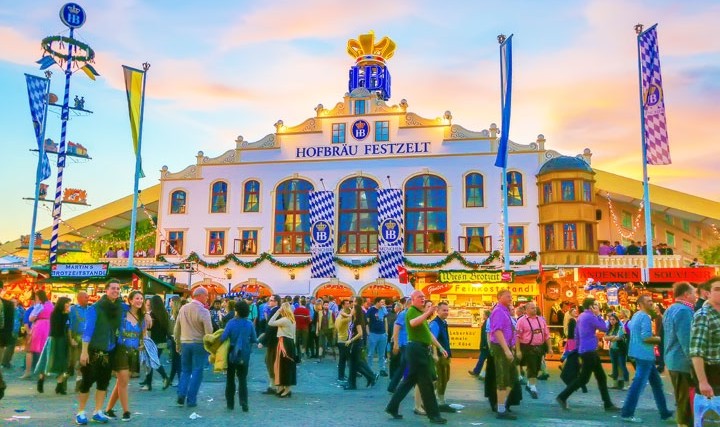
By 1910, Oktoberfest turned 100—and the party was as grand as you’d expect. An eye-popping 120,000 liters of beer were served, and a new legend was born: the Bräurosl tent, which could hold an incredible 12,000 thirsty guests. Today’s heavyweight is the Hofbräu-Festhalle, packing in 10,000 merrymakers.

The Dark Years: When the Taps Went Dry
Oktoberfest hasn’t always been a guaranteed good time. Between 1914 and 1918, World War I put a full stop to the celebration. Post-war austerity turned Oktoberfest into a humbler “Autumn Fest” for a couple of years. Then came the 1920s and a nasty bout of hyperinflation that put another dent in the keg.

By 1933, politics crept in as the Bavarian flag was replaced with the swastika under Nazi rule. World War II brought yet another halt from 1939 to 1945. Even in the late 1940s, Munich had to make do with low-alcohol beer and toned-down “Autumn Fests.” All told, Oktoberfest has been canceled 24 times due to war, disease, or disaster—but never for lack of spirit.

The Modern Era: Big Tents, Big Beers, and Big Changes
Since 1950, a boisterous and beloved tradition has kicked things off: At noon on opening day, the Mayor of Munich taps the first keg and shouts, “O’zapft is!” (“It’s tapped!”). With a 12-gun salute and the ceremonial passing of the first beer to the Bavarian Minister-President, the festivities begin. The honor of that first tap went to Mayor Thomas Wimmer—and the ritual still kicks off Oktoberfest today.

By the 1960s, Oktoberfest was an international sensation. Tourists began associating Germans with feathered Sennerhüte, Lederhosen, and women in Dirndls—and, for better or worse, the stereotype stuck. That same year marked the end of the original horse races, but no one seemed to miss them amid the sea of pretzels and polkas.

Of course, with millions of beers being poured, a few overzealous drinkers always end up going down for the count. Enter the term “Bierleichen”—beer corpses. These are the partygoers who pass out and are gently carted off to medical tents for a nap and a recovery snack.

To make the festival more family-friendly, 2005 introduced the idea of a “quiet Oktoberfest.” Before 6 PM, tents limit their music to mellow brass bands playing traditional tunes at no more than 85 decibels—loud enough to lift your spirits, but soft enough for Grandma to enjoy her stein in peace. After dark, things ramp up with Schlager and pop music, keeping the late-night crowd grooving (and hopefully not brawling).

Also returning in 2005 was a beloved blast from the past: the Mondlift, Germany’s last traveling Enterprise ride. It’s the perfect thrill after a liter or two—if your stomach can handle it.

In 2008, things got a little less smoky. A Bavarian law banned smoking in enclosed public spaces, including the beer tents. But Oktoberfest found a loophole: since the tents are technically temporary structures, smoking was allowed, though selling tobacco inside was a no-go. That rule held firm into 2009 and beyond, with the smoke slowly clearing out of the beer halls.

Oktoberfest Today: A Global Icon
From royal weddings to wartime interruptions, from candlelit tents to laser-lit beer halls, Oktoberfest has seen it all. Today, it’s a glorious mix of old-school charm and modern flair—where tradition meets turbo-charged fun. Whether you’re hoisting a Maß in Munich or throwing your own backyard Oktoberfest, remember: It’s not just a festival—it’s a feeling.


Top 10 Oktoberfest Celebrations in the U.S.

1. Oktoberfest Zinzinnati – Cincinnati, Ohio

As the largest Oktoberfest celebration in the United States, Oktoberfest Zinzinnati transforms downtown Cincinnati into a vibrant Bavarian village each September. Drawing nearly a million visitors annually, the festival is famous for its quirky events like the Running of the Wieners dachshund race and the World’s Largest Chicken Dance. Featuring more than 50 varieties of beer, authentic German food, and nonstop polka music, Zinzinnati delivers the closest American experience to Munich’s original.

2. Nashville Oktoberfest – Nashville, Tennessee

Held in the historic Germantown district, the Nashville Oktoberfest blends Southern hospitality with Bavarian tradition. Spanning multiple city blocks, this four-day celebration offers authentic German beers, bratwursts, schnitzels, and plenty of festive entertainment. Highlights include the massive beer garden, live German bands, a 5K Bier Run, and the wildly popular Dachshund Derby. It’s one of the South’s liveliest fall festivals, attracting hundreds of thousands each year.

3. Wurstfest – New Braunfels, Texas

Wurstfest is a unique Texas twist on a traditional German celebration, taking place along the Comal River in New Braunfels—a town founded by German settlers. This 10-day “Salute to Sausage” combines carnival rides, oompah bands, polka dancing, and a smorgasbord of German and Texan cuisine. The atmosphere is electric, with thousands gathering each night to raise steins and dance in dirndls and lederhosen.

4. Frankenmuth Oktoberfest – Frankenmuth, Michigan

Often called “Michigan’s Little Bavaria,” Frankenmuth boasts a charming Bavarian aesthetic that makes it the perfect backdrop for an Oktoberfest celebration. In fact, its Oktoberfest is the only one outside Germany officially sanctioned by Munich’s original organizers. Guests can expect Hofbräuhaus beer, traditional German folk dancing, and plenty of pretzels and schnitzel—all set within a storybook town that feels like a European escape.

5. La Crosse Oktoberfest – La Crosse, Wisconsin

One of the oldest and most respected Oktoberfest events in the Midwest, La Crosse Oktoberfest began in 1961 and has been a staple of Wisconsin tradition ever since. The multi-day festival includes grand parades, tapping of the golden keg, live performances, and a large Oktoberfest grounds with food stalls and beer tents. Nestled along the Mississippi River, La Crosse delivers a scenic and spirited atmosphere that keeps locals and tourists coming back year after year.

6. Helen Oktoberfest – Helen, Georgia

Nestled in the Blue Ridge Mountains, Helen is a recreated Bavarian village that feels tailor-made for Oktoberfest. The celebration here spans multiple weeks from mid-September to late October, making it the longest-running Oktoberfest in the United States. The Helen Festhalle becomes the heart of the action, where polka bands, hearty food, and beer flow freely in a uniquely picturesque setting.

7. Leavenworth Oktoberfest – Leavenworth, Washington

Leavenworth, a charming Alpine-style village in the Cascades, hosts one of the most beloved Oktoberfests in the Pacific Northwest. The festival features traditional German bands flown in from Europe, a Kinderplatz for families, and three massive beer gardens. With its cobblestone streets, half-timbered architecture, and mountain views, Leavenworth offers a picture-perfect setting for fall festivities.

8. Mount Angel Oktoberfest – Mount Angel, Oregon

This Oregon town with deep German roots has been celebrating Oktoberfest since 1966, and it’s one of the most family-friendly and culturally rich in the country. The festival features multiple venues, each with its own theme, live entertainment, and food offerings. From the Weingarten to the Biergarten, Mount Angel Oktoberfest celebrates music, dancing, and culinary traditions in the shadow of a beautiful Benedictine Abbey.

9. Fredericksburg Oktoberfest – Fredericksburg, Texas

In the heart of Texas Hill Country, Fredericksburg’s German heritage comes alive each fall during Oktoberfest. Known for its welcoming charm, this three-day event features craft beer, local wine, Bavarian bands, and artisan markets. With a laid-back pace and scenic surroundings, Fredericksburg Oktoberfest is ideal for those seeking a more relaxed and intimate experience.

10. Oktoberfest Denver – Denver, Colorado

Held over two weekends in the historic Ballpark neighborhood, Denver’s Oktoberfest has become a Rocky Mountain tradition. Founded in 1969, the event features stein-hoisting competitions, keg bowling, bratwurst eating contests, and plenty of German beer. With the Denver skyline as its backdrop, this high-altitude celebration fuses Colorado craft with Old World tradition.


For Brewing fun fact, trivia, movies and more, Click Here.
Filed Under: Beer, craftbeer, Oktoberfest

  • « Go to Previous Page
  • Page 1
  • Page 2
  • Page 3
  • Page 4
  • Page 5
  • Page 6
  • Interim pages omitted …
  • Page 10
  • Go to Next Page »

Primary Sidebar

Follow us

  • Email
  • Facebook
  • Instagram
  • Twitter
  • YouTube

2025 U.S. Open Beer Championship  
Medal Winners

 
2024 U.S. Open Cider Championship  
Medal Winners

Archives

  • March 2026
  • February 2026
  • January 2026
  • December 2025
  • November 2025
  • October 2025
  • September 2025
  • August 2025
  • July 2025
  • June 2025
  • May 2025
  • April 2025
  • March 2025
  • February 2025
  • January 2025
  • December 2024
  • November 2024
  • October 2024
  • September 2024
  • August 2024
  • July 2024
  • May 2024
  • April 2024
  • March 2024
  • November 2023
  • October 2023
  • August 2023
  • July 2023
  • June 2023
  • May 2023
  • April 2023
  • October 2022
  • May 2022
  • February 2022
  • January 2022
  • June 2021
  • March 2021
  • December 2020
  • September 2020
  • August 2020
  • July 2020
  • June 2020
  • February 2020
  • November 2019
  • February 2019
  • May 2018
  • April 2018

Copyright © 2026 · BeerInfo.com. All Rights Reserved.